Quranic Answer
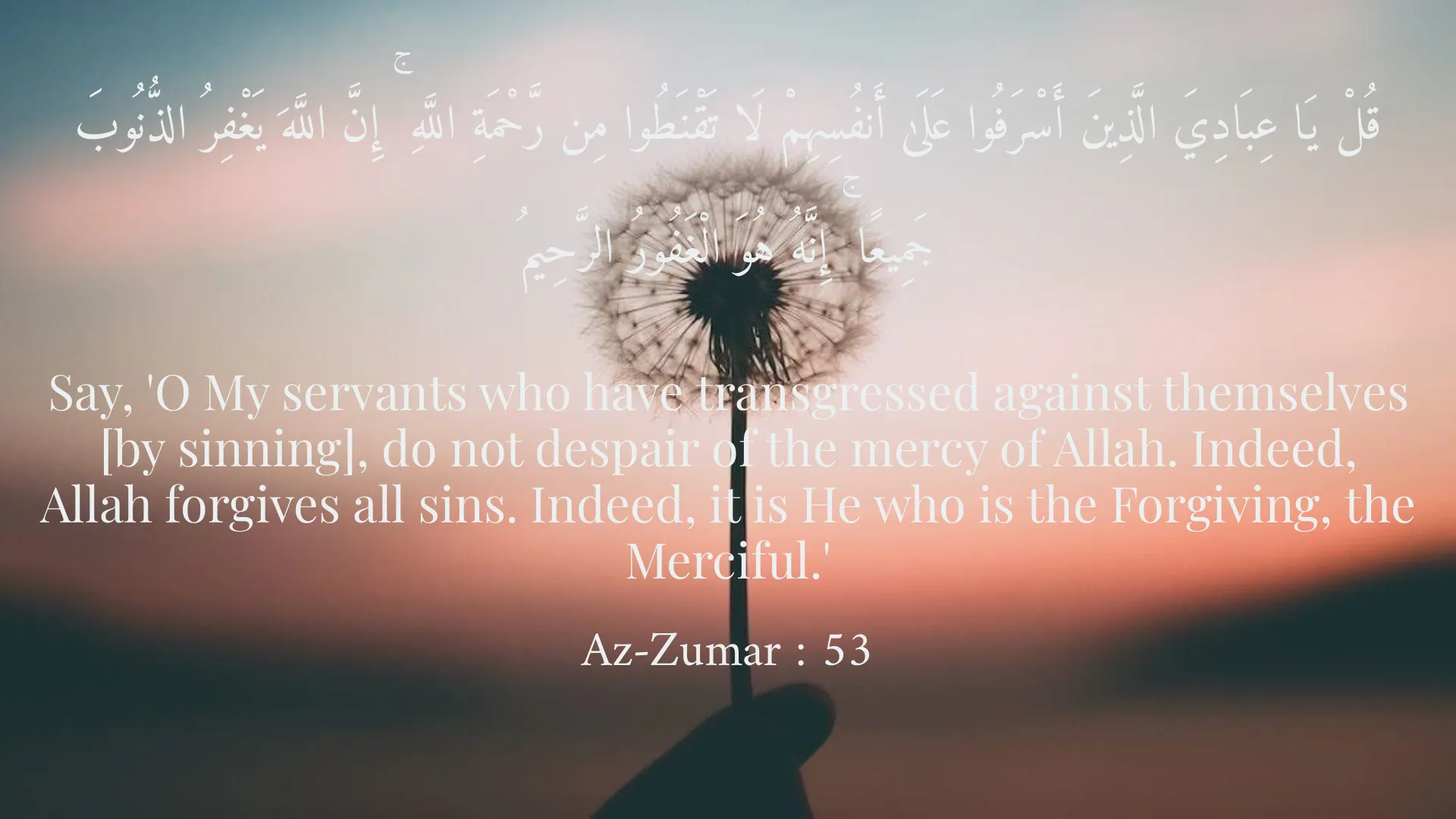
The feeling of despair, especially despair from the boundless mercy of God, is one of the profound spiritual challenges that many individuals may face at different points in their lives. However, the sublime religion of Islam, and particularly the luminous verses of the Holy Quran, unequivocally condemns this feeling, considering it antithetical to the essence of monotheism and a proper understanding of God. The Quran explicitly commands believers never to despair of Allah's vast mercy, because despair signifies an insufficient understanding of God's infinite power, knowledge, and compassion. The first and most important principle that the Quran presents for overcoming despair is absolute certainty in the boundless expanse of Divine Mercy. In Surah Az-Zumar, verse 53, Allah says: “Say, 'O My servants who have transgressed against themselves [by sinning], do not despair of the mercy of Allah. Indeed, Allah forgives all sins. Indeed, it is He who is the Forgiving, the Merciful.'” This verse is a guiding light for every human being who finds themselves immersed in sin or feeling sinful. With this declaration, Allah has opened the door of return and repentance for everyone, showing that no sin is so great that His mercy cannot encompass it. The phrase "transgressed against themselves" includes all kinds of sins and transgressions against divine and human rights, sending a message of hope to everyone, regardless of their past. Furthermore, the Holy Quran considers despair to be a characteristic of disbelievers and those who are astray. In Surah Yusuf, verse 87, we read: "And do not despair of the comfort of Allah. Indeed, no one despairs of relief from Allah except the disbelieving people." This verse indicates that despair is not merely a negative psychological state but a deficiency in faith and an incorrect understanding of Divine power and wisdom. Whoever believes in the absolute power of Allah knows that every problem has a solution and every sin is forgivable. To practically overcome despair, the Quran offers several solutions that encompass spiritual, practical, and doctrinal dimensions: 1. Tawbah (Repentance) and Istighfar (Seeking Forgiveness): One of the most crucial ways to alleviate despair is a sincere return to Allah. Repentance means genuine regret for sins committed, a firm decision to abandon them, and making amends (if possible). Allah loves those who repent and transforms their sins into good deeds. Verse 53 of Az-Zumar, mentioned earlier, is a clear manifestation of this truth. 2. Dhikr (Remembrance of Allah): Inner peace is attained through the remembrance of Allah. Surah Ar-Ra'd, verse 28, states: "Those who have believed and whose hearts are assured by the remembrance of Allah. Unquestionably, by the remembrance of Allah hearts are assured." Constant remembrance and recitation of the Quran free the heart from the darkness of despair and illuminate it with the light of hope. 3. Sabr (Patience) and Tawakkul (Trust in Allah): When facing hardships and difficulties, patience and reliance on Almighty Allah are key. Patience means enduring hardships without losing hope, and Tawakkul means complete trust in Allah's planning and will. Surah Al-Baqarah, verse 153, states: "O you who have believed, seek help through patience and prayer. Indeed, Allah is with the patient." This reliance keeps hope alive in the heart. 4. Reflection on Divine Attributes: Contemplating the attributes of Allah such as "Al-Ghaffar" (The Ever-Forgiving), "Ar-Rahim" (The Most Merciful), "At-Tawwab" (The Accepter of Repentance), "Al-Haleem" (The Forbearing), and "Al-Wasi'" (The All-Encompassing) helps individuals to better understand His greatness and generosity. This deep understanding uproots the seeds of despair and strengthens confidence in Divine aid and mercy. Allah has opened the doors of forgiveness even for those who have wronged themselves, which demonstrates the universality and depth of His mercy. 5. Good Deeds and Helping Others: Performing good and charitable deeds not only purifies sins but also reinforces a sense of self-worth and purpose in an individual. Helping those in need and solving others' problems revitalizes feelings of usefulness and dispels negative thoughts of despair. 6. Du'a (Supplication) and Invocation: Direct communication with Allah through prayer and seeking His help is a gateway to Divine mercy. Du'a is not only a means of expressing needs but also a sign of belief in Allah's responsiveness, and this faith itself acts as an antidote to despair. Allah has promised to answer the prayers of His servants. Despair is a trap set by Satan to divert humans from the right path. The Holy Quran teaches us to always be hopeful of Allah's mercy and to know that we are never in a dead end unless we ourselves close the doors of Divine mercy upon ourselves. Therefore, one must always remember that in every situation, the door of repentance and return is open, and Allah is waiting for His servants to return so that He may embrace them with His boundless mercy. Hoping for Divine mercy is not just a moral recommendation but an article of faith that fills life with meaning and steadfastness. This hope empowers individuals to overcome the greatest challenges and know that after every difficulty, there is ease.
Related Verses
قُلْ يَا عِبَادِيَ الَّذِينَ أَسْرَفُوا عَلَىٰ أَنفُسِهِمْ لَا تَقْنَطُوا مِن رَّحْمَةِ اللَّهِ ۚ إِنَّ اللَّهَ يَغْفِرُ الذُّنُوبَ جَمِيعًا ۚ إِنَّهُ هُوَ الْغَفُورُ الرَّحِيمُ
Say, 'O My servants who have transgressed against themselves [by sinning], do not despair of the mercy of Allah. Indeed, Allah forgives all sins. Indeed, it is He who is the Forgiving, the Merciful.'
Az-Zumar : 53
يَا بَنِيَّ اذْهَبُوا فَتَحَسَّسُوا مِن يُوسُفَ وَأَخِيهِ وَلَا تَيْأَسُوا مِن رَّوْحِ اللَّهِ ۖ إِنَّهُ لَا يَيْأَسُ مِن رَّوْحِ اللَّهِ إِلَّا الْقَوْمُ الْكَافِرُونَ
O my sons, go and find out about Joseph and his brother and do not despair of the comfort of Allah. Indeed, no one despairs of relief from Allah except the disbelieving people.
Yusuf : 87
قَالَ وَمَن يَقْنَطُ مِن رَّحْمَةِ رَبِّهِ إِلَّا الضَّالُّونَ
He (Abraham) said, 'And who despairs of the mercy of his Lord except those astray?'
Al-Hijr : 56
Short Story
It is narrated that in ancient times, there was a man who had sinned many times in his life and, due to the multitude of his transgressions, had despaired of God's forgiveness. He was in torment day and night, believing there was no way left for him to return or be forgiven. One day in the market, he encountered a wise and eloquent old man, a man of profound spiritual knowledge. The sinful man, with a heart full of sorrow, recounted his story to the sage and asked him: "O wise elder, is there any hope for divine mercy for someone like me, who has fallen into error countless times?"<br><br>The wise old man smiled warmly and said: "My young friend, listen to a tale from the sweet-tongued Sa'di, who said: 'The servant who turns away from God, let him return with sincerity and devotion, even if he has broken his promise a hundred times. Come back, for a thousand doors are open for your return.'" Then he continued: "Have you not seen how a tailor, no matter how much he tears a piece of cloth, mends it again with needle and thread? And have you heard how the rain of Divine mercy falls even upon dry and parched lands, bringing them back to life? My dear one, despair itself is a greater sin than any other, for it is a sign of disbelief in the boundless mercy of Allah. God is so merciful that even the very feeling of your remorse and shame is a sign that He still loves you and has kept the door of repentance open for you. Arise, and with a broken heart and tearful eyes, turn to His threshold. He awaits your return to embrace you with His infinite mercy and erase your sins. No sin is greater than the mercy of the Lord."<br><br>Upon hearing these words, the sinful man seemed to awaken from his heedlessness, and a light of hope began to shine in his heart. Tears flowed from his eyes, and with a reassured heart, he returned to God. He learned that one should never despair of a door that is always open, and that Divine mercy is vaster than all expectations.