Quranic Answer
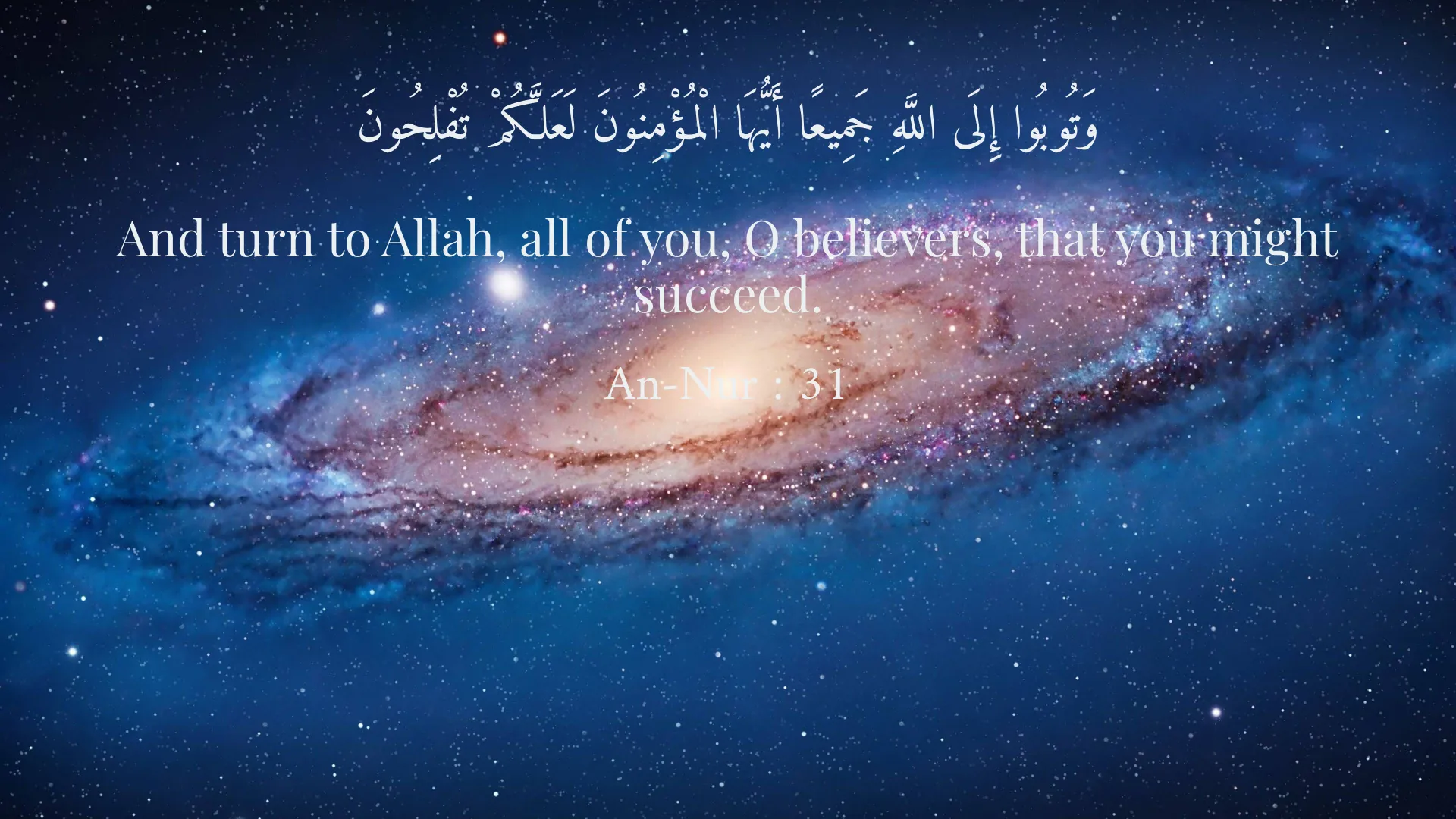
In the Holy Quran, the concept of repentance and turning back to Allah is highly emphasized, underscoring the importance of seeking forgiveness and striving for a path of righteousness. The Quran serves as a guidance for humanity, directing believers towards a fulfilling and pious life while catering to their spiritual needs. The act of turning back to Allah, expressing remorse for sins, and making a commitment to improve, forms the backbone of the Islamic faith. This article elaborates on these principles as manifested in several verses from the Quran, underlining the significance of true repentance and the path toward a better future, resonating with the heart of a believer. One of the most striking verses that capture this emphasis on repentance is found in Surah An-Nur (24:31): 'And turn to Allah, all of you, O believers, that you might succeed.' This verse resonates with a clarion call for believers to return to their Creator with a heart full of sincerity and humility. The notion of success here is intrinsically linked to one's relationship with Allah. Not only does this verse instruct believers on the importance of repentance, but it also provides a pathway to success that is fundamentally contingent upon their willingness to acknowledge their past faults. Acknowledging one’s mistakes is the first step towards healing and improvement. True repentance, or 'Tawbah' in Arabic, goes beyond mere regret. It involves a heartfelt expression of remorse for past actions coupled with a resolute intention to amend one's ways and strive towards righteousness. In this light, Allah’s guidance encourages believers to confront their faults bravely, to seek His forgiveness, and to aspire for moral rectitude. Allah's mercy is portrayed as vast and encompassing, forgiving those who genuinely seek Him. It is a reminder that no matter how grievous the sin, if the heart yearns for repentance, Allah is a casting net of mercy, waiting to welcome His servants back. Moreover, in Surah Al-Baqarah (2:222), Allah affirms, 'Indeed, Allah loves those who repent and loves those who purify themselves.' This verse establishes that Allah not only appreciates the act of repentance but also holds a special affection for those who strive to purify their souls from sins. The act of purification encompasses both the removal of sinful tendencies and the nurturing of virtuous traits. This dual aspect of repentance encourages believers to not only seek forgiveness but also take concrete steps toward self-improvement. Additionally, what constitutes self-purification can involve various actions, including engaging in prayer, immersing oneself in charitable deeds, and fostering a compassionate relationship with fellow human beings. The Quran goes further to emphasize the importance of maintaining a consistent effort in purifying oneself, reflecting on the significance of intention and persistence in achieving personal betterment. As we navigate through life, one common pitfall is the tendency to dwell on past mistakes. In Surah Az-Zumar (39:53), Allah addresses His believers with reassurance, saying, 'O My servants who have believed, fear your Lord. For those who do good in this world is good, and the earth of Allah is spacious. Indeed, the patient will be given their reward without account.' Here, Allah offers solace and guidance for those who might struggle with guilt over their past. Instead of lamenting over errors and sins, He directs the focus towards positive action and forward-thinking. This verse encapsulates a fundamental principle in Islam: the importance of maintaining a positive outlook and focusing on good deeds rather than the burdens of past mistakes. The exhortation to go forth and practice goodness emphasizes that every individual possesses the potential to transform their circumstances through righteous actions. The encouragement towards patience further enriches this message, as it implies that the rewards for such efforts are not only significant but are also bestowed freely. Moreover, the theme of the boundless mercy of Allah runs through these verses, serving as a source of hope for all believers. It conveys that while everyone is susceptible to error, what truly matters in the eyes of Allah is the willingness to rectify mistakes and move ahead with unwavering faith. Each act of kindness, each genuine effort towards repentance is recognized and rewarded by Allah, fostering a deeper relationship of trust between the believer and their Creator. In Islam, the path of repentance is often illustrated by the metaphor of a continuous journey rather than a singular event. This perspective alleviates the pressure of attaining perfection, allowing believers to embrace their humanity and associate their growth with their heart's desires. The willingness to turn back to Allah, coupled with steadfast effort in pursuing good deeds, cultivates a garden of spiritual resilience that blooms throughout life's challenges. Ultimately, the Quran offers a profound understanding of the transformative power of repentance. It emphasizes that one’s past does not define their future and that a sincere response to mistakes can lead to spiritual fulfillment and growth. The journey towards realigning oneself with Allah is laden with opportunities for improvement and renewal, encouraging believers to tread joyfully towards a life shaped by faith, virtue, and compassion. Through repentance and perseverance, one can construct not only a better personal narrative but also contribute positively to the communal fabric of society. In conclusion, the messages derived from the aforementioned verses encapsulate a fundamental principle in Islamic spirituality: the interdependence of repentance, self-purification, and positive action. As believers strive to turn back to Allah, recognize their shortcomings, and make conscious choices in favor of good deeds, they pave the way for a successful and fulfilling life both in this world and the Hereafter. Reassured by Allah's infinite mercy and love for the repentant, Muslims are inspired to focus not on their past failures but on the endless possibilities that lie ahead—a reminder that pops up time and again in the sacred text, encouraging every believer along their journey towards divine proximity and success.
Related Verses
وَتُوبُوا إِلَى اللَّهِ جَمِيعًا أَيُّهَا الْمُؤْمِنُونَ لَعَلَّكُمْ تُفْلِحُونَ
And turn to Allah, all of you, O believers, that you might succeed.
An-Nur : 31
إِنَّ اللَّـهَ يُحِبُّ التَّوَّابِينَ وَيُحِبُّ الْمُتَطَهِّرِينَ
Indeed, Allah loves those who repent and loves those who purify themselves.
Al-Baqarah : 222
يَا عِبَادِيَ الَّذِينَ آمَنتُمُ اتَّقُوا رَبَّكُمْ لِلَّذِينَ أَحْسَنُوا فِي هَذِهِ الدُّنْيَا حَسَنَةٌ وَأَرْضُ اللَّهِ وَاسِعَةٌ إِنَّمَا يُوَفَّى الصَّابِرُونَ أَجْرَهُمْ بِغَيْرِ حِسَابٍ
O My servants who have believed, fear your Lord. For those who do good in this world is good, and the earth of Allah is spacious.
Az-Zumar : 53
Short Story
One day, a young man named Arash was feeling a deep sense of guilt for the mistakes he had made in the past. With each passing day, this feeling tormented him. He decided to seek guidance from a wise man and asked him for advice. The wise man told him: 'Allah is forgiving and merciful. If you want to overcome your past, you must repent and resolve to change.' Upon hearing these words, Arash felt as if a heavy burden had been lifted off his shoulders. He was able to overcome his past by turning to God and doing good deeds, launching himself into a new life.