Quranic Answer
Negative thoughts, especially those concerning the Divine essence, can be profoundly distressing and unsettling. These types of thoughts, sometimes appearing as obsessions or inner whispers, not only deprive a person of spiritual tranquility but can also affect their connection with the Creator of the universe. However, it's crucial to understand that these thoughts often originate from a source external to the individual, and the Holy Quran offers clear and profound strategies to counter them. These strategies are built upon a correct understanding of God, reliance (Tawakkul), remembrance (Dhikr), patience (Sabr), and combating the whispers of Satan. The first and perhaps most crucial step in overcoming negative thoughts about God is to cultivate a correct and deep understanding of His Sacred Being. The Quran introduces God with perfect attributes and His Most Beautiful Names (Asma ul Husna). He is 'Ar-Rahman' and 'Ar-Rahim' – the Most Gracious, the Most Merciful, whose mercy encompasses all things. He is 'Al-Alim' – the All-Knowing, aware of both the manifest and the hidden, and 'Al-Hakim' – the All-Wise, whose every action is based on wisdom and ultimate good, even if we do not immediately comprehend it. He is 'Al-Qadir' – the All-Powerful, capable of all things, and 'Al-Adl' – the Just, who never wrongs His servants. When a person reflects on these attributes, they realize that negative thoughts about God's injustice, neglect, or harshness are in complete contradiction with His true essence. Contemplating the creation of the heavens and the earth, the order governing the cosmos, and the miracle of human creation itself, serves as clear evidence of God's infinite power, knowledge, and wisdom, dispelling any doubt or uncertainty. Studying and reflecting upon verses that explain Divine attributes, such as the initial verses of Surah Al-Hadid or Ayatul Kursi (Surah Al-Baqarah, verse 255), fills the heart with the light of knowledge and dispels the darkness of misgivings. The second fundamental strategy is to seek refuge in the remembrance of God (Dhikr). Allah says in the Quran: "Those who have believed and whose hearts are assured by the remembrance of Allah. Unquestionably, by the remembrance of Allah hearts are assured." (Ar-Ra'd, 13:28). Dhikr is not merely limited to uttering words; it encompasses a conscious presence and awareness of God's greatness and mercy within one's heart. Reciting the Quran with contemplation, performing prayers (Salah) with presence of mind, uttering phrases like 'La ilaha illa Allah' (There is no god but Allah), 'Subhanallah' (Glory be to Allah), 'Alhamdulillah' (All praise is due to Allah), 'Allahu Akbar' (Allah is the Greatest), and sending blessings upon Prophet Muhammad (PBUH) all strengthen the spiritual connection with God and cleanse the mind of negative thoughts. Just as light dispels darkness, the remembrance of God purifies the mind from Satanic whispers and temptations. Especially when negative thoughts assault, one should immediately resort to the remembrance of God and disregard them. The third crucial strategy is to combat the whispers of Satan (Waswas). Many of these negative thoughts are the whispers of 'Al-Waswas al-Khannas' (the whispering, retreating devil) who casts doubt into the hearts of people. Satan constantly strives to weaken human faith and divert individuals from the straight path. Recognizing this satanic ploy helps one attribute these thoughts to an external source and refrain from self-blame. Seeking refuge with Allah from the accursed Satan by saying 'A'udhu billahi minash Shaytanir Rajim' (I seek refuge in Allah from the accursed Satan) and reciting Surahs An-Nas and Al-Falaq are Quranic methods to ward off these whispers. In Surah An-Nas, Allah teaches us to seek refuge in "the Lord of mankind, the King of mankind, the God of mankind" from the evil of the retreating whisperer. It is crucial not to give importance to these whispers and to disempower them by ignoring them. The more we dwell on them, the more deeply rooted they become. The fourth principle is reliance on God (Tawakkul) and patience (Sabr) in the face of difficulties. Sometimes, negative thoughts about God arise in the aftermath of life's hardships, calamities, and adversities. In such circumstances, a person might feel that God has abandoned them or is indifferent. At these times, placing one's trust in God and exercising patience are the keys to liberation. Tawakkul means that after exerting effort and planning, one entrusts the outcome to God, believing that Allah will ordain what is best for them. Sabr, too, means steadfastness and perseverance on the path of servitude to God, enduring difficulties with reliance on Him. Allah says in the Quran: "O you who have believed, seek help through patience and prayer. Indeed, Allah is with the patient." (Al-Baqarah, 2:153). Believing that every calamity has a wisdom behind it and every hardship will be followed by ease diminishes negative thoughts. Fifth, repentance (Tawbah) and seeking forgiveness (Istighfar) are vital. Sometimes, the root of negative thoughts about God is a sense of guilt or shortcomings in fulfilling religious duties. When a person perceives themselves as sinful, they might think that God will not forgive them or has turned away from them. In such a state, sincere turning to God with repentance and seeking forgiveness is the solution. Allah in the Holy Quran introduces Himself as 'At-Tawwab' (The Accepter of Repentance) and 'Al-Ghafur' (The Forgiver), and has repeatedly emphasized His acceptance of His servants' repentance, even if their sins are great. "Say, 'O My servants who have transgressed against themselves [by sinning], do not despair of the mercy of Allah. Indeed, Allah forgives all sins. Indeed, it is He who is the Forgiving, the Merciful.'" (Az-Zumar, 39:53). This verse illuminates the light of hope in every despairing heart and shows that no sin is too great for Divine mercy to encompass, and this hope is the most important antidote against negative thoughts of despair concerning God. Finally, it is essential to remember that confronting negative thoughts is a gradual process requiring continuous effort and practice. By adhering to these Quranic principles, one can progressively cleanse the heart and mind of such thoughts and attain a profound peace that is only possible through a strong and conscious connection with God. Firm faith in God's merciful and just essence is the best shield against the onslaught of whispers and negative thoughts.
Related Verses
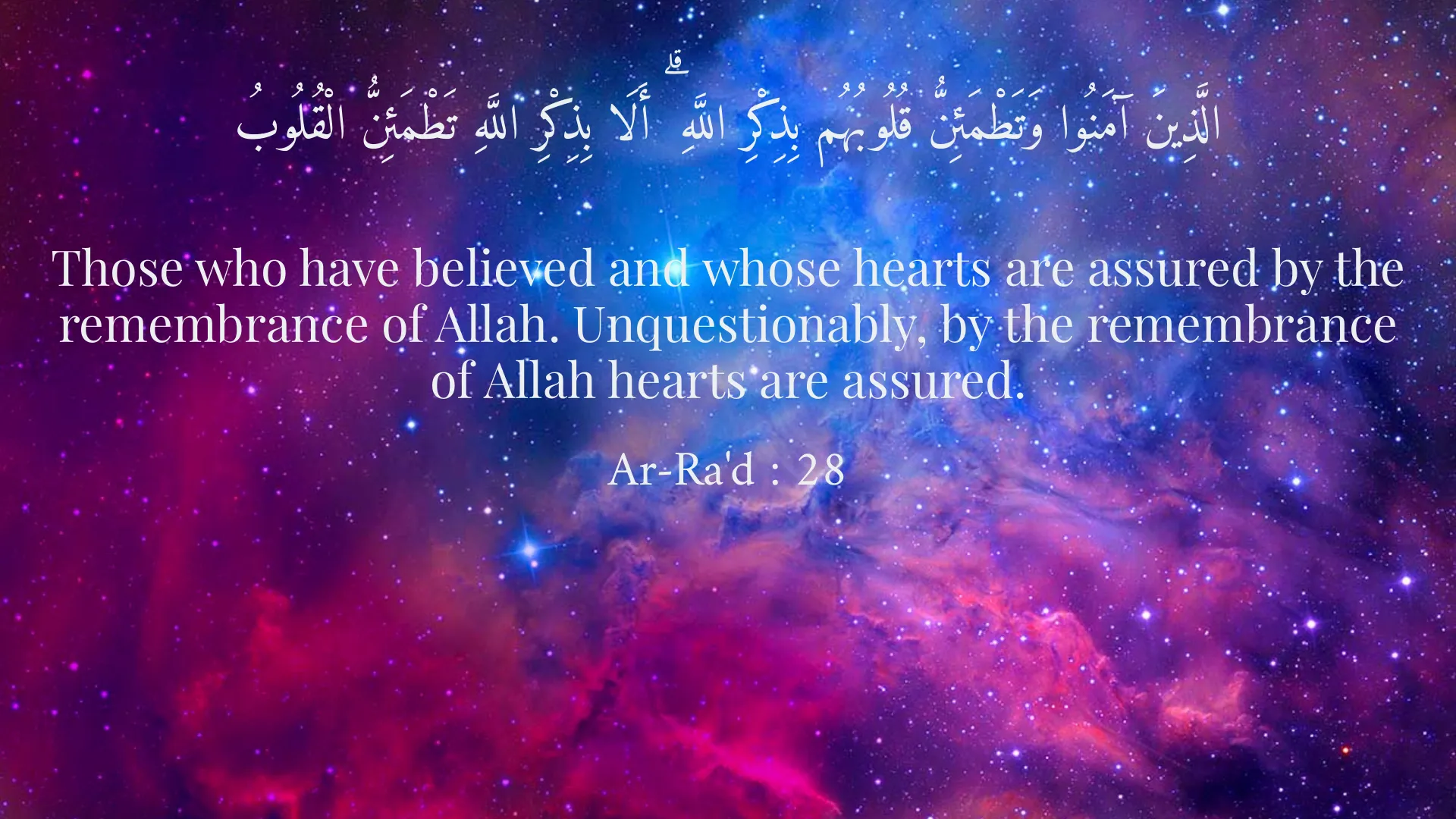
الَّذِينَ آمَنُوا وَتَطْمَئِنُّ قُلُوبُهُم بِذِكْرِ اللَّهِ ۗ أَلَا بِذِكْرِ اللَّهِ تَطْمَئِنُّ الْقُلُوبُ
Those who have believed and whose hearts are assured by the remembrance of Allah. Unquestionably, by the remembrance of Allah hearts are assured.
Ar-Ra'd : 28
قُلْ أَعُوذُ بِرَبِّ النَّاسِ
Say, 'I seek refuge in the Lord of mankind,'
An-Nas : 1
مِن شَرِّ الْوَسْوَاسِ الْخَنَّاسِ
From the evil of the retreating whisperer -
An-Nas : 4
قُلْ يَا عِبَادِيَ الَّذِينَ أَسْرَفُوا عَلَىٰ أَنفُسِهِمْ لَا تَقْنَطُوا مِن رَّحْمَةِ اللَّهِ ۚ إِنَّ اللَّهَ يَغْفِرُ الذُّنُوبَ جَمِيعًا ۚ إِنَّهُ هُوَ الْغَفُورُ الرَّحِيمُ
Say, 'O My servants who have transgressed against themselves [by sinning], do not despair of the mercy of Allah. Indeed, Allah forgives all sins. Indeed, it is He who is the Forgiving, the Merciful.'
Az-Zumar : 53
Short Story
It is narrated that in Saadi's time, a person constantly complained to him about distressing and fearful thoughts concerning destiny and the future. Saadi, with kindness, said: "My friend, do not wound your heart over what has not yet come, nor grieve over what has passed. What God wills, so it shall be, and what He wills not, shall never be. One day, a sage asked his student: Why does a fish not fear in the water? The student replied: Because it knows that the water holds it and will never abandon it. The sage said: So too, be like the fish in the ocean of Divine grace; once you know that He is always your Guardian and Protector, fear and distressing thoughts will never enter your heart. Entrust your heart to Him, for He is the best Guardian and the only refuge, and all else besides Him is transient."