Quranic Answer
In the Holy Quran, the importance of kindness and benevolence is a recurring theme that resonates deeply within the teachings of Islam. The verses of the Quran serve not only as a spiritual guide for Muslims but also offer profound insights into the moral and ethical conduct that individuals should adopt in their daily lives. One particular verse that encapsulates this message is found in Surah Al-Baqarah, verse 177, where Allah reminds us that righteousness encompasses far more than just the tangible acts of charity. It entails a holistic approach to goodness, including love for others, the establishment of prayer, and the obligatory giving of zakat (almsgiving). This multi-faceted view of righteousness highlights that acts of kindness should form the bedrock of our lives, influencing our interactions and guiding our decisions. Righteousness, as elaborated in this verse, is intricately connected to our relationship with others and with Allah. By acknowledging the importance of loving our fellow human beings, we embrace a key principle that can lead to a more harmonious and compassionate society. When kindness is practiced, it generates a ripple effect; small acts of kindness can inspire greater love and cooperation among individuals, communities, and nations. Expanding on this concept, Surah An-Nahl, verse 90, provides another critical directive from Allah, who commands us to act with justice and benevolence: 'Indeed, Allah commands you to render trusts to whom they are due and when you judge between people to judge with justice.' This verse is pivotal as it underlines the intertwined nature of justice and kindness. Acting justly means treating everyone fairly and equitably, which is an essential aspect of being kind. When we uphold justice, we create a foundation where kindness can thrive, fostering trust and mutual respect among people. In a world that often grapples with issues of inequity and strife, the call to uphold fairness serves as a powerful reminder of the role each individual can play in making the world a better place through kindness. The principles of kindness in Islam promote not just personal morality but also societal harmony. It poses the argument that personal actions, however ordinary they may seem, can significantly impact the broader community. Practicing kindness need not always manifest in grand gestures; sometimes, the simplest acts can have profound significance. Consider the small but impactful choices we can make in our everyday lives. For instance, we can offer help to those in need—whether by assisting the elderly, volunteering at a local charity, or simply lending an ear to a friend. By showing respect to our parents and elders, we honor their contributions and reinforce the importance of familial bonds. These seemingly minor actions accumulate over time and contribute immensely to building a culture of kindness. Additionally, prayer can serve as a powerful tool to cultivate a kinder heart. Seeking guidance and enlightenment through prayer can help us align our intentions with acts of compassion. Many individuals may find that engaging in regular prayers fosters a deeper sense of empathy and compassion, nudging them towards kindness in their daily interactions. The teachings of the Prophet Muhammad (peace be upon him) also emphasize this vital aspect of kindness. With the statement, 'Behave with kindness and love,' he succinctly encapsulates one of the core tenets of being a good Muslim. The life of the Prophet serves as the ultimate blueprint for kindness in action; his treatment of friends and foes alike provides numerous examples of how one can embody kindness in various circumstances. He advocated for treating others with respect and dignity, regardless of their status or relationship to us. By doing so, he demonstrated that kindness is not merely a function of generosity but is fundamental to establishing a just and peaceful society. Ultimately, for kindness to flourish, it must be deeply rooted in our hearts and reflected through our words and actions. This requires conscious effort and self-reflection. Each day, we have the opportunity to assess how our behaviors contribute to the world's kindness quotient. Are we patient with those who irritate us? Do we offer help without expecting anything in return? Are we generous with our time and resources? By taking the time to reflect on these questions, we can cultivate an authentic spirit of kindness in ourselves. Moreover, the cathartic nature of kindness should not be overlooked. Engaging in good deeds not only enriches the lives of others but also enhances our own well-being. There is an undeniable fulfillment that comes from helping others. Research consistently shows that acts of kindness can lead to increased happiness and life satisfaction for the giver. This reaffirms the idea that the practice of kindness is a win-win situation: it betters the community while also nurturing our own spirit. Thus, fostering kindness is not merely a recommendation in Islamic teachings; it is a profound invitation to reshape our character and, subsequently, our world. When we embody kindness, we are simultaneously building a more compassionate society, breaking down walls of division, and serving as beacons of hope and love in a world that often feels indifferent to suffering. In conclusion, the Holy Quran unequivocally underscores the importance of kindness, urging us to weave it into the fabric of our lives through both actions and intentions. By committing ourselves to practice kindness and compassion earnestly, we can transform not only our lives but also the lives of those around us. The teachings of the Quran and the Prophet Muhammad (peace be upon him) remind us that these principles are not merely moral imperatives but are essential for nurturing a thriving, just, and peaceful society.
Related Verses
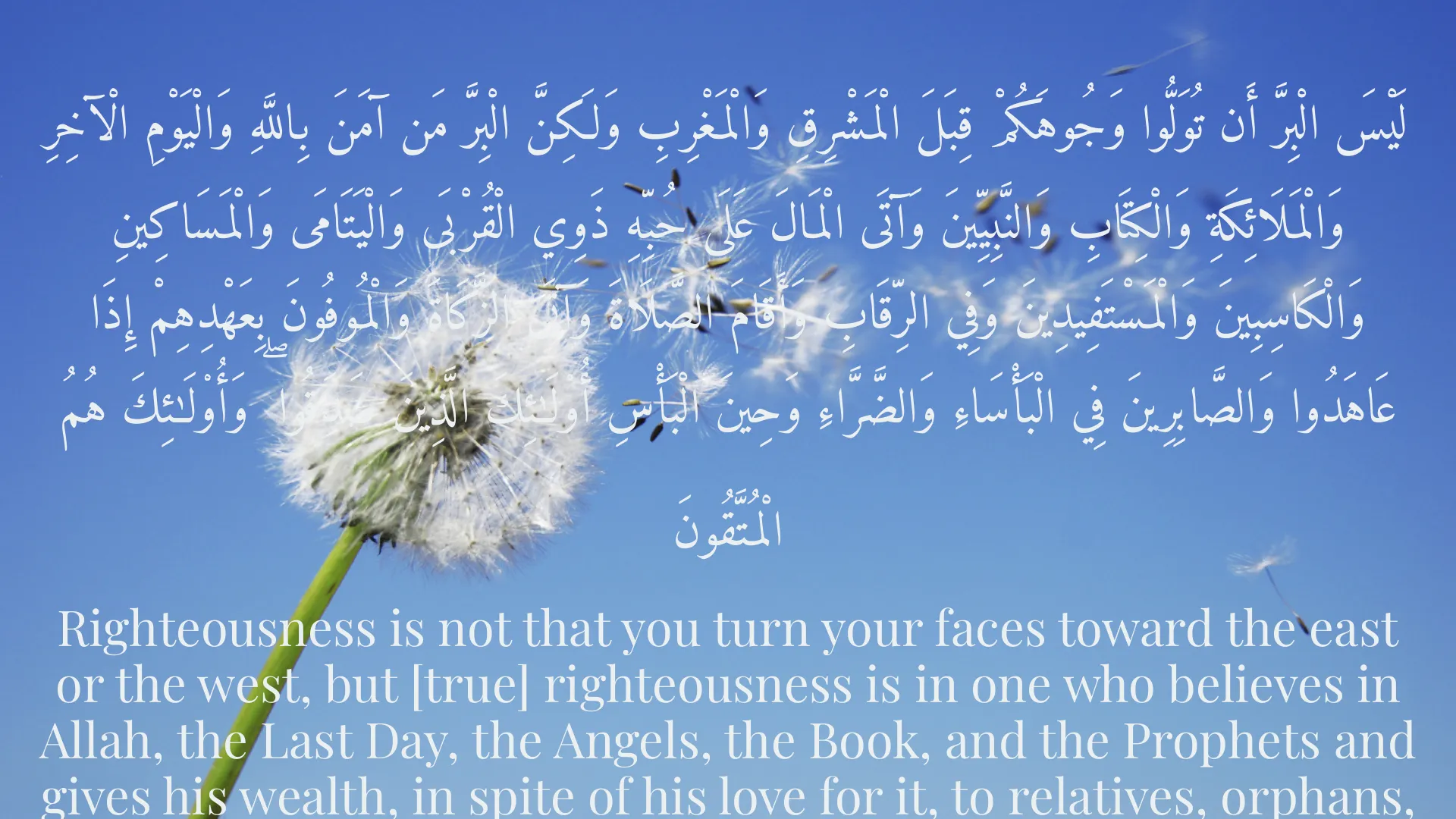
لَيْسَ الْبِرَّ أَن تُوَلُّوا وَجُوهَكُمْ قِبَلَ الْمَشْرِقِ وَالْمَغْرِبِ وَلَكِنَّ الْبِرَّ مَن آمَنَ بِاللَّهِ وَالْيَوْمِ الْآخِرِ وَالْمَلَائِكَةِ وَالْكِتَابِ وَالنَّبِيِّينَ وَآتَى الْمَالَ عَلَى حُبِّهِ ذَوِي الْقُرْبَى وَالْيَتَامَى وَالْمَسَاكِينِ وَالْكَاسِبِينَ وَالْمَسْتَفِيدِينَ وَفِي الرِّقَابِ وَأَقَامَ الصَّلَاةَ وَآتَى الزَّكَاةَ وَالْمُوفُونَ بِعَهْدِهِمْ إِذَا عَاهَدُوا وَالصَّابِرِينَ فِي الْبَأْسَاءِ وَالضَّرَّاءِ وَحِينَ الْبَأْسِ أُو۟لَـٰئِكَ الَّذِينَ صَدَقُوا ۖ وَأُو۟لَـٰئِكَ هُمُ الْمُتَّقُونَ
Righteousness is not that you turn your faces toward the east or the west, but [true] righteousness is in one who believes in Allah, the Last Day, the Angels, the Book, and the Prophets and gives his wealth, in spite of his love for it, to relatives, orphans, the needy, the traveler, those who ask [for help], and for freeing slaves; [and he who] establishes prayer and gives zakah; [those who fulfill their promise when they promise] and [those who are] patient in poverty and hardship and during battle. Those are the ones who have been true, and it is those who are the righteous.
Al-Baqarah : 177
إِنَّ اللّهَ يَأْمُرُ بِالْعَدْلِ وَالإِحْسَانِ وَإِيتَاءِ ذِي الْقُرْبَىٰ ۖ وَيَنْهَى عَنِ الْفَحْشَاءِ وَالْمُنْكَرِ وَالْبَغْيِ ۚ يَعِظُكُمْ لَعَلَّكُمْ تَذَكَّرُونَ
Indeed, Allah commands you to render trusts to whom they are due and when you judge between people to judge with justice. Excellent is that which Allah instructs you. Indeed, Allah is ever Hearing and Seeing.
An-Nahl : 90
Short Story
On a sunny day, Ali decided to embrace kindness more in his life. He began his day by smiling at everyone he met and resolved to do one good deed each day. He remembered learning from the Quran that emphasizes kindness. The services he provided to his neighbors and friends not only brought joy to them but also gave him a greater sense of satisfaction and peace. This journey of kindness taught him that a better world begins with small actions.