Quranic Answer
Your question about how to reduce worries to think more about God is a profound and fundamental one, rooted in the human need for tranquility. The Holy Quran, as divine revelation, offers clear pathways to achieve this inner peace and liberate the heart from worldly anxieties, allowing it to focus more deeply and continuously on its Creator. Indeed, many of our worries and anxieties stem from excessive attachment to the transient world and insufficient trust in divine power and wisdom. The Quran not only teaches us how to detach from these worldly ties but also reveals the path to heartfelt assurance. This assurance helps us lift the heavy burden of worries and create more space for focusing on what truly matters: our connection with the Creator of the universe. The most central and pivotal Quranic remedy for reducing worries and strengthening remembrance of God is “Dhikr Allah,” the remembrance of Allah. Allah Almighty states in Surah Ar-Ra’d, verse 28: “الَّذِينَ آمَنُوا وَتَطْمَئِنُّ قُلُوبُهُم بِذِكْرِ اللَّهِ ۗ أَلَا بِذِكْرِ اللَّهِ تَطْمَئِنُّ الْقُلُوبُ” (Those who have believed and whose hearts are assured by the remembrance of Allah. Unquestionably, by the remembrance of Allah hearts are assured). This verse articulates a fundamental spiritual principle: true peace is found not in wealth or status, nor in escaping problems, but in a profound connection with the Creator. When a person establishes an internal connection with God, their heart links to an inexhaustible source of power and tranquility, becoming less vulnerable to worldly fluctuations. Dhikr, or remembrance of God, is not merely the repetition of words; it encompasses every action and thought that brings God to mind and makes His presence vivid in one’s life. This can include reciting the Quran with contemplation and reflection on divine verses, performing prayers with full concentration and a sense of direct communication with the Lord, reflecting on the unparalleled creation of the heavens and the earth, doing good deeds for God’s sake, and even silently remembering Him in every state and place. The more God’s remembrance permeates our lives, the less room there will be for unnecessary worries, and our hearts will be guided towards more stable and profound peace. Another key principle emphasized by the Quran is “Tawakkul,” or reliance on Allah. In Surah At-Talaq, verse 3, it says: “وَمَن يَتَوَكَّلْ عَلَى اللَّهِ فَهُوَ حَسْبُهُ ۚ إِنَّ اللَّهَ بَالِغُ أَمْرِهِ ۚ قَدْ جَعَلَ اللَّهُ لِكُلِّ شَيْءٍ قَدْرًا” (And whoever relies upon Allah – then He is sufficient for him. Indeed, Allah will accomplish His purpose. Allah has already set for everything a [decreed] extent). Tawakkul does not imply idleness or abandonment of effort; rather, it means exerting all possible effort and planning, then entrusting the outcome to Allah. When a person knows that the outcome of affairs is in God’s hands and that He is the best Planner, having created everything with wisdom and a specific measure, the anxiety stemming from uncertainties and fear of the future is significantly reduced. This assurance in divine power and justice frees the heart from the heavy burden of futile worries and prepares the ground for deeper reflection on God’s greatness and the quality of one’s worship. True Tawakkul instills the belief in the heart that Allah always desires what is best for His servant, even if we do not outwardly comprehend it or are unaware of the hidden dimensions of His wisdom. This belief dries up the roots of future worries and enables one to attend to their duties with peace of mind. Furthermore, “Sabr” (patience) and “Salat” (prayer) are vital tools that the Quran introduces for coping with difficulties and worries. In Surah Al-Baqarah, verse 153, we read: “يَا أَيُّهَا الَّذِينَ آمَنُوا اسْتَعِينُوا بِالصَّبْرِ وَالصَّلَاةِ ۚ إِنَّ اللَّهَ مَعَ الصَّابِرِينَ” (O you who have believed, seek help through patience and prayer. Indeed, Allah is with the patient). Prayer is a direct and immediate connection that a person establishes with their Lord; moments where one separates from the noisy world and its material concerns and directs their entire being towards the Creator. This temporary detachment from the world provides an unparalleled opportunity to rejuvenate and cleanse the mind from distracting thoughts. Every unit of prayer is a step towards liberation from the chains of worry and closeness to the source of eternal peace. Patience, too, helps a person remain steadfast and resilient in the face of life’s calamities and adversities, avoiding despair and hopelessness. A patient person knows that every problem has an end and every hardship will turn into ease; this perspective transforms momentary worries into opportunities for growth and closeness to God. Patience and prayer are like two wings for the soul to soar towards tranquility and remembrance of God, empowering individuals to face challenges rather than being overwhelmed by them. In addition to these, the Quran also places special emphasis on “Shukr” (gratitude) and “Istighfar” (seeking forgiveness). Gratitude for the blessings that Allah has bestowed upon us shifts one’s perspective from what they lack to what they possess, filling the heart with contentment and peace. When a person is constantly counting divine blessings and contemplating the abundance in their life instead of focusing on shortcomings, there will be no room for baseless worries. Gratitude, in essence, is a form of practical remembrance that reminds one of God's boundless grace and favor. And Istighfar, seeking forgiveness for sins, not only purifies the soul but also lifts the psychological burden of guilt and regret from one's shoulders, creating space for focusing on the Beloved. When one feels light and purified from sin, their mind becomes freer and their heart more ready to connect with God. These acts are not merely devotional; they also have profound psychological effects that contribute to reducing anxiety and increasing inner peace, paving the way for continuous and deeper remembrance of God. In summary, to reduce worries and increase focus on God, the Holy Quran provides a comprehensive roadmap. These solutions include: 1. Continuous remembrance of God (through prayer, Quran recitation, reflection on creation, and other acts of worship) which brings peace to hearts and connects one to the ultimate source of tranquility. 2. Complete reliance on Him after fulfilling one’s duties, which lifts the burden of worries and fosters heartfelt assurance. 3. Seeking help through patience and prayer in the face of challenges, which enhances spiritual strength and paves the way through difficulties. 4. Continuous gratitude and seeking forgiveness, which purify the heart and foster a positive mindset, preventing one from being consumed by negative thoughts. By implementing these principles in daily life, one can free their heart from worldly shackles and feel the presence of their Lord in every moment and place, thereby achieving a stable and profound tranquility that leads them towards true remembrance and worship of God. This path is a journey from anxiety to peace, from distraction to focus, and from material concerns to spiritual richness, all under divine guidance and support.
Related Verses
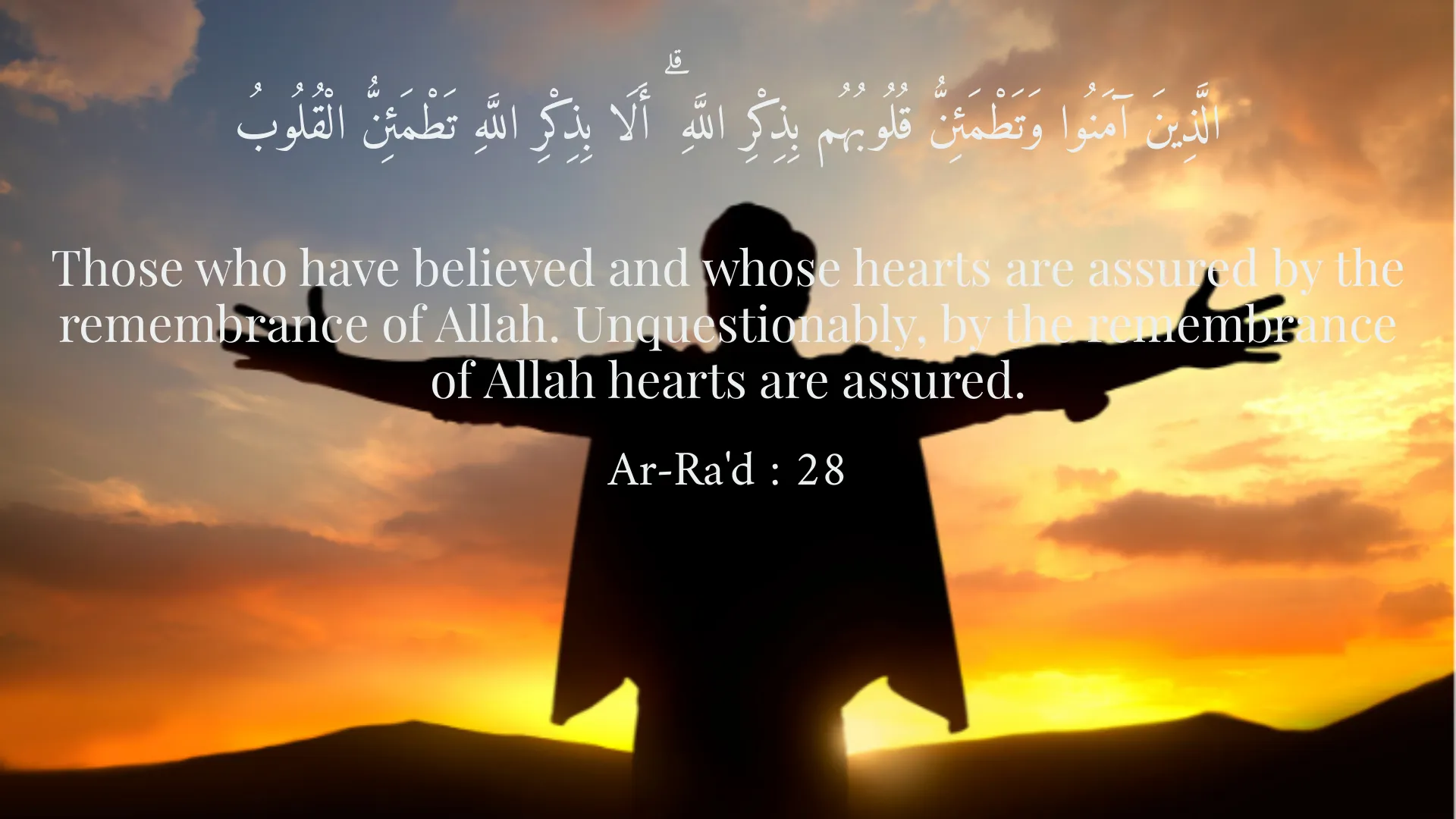
الَّذِينَ آمَنُوا وَتَطْمَئِنُّ قُلُوبُهُم بِذِكْرِ اللَّهِ ۗ أَلَا بِذِكْرِ اللَّهِ تَطْمَئِنُّ الْقُلُوبُ
Those who have believed and whose hearts are assured by the remembrance of Allah. Unquestionably, by the remembrance of Allah hearts are assured.
Ar-Ra'd : 28
وَمَن يَتَوَكَّلْ عَلَى اللَّهِ فَهُوَ حَسْبُهُ ۚ إِنَّ اللَّهَ بَالِغُ أَمْرِهِ ۚ قَدْ جَعَلَ اللَّهُ لِكُلِّ شَيْءٍ قَدْرًا
And whoever relies upon Allah – then He is sufficient for him. Indeed, Allah will accomplish His purpose. Allah has already set for everything a [decreed] extent.
At-Talaq : 3
يَا أَيُّهَا الَّذِينَ آمَنُوا اسْتَعِينُوا بِالصَّبْرِ وَالصَّلَاةِ ۚ إِنَّ اللَّهَ مَعَ الصَّابِرِينَ
O you who have believed, seek help through patience and prayer. Indeed, Allah is with the patient.
Al-Baqarah : 153
Short Story
It is narrated that in a certain city, there lived a wealthy merchant whose thoughts grew increasingly burdened by his immense possessions, leaving him restless and sleepless. At night, he feared thieves, and by day, he worried about financial loss, constantly living in anxiety. Next to him resided a dervish who possessed nothing but a tattered cloak and an empty bowl. Yet, he was always joyful and cheerful, engaged in the remembrance of God with a tranquil heart. One day, the merchant confided his sorrows and anxieties to the dervish and asked, 'O dervish, what is it about you that, despite your destitution, you are always full of peace and remembrance of God, while I, with all my wealth, find no tranquility in my heart and am never free from worries?' The dervish smiled and replied, 'My friend, you have tied your heart to gold and silver, and the more your gold and silver increase, the more your attachment and fear of losing them also grow. But I have tied my heart to the Creator of the heavens and the earth, whose treasures are boundless and never diminish. Since I have no one but Him, I think of no one but Him, and since I know He is sufficient, I no longer worry about anything.' The merchant was moved by the dervish's words and, little by little, reduced his worldly attachments, dedicating his heart to the remembrance of God. It was then that he tasted true peace.