Quranic Answer
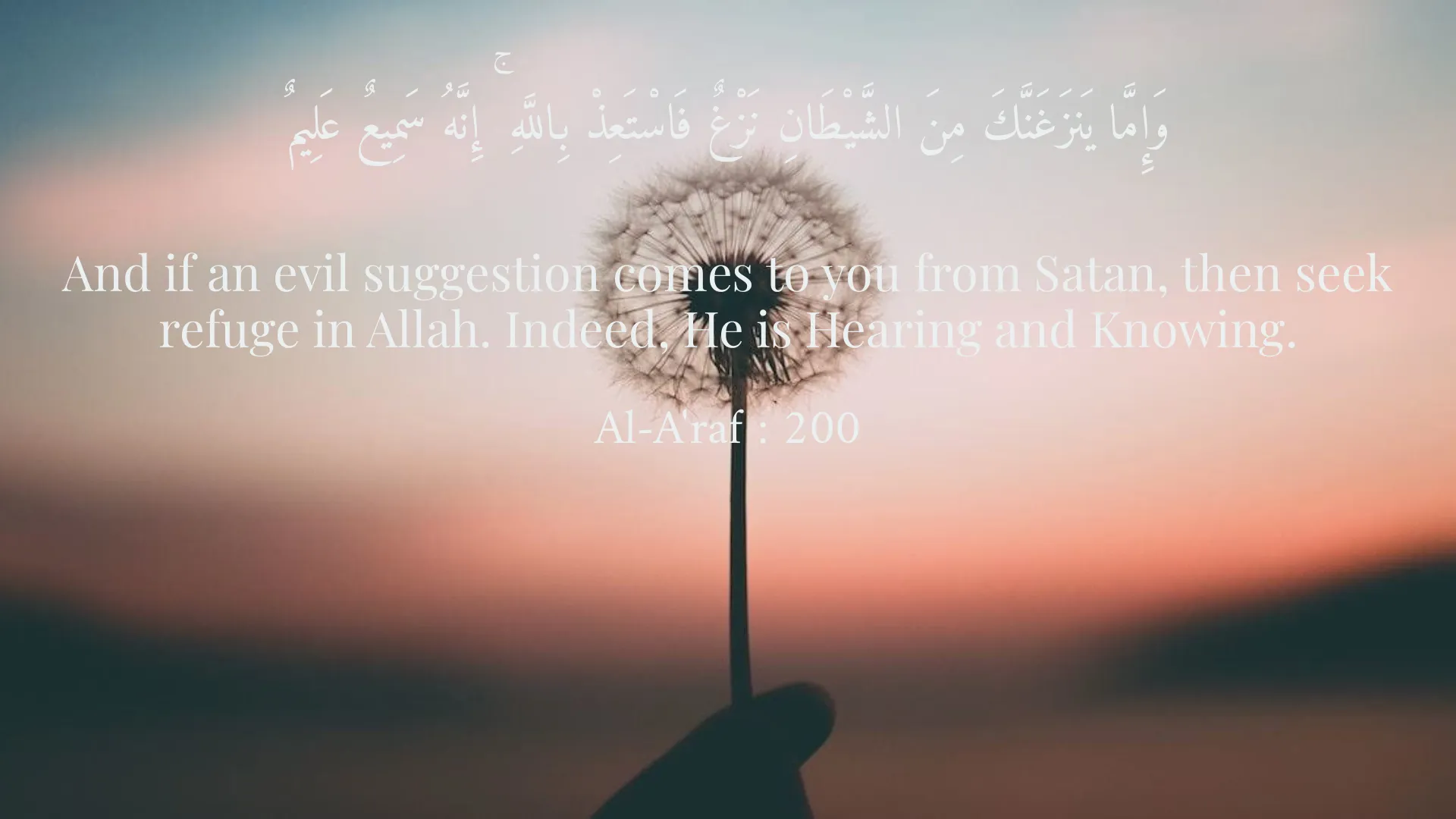
Resisting temptations is one of the fundamental challenges on the path of spiritual growth and drawing closer to God. The Holy Quran, as a guiding book, provides comprehensive and profound solutions for countering the temptations of Satan and the alluring self (Nafs al-Ammara). These solutions are not only applicable for repelling immediate temptations but also lay a strong foundation for building a resilient and faithful character. Understanding these principles and applying them in daily life is the key to achieving inner peace and steadfastness on the path of truth. Firstly, and perhaps most importantly, the Quranic remedy for encountering temptations is to 'seek refuge in Allah' (Istia'dha). Satan is an open enemy to humanity, and his temptations assault the heart and mind from all directions. The Quran explicitly addresses this issue and shows the way to counter it. In Surah Al-A'raf, verse 200, it states: "And if an evil suggestion comes to you from Satan, then seek refuge in Allah. Indeed, He is Hearing and Knowing." This verse and similar ones (like Surah Fussilat, verse 36) emphasize that the moment temptation strikes, one should immediately seek refuge in Allah's infinite power by uttering "A'udhu billahi minash-shaitanir-rajim" (I seek refuge in Allah from the accursed Satan), thus forming a spiritual shield around oneself. This seeking of refuge is not merely a verbal invocation; it is a heartfelt acknowledgment of one's weakness before Satan and an admission of Allah's infinite power. This act is the starting point for disconnecting from the source of temptation and establishing a connection with the origin of purity and truth. Secondly, 'remembrance of Allah' (Dhikr) and persistence in it. The Quran clearly states that the remembrance of Allah brings tranquility to hearts. In Surah Ar-Ra'd, verse 28, we read: "Those who have believed and whose hearts are assured by the remembrance of Allah. Unquestionably, by the remembrance of Allah hearts are assured." When one's heart is occupied with the remembrance of Allah, there is no room left for satanic temptations. Dhikr includes prayer (Salat), recitation of the Quran, glorifications (Tasbih), contemplation on divine verses, and even doing good deeds with a divine intention. Prayer, as a pillar of faith, plays a very crucial role in deterring a person from indecency and wrongdoing, as stated in Surah Al-Ankabut, verse 45: "Indeed, prayer prohibits immorality and wrongdoing." Prayer is an opportunity to disconnect from the worldly life and establish a deep connection with the Creator, in which state temptations lose their power. Thirdly, 'piety and fear of Allah' (Taqwa). Taqwa means self-restraint and observing Allah's limits in all aspects of life. One who practices Taqwa is constantly mindful of their actions and intentions, knowing that Allah is watching over them. This awareness serves as a strong barrier against temptations. In Surah Al-Imran, verse 102, it says: "O you who have believed, fear Allah as He should be feared and do not die except as Muslims." Taqwa enables a person to act with insight and not be deceived by the alluring appearances of the world. A person with Taqwa, even in moments of intense temptation, reflects on the consequences of their actions and Allah's pleasure or displeasure, and this reflection prevents them from sin. The Quran also indicates in Surah Taha, verse 124, that turning away from the remembrance of Allah (and consequently falling into temptation) leads to a constricted and difficult life: "And whoever turns away from My remembrance - indeed, he will have a difficult life, and We will gather him on the Day of Resurrection blind." This verse shows that the root of many problems and distresses is deviation from the divine path and surrender to temptations. Fourthly, 'patience and steadfastness' (Sabr). Resisting temptation requires perseverance and endurance. Sometimes, temptations recur repeatedly, putting a person in distress. In such situations, patience and forbearance against the inclination to sin are crucial. Allah, in the Holy Quran, has repeatedly given glad tidings to the patient, stating: "Indeed, Allah is with the patient" (Al-Baqarah: 153). Patience is not only about enduring hardships but also about steadfastness in doing good deeds and abstaining from sins. When a person faces a temptation, by recalling the rewards of the afterlife and the worldly and otherworldly consequences of sin, they exercise patience and refrain from committing it. This steadfastness gradually increases their power of resistance. Fifthly, 'contemplation on the nature of Satan and the weakness of his plot'. The Quran teaches us that Satan's deception is ultimately weak and baseless. In Surah An-Nisa, verse 76, it says: "Indeed, the plot of Satan has ever been weak." Satan has no independent power to force a person to sin; rather, he is merely an inviter and a tempter. A person, by their own will and choice, can reject his invitation. This understanding gives a person courage and hope that they can overcome temptations and not be deceived by him. Satan tries to deceive by beautifying sin and trivializing it, but by deeply understanding these truths, his schemes can be foiled. Finally, 'reflection on the consequences of sin and the rewards of obedience' is also a significant factor in resisting temptation. The Quran repeatedly reminds us of Paradise and Hell, Allah's pleasure and His wrath, so that a person chooses between the fleeting pleasure of sin and its eternal consequences, or the temporary hardship of obedience and its endless rewards. Remembering these truths strengthens one's resolve to resist. For example, in Surah Ibrahim, verse 22, Satan says to people after the Day of Judgment: "And Satan will say when the matter has been concluded, 'Indeed, Allah had promised you the promise of truth. And I had promised you, but I betrayed you. But I had no authority over you except that I invited you, and you responded to me. So do not blame me; but blame yourselves.'" This verse indicates that the primary responsibility for choice lies with the individual, and Satan is only an instigator, not a compeller. In summary, resisting temptations is a continuous process that requires strengthening faith, constantly seeking refuge in Allah, repeatedly remembering His presence, patience and steadfastness, and awareness of Satan's role and nature. By applying these Quranic principles, one can master their self and remain steadfast on the path of drawing closer to Allah.
Related Verses
وَإِمَّا يَنزَغَنَّكَ مِنَ الشَّيْطَانِ نَزْغٌ فَاسْتَعِذْ بِاللَّهِ ۚ إِنَّهُ سَمِيعٌ عَلِيمٌ
And if an evil suggestion comes to you from Satan, then seek refuge in Allah. Indeed, He is Hearing and Knowing.
Al-A'raf : 200
الَّذِينَ آمَنُوا وَتَطْمَئِنُّ قُلُوبُهُم بِذِكْرِ اللَّهِ ۗ أَلَا بِذِكْرِ اللَّهِ تَطْمَئِنُّ الْقُلُوبُ
Those who have believed and whose hearts are assured by the remembrance of Allah. Unquestionably, by the remembrance of Allah hearts are assured.
Ar-Ra'd : 28
اتْلُ مَا أُوحِيَ إِلَيْكَ مِنَ الْكِتَابِ وَأَقِمِ الصَّلَاةَ ۖ إِنَّ الصَّلَاةَ تَنْهَىٰ عَنِ الْفَحْشَاءِ وَالْمُنكَرِ ۗ وَلَذِكْرُ اللَّهِ أَكْبَرُ ۗ وَاللَّهُ يَعْلَمُ مَا تَصْنَعُونَ
Recite what has been revealed to you of the Book and establish prayer. Indeed, prayer prohibits immorality and wrongdoing; and the remembrance of Allah is greater. And Allah knows that which you do.
Al-Ankabut : 45
الَّذِينَ آمَنُوا يُقَاتِلُونَ فِي سَبِيلِ اللَّهِ ۖ وَالَّذِينَ كَفَرُوا يُقَاتِلُونَ فِي سَبِيلِ الطَّاغُوتِ فَقَاتِلُوا أَوْلِيَاءَ الشَّيْطَانِ ۖ إِنَّ كَيْدَ الشَّيْطَانِ كَانَ ضَعِيفًا
Those who believe fight in the cause of Allah, and those who disbelieve fight in the cause of Taghut. So fight against the allies of Satan. Indeed, the plot of Satan has ever been weak.
An-Nisa : 76
Short Story
It is narrated that in ancient times, there was a pious and wise man who was always in search of inner peace. One day, a devil approached him and tempted him to commit a sin. The wise man laughed and said, "O wretched one! You seek to deceive me, while I have been struggling with my own soul for years. How could I fall prey to you, whose plot is weak?" The devil, who did not expect such a response, despaired and left. The wise man told his disciples, "Whenever a temptation comes to you, remember that the true power belongs to God, and the devil's plot is but weakness. Illuminate your hearts with the remembrance of God so that no darkness may reside within."