Quranic Answer
To save worship from becoming a lifeless repetition, the Holy Quran guides us towards a profound understanding of its true essence. Worship in Islam is far more than a set of ritualistic movements or mere verbal recitations; it is a holistic, conscious, and heartfelt engagement with the Divine, designed to permeate every aspect of a believer's life. The Quran emphasizes several key principles that, when embraced, transform routine acts of worship into vibrant, soul-nourishing experiences. Firstly, the paramount principle is Niyyah (Intention). While often understood as a simple verbal declaration before an act of worship, its true depth lies in the sincere resolve and conscious awareness that one is performing this act purely for the sake of Allah, seeking His pleasure and closeness, not for show or worldly gain. The Quran repeatedly stresses the importance of sincerity (Ikhlas) in one's devotion. For instance, in Surah Az-Zumar (39:2-3), Allah states, "Indeed, We have sent down to you the Book with truth, so worship Allah, [being] sincere to Him in religion. Unquestionably, for Allah is the pure religion." This verse clearly indicates that the value of worship is directly tied to the purity of intention. When we consciously bring this intention to every prayer, every recitation, every act of charity, it shifts the act from a mere habit to a profound spiritual connection. It reminds us why we are doing what we are doing, preventing it from devolving into a thoughtless routine. Secondly, Tadabbur (Contemplation and Reflection) is crucial. The Quran is not merely a book to be recited beautifully; it is a guide to be understood and pondered upon. Allah urges us in Surah Muhammad (47:24): "Do they not then ponder on the Qur’an, or are there locks on their hearts?" This call to reflection extends to all forms of worship. When performing Salah (prayer), one should not just recite the verses and phrases, but actively reflect on their meanings, internalizing the grandeur of Allah, His attributes, and His commands. Understanding the praise, the supplications, and the affirmations of faith transforms the prayer from a set of sounds into a meaningful dialogue with the Creator. Similarly, when reciting the Quran, taking time to understand the tafsir (exegesis) and ponder the wisdom behind each ayah deepens the spiritual experience. This intellectual engagement, combined with heartfelt presence, unlocks the true potential of worship. Thirdly, Hudhur al-Qalb (Presence of Heart) is the very soul of worship. It means being fully attentive and engaged mentally and emotionally during the act of devotion, rather than allowing the mind to wander. The Quran warns against heedlessness in prayer in Surah Al-Ma'un (107:4-5), "So woe to those who pray, [but] who are heedless of their prayer." This heedlessness is precisely what turns worship into a lifeless repetition. Cultivating presence of heart requires conscious effort. It involves mindfulness, silencing worldly distractions, and directing one's entire being towards Allah. One way to achieve this is through Dhikr (Remembrance of Allah), as mentioned in Surah Ar-Ra'd (13:28): "Those who believe, and whose hearts are set at rest by the remembrance of Allah. Verily by the remembrance of Allah hearts are set at rest." Constant remembrance of Allah, both formal and informal, creates an inner state of tranquility and awareness that naturally flows into formal acts of worship, making them more vibrant and meaningful. Beyond these core principles, other aspects contribute to preventing lifeless repetition. Seeking Knowledge about one's faith, understanding the deeper wisdom behind Islamic rituals and injunctions, empowers the worshipper with conviction and appreciation. When one understands why they pray, why they fast, or why they give charity, these acts gain immense significance. Moreover, Variety in Worship can help keep the spiritual journey fresh. While obligatory prayers are fixed, supplementing them with voluntary prayers (Nawafil), personal supplications (Du'a), Quran recitation, charitable acts, helping others, and reflecting on Allah's creation (Tafakkur) adds richness and dynamism. Each form of worship offers a different avenue for connecting with Allah and experiencing His mercy and presence. Finally, Connecting Worship to Daily Life is essential. True worship is not confined to the mosque or a prayer mat; it is a way of life. The impact of one's Salah should be reflected in one's character, ethics, and interactions with others. Surah Al-Ankabut (29:45) states, "Indeed, prayer prohibits immorality and wrongdoing, and the remembrance of Allah is greater." This verse highlights that prayer, when performed correctly and with presence, has the power to purify one's actions and steer them away from sin. When we see our acts of worship as means to become better individuals, more conscious of Allah's presence in every moment, the rituals transcend their outward form and become living, breathing expressions of devotion. This continuous feedback loop, where worship enriches life and life enriches worship, ensures that devotion remains vibrant, profound, and far from being a lifeless repetition. It becomes an ongoing journey of spiritual growth and a constant source of peace and tranquility.
Related Verses
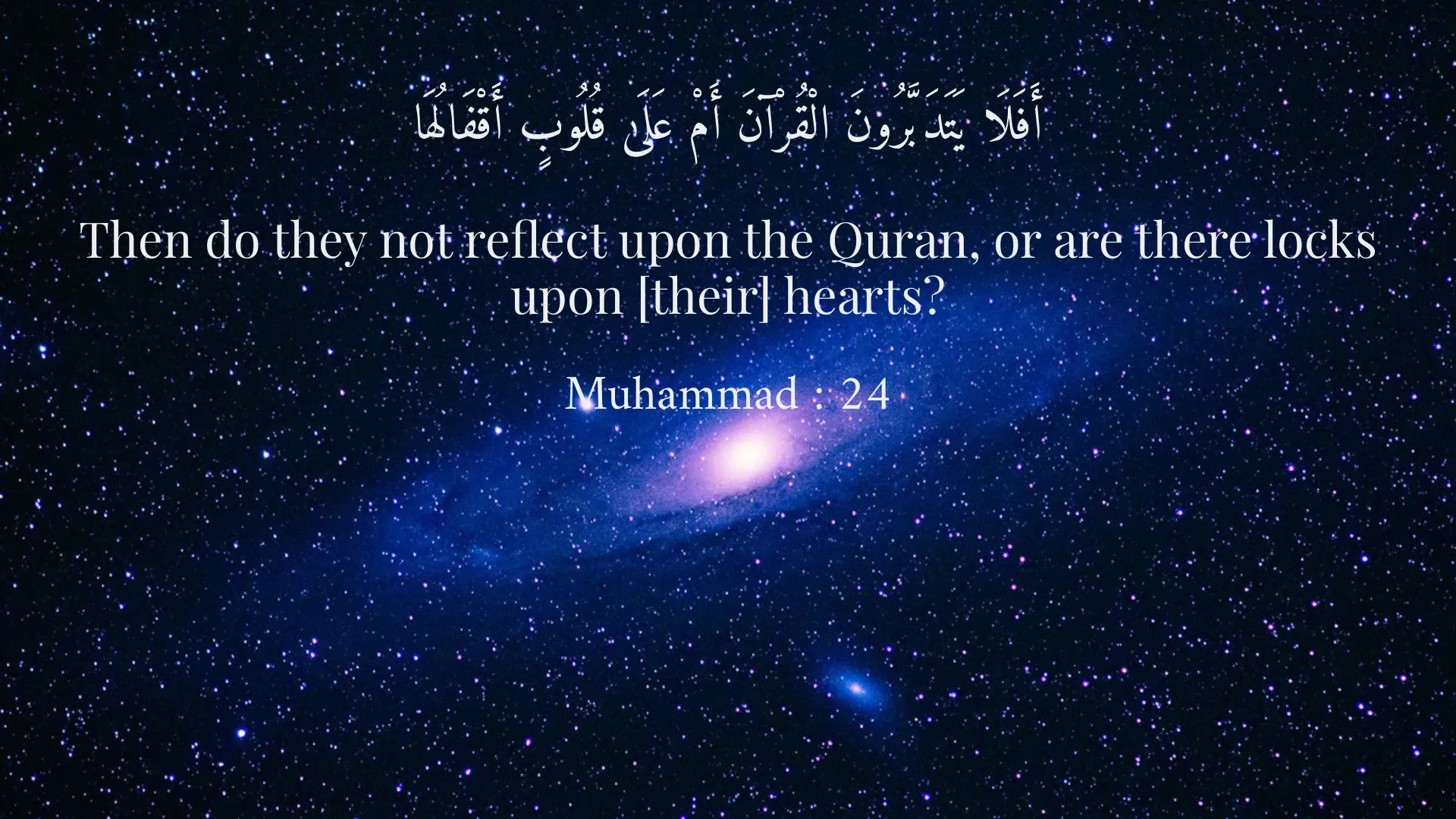
أَفَلَا يَتَدَبَّرُونَ الْقُرْآنَ أَمْ عَلَىٰ قُلُوبٍ أَقْفَالُهَا
Then do they not reflect upon the Quran, or are there locks upon [their] hearts?
Muhammad : 24
الَّذِينَ آمَنُوا وَتَطْمَئِنُّ قُلُوبُهُم بِذِكْرِ اللَّهِ ۗ أَلَا بِذِكْرِ اللَّهِ تَطْمَئِنُّ الْقُلُوبُ
Those who have believed and whose hearts are assured by the remembrance of Allah. Unquestionably, by the remembrance of Allah hearts are assured.
Ar-Ra'd : 28
إِنَّا أَنزَلْنَا إِلَيْكَ الْكِتَابَ بِالْحَقِّ فَاعْبُدِ اللَّهَ مُخْلِصًا لَّهُ الدِّينَ
Indeed, We sent down to you the Book in truth, so worship Allah, [being] sincere to Him in religion.
Az-Zumar : 2
Short Story
One day, a pious man renowned for his abundant worship approached a wise sage, in the manner of Saadi, and lamented: 'For a long time, I have performed prayers and recitations, but I no longer find the sweetness of the past, and I feel my acts of worship are merely lifeless repetitions.' The sage, with a gentle smile, replied: 'My friend, it seems you have clung to the body of worship while neglecting its soul. When you speak with a dear friend, do you merely utter words, or is your heart also with them?' The pious man responded: 'Certainly, my heart is with them.' The sage then said: 'Worship is likewise. If you do not bring your heart into it, words, bowing, and prostrating will be but empty movements. The soul of worship is the presence of the heart and contemplating the Creator's majesty. Just as a vase without flowers lacks beauty, worship without presence lacks sweetness. Water your heart and let the roots of your presence delve into the soil of knowledge, so that your worship may yield sweet fruits of tranquility and divine closeness, like a fruitful tree.'