Quranic Answer
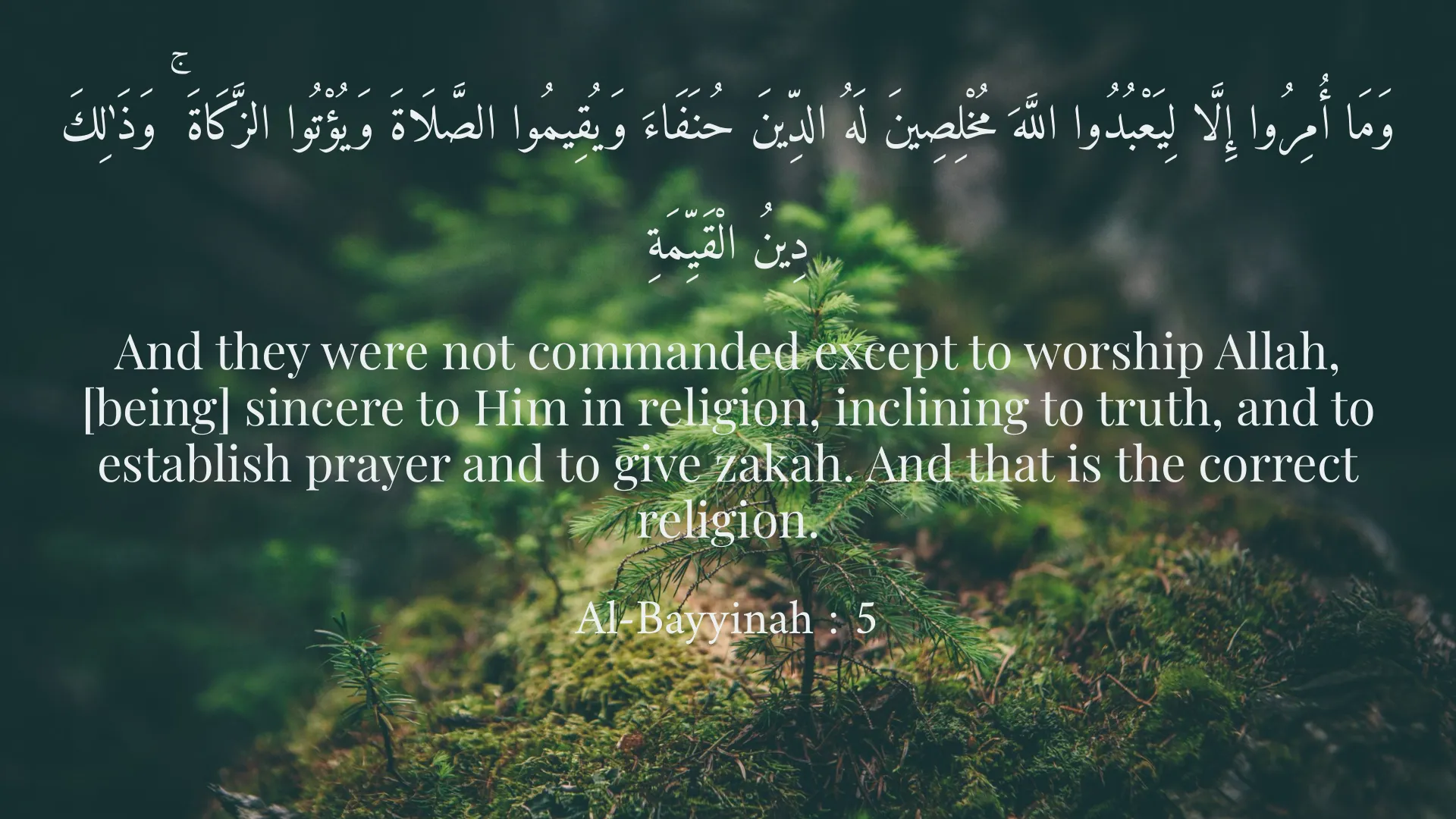
The question, "How can I separate intention from action?" touches upon a profound concept in Islamic theology. From the perspective of the Holy Quran, the notion of "separating intention from action" in the sense of completely divorcing one from the other is not only undesirable but fundamentally contrary to Quranic teachings. In fact, the Quran emphasizes the inseparable and vital link between intention (niyyah) and action (amal). Intention is the very spirit and soul of an action, imbuing it with meaning, direction, and purpose. Without a pure intention, an action, no matter how grand or outwardly impressive, can be rendered meaningless or even worthless in the sight of Allah, deprived of its divine reward. The Quran, in numerous verses, underscores the paramount importance of sincerity (Ikhlas) and the pure intention of seeking God's pleasure in all deeds. Ikhlas means performing an act solely for the sake of Allah, without any worldly motives or partners. This clearly indicates that intention is not separate from action; rather, it is the determinant of its value and acceptance. For instance, in Surah Al-Bayyinah, verse 5, Allah states: "And they were not commanded except to worship Allah, [being] sincere to Him in religion, inclining to truth, and to establish prayer and to give zakah. And that is the correct religion." This verse explicitly articulates that the essence of worship is sincere devotion to Allah, making pure intention a fundamental condition for the acceptance of any act of worship. Without it, the action becomes a hollow shell, devoid of spiritual substance. To comprehend this intrinsic link more deeply, it's essential to understand that in the Islamic worldview, every action, whether an act of worship or a social deed, must be performed with a pure intention for Allah to gain spiritual value. If the purpose behind a seemingly good deed is ostentation (riya'), seeking fame, or material gain, then even if the action appears righteous, it becomes devoid of otherworldly reward. This is where the role of intention as a qualitative and spiritual filter for actions becomes apparent. Intention delineates the boundary between a hypocritical act and a sincere one. The Quran severely condemns hypocrisy (nifaq), which is precisely the mismatch between outward appearance/action and inward belief/intention—a virtuous facade with a corrupt inner motive or a non-divine agenda. This internal contradiction not only nullifies the reward but also incurs divine displeasure. How can one strengthen this intrinsic link? The Quran guides us towards self-purification, spiritual refinement, and continuous reflection on the ultimate purpose of creation. Intention is a mental and internal phenomenon that requires cultivation and constant vigilance. A person must constantly review their intentions, ensuring that the primary motivator for their actions is the pleasure of Allah. This entails struggling against the commanding self (nafs al-ammarah), avoiding satanic whispers, and strengthening sincere faith in the heart. Whenever an individual can achieve a level of sincerity where their actions are solely for Allah, their intention and action are truly aligned, bringing them closer to true perfection. One significant aspect of this alignment is the reward for deeds. In many Quranic verses, rewards are promised based on the quality of actions and the intentions behind them. Allah is aware of the depths of the human heart and intentions, and He judges based on them, not merely on the outward appearance of an action. In Surah Hud, verse 7, Allah says: "And it is He who created the heavens and the earth in six days—and His Throne had been upon water—that He might test you, which of you is best in deed." The phrase "best in deed" (ahsan 'amala) refers to the quality of the action, a significant part of which stems from the intention. This means that merely performing an act is not enough; rather, how it is performed and the intention behind it are of paramount importance, and this is the core area where one must focus their spiritual efforts. Therefore, instead of separating intention from action, the Quran calls us towards "integration" and "alignment" of intention and action. The goal is for a person's action to be the manifestation of their pure intention, and for their intention to be reflected in their action in the best and most complete way possible. This alignment is the key to salvation and success in this world and the hereafter. Any action that does not stem from a pure intention is like a tree without roots; it will not endure and ultimately will not bear fruit. This is why great spiritual masters have always emphasized the importance of guarding and purifying one's intention. They understood that an action without a correct intention is like a lifeless body that serves no true purpose and holds no spiritual value. In daily life, this principle means constantly reviewing all our actions. When we help someone, is our intention purely to gain Allah's pleasure and assist that person, or are we seeking people's praise? When we pray, is it merely to fulfill a duty, or with full presence of heart to connect with Allah? These questions illustrate that intention is present at every moment of life, guiding and directing actions. Thus, separating intention from action is neither possible nor desirable; rather, one must strive to purify intention and place it in the path of divine pleasure, so that the action, in turn, becomes valuable and effective. This process of purifying intention is a lifelong spiritual journey that guides a person towards perfection and proximity to Allah, elevating their actions from mere physical movements to acts of profound worship and closeness to the Divine, imbuing them with true depth and meaning.
Related Verses
وَمَا أُمِرُوا إِلَّا لِيَعْبُدُوا اللَّهَ مُخْلِصِينَ لَهُ الدِّينَ حُنَفَاءَ وَيُقِيمُوا الصَّلَاةَ وَيُؤْتُوا الزَّكَاةَ ۚ وَذَٰلِكَ دِينُ الْقَيِّمَةِ
And they were not commanded except to worship Allah, [being] sincere to Him in religion, inclining to truth, and to establish prayer and to give zakah. And that is the correct religion.
Al-Bayyinah : 5
إِنَّا أَنزَلْنَا إِلَيْكَ الْكِتَابَ بِالْحَقِّ فَاعْبُدِ اللَّهَ مُخْلِصًا لَّهُ الدِّينَ
Indeed, We sent down to you the Book in truth, so worship Allah, [being] sincere to Him in religion.
Az-Zumar : 2
أَلَا لِلَّهِ الدِّينُ الْخَالِصُ ۚ وَالَّذِينَ اتَّخَذُوا مِن دُونِهِ أَوْلِيَاءَ مَا نَعْبُدُهُمْ إِلَّا لِيُقَرِّبُونَا إِلَى اللَّهِ زُلْفَىٰ ۚ إِنَّ اللَّهَ يَحْكُمُ بَيْنَهُمْ فِي مَا هُمْ فِيهِ يَخْتَلِفُونَ ۗ إِنَّ اللَّهَ لَا يَهْدِي مَنْ هُوَ كَاذِبٌ كَفَّارٌ
Unquestionably, for Allah is the pure religion. And those who take protectors besides Him [say], "We only worship them that they may bring us nearer to Allah in position." Indeed, Allah will judge between them concerning that over which they differ. Indeed, Allah does not guide he who is a liar and [habitually] ungrateful.
Az-Zumar : 3
Short Story
It is narrated that in ancient times, two men were performing prayers in a mosque. One of them prayed with such humility and devotion that it seemed as if he had detached himself from everything in the world and was connected only to his Lord. The other also prayed, but every moment he glanced around to see how people were observing him and if they were praising him. A wise mystic, who witnessed the state of these two, said: "The one who prayed with a present heart and for the pleasure of God, his act had a soul and was accepted, even if no eye saw him. But the one whose intention was for people to witness him, his prayer was a lifeless body, though it appeared virtuous outwardly." This story illustrates that in the sight of God, the quality of intention determines the value of an action, not merely its outward appearance. Therefore, instead of separating intention from action, we must unite them and purify our intentions.