Quranic Answer
Anger is a natural human emotion, a primal response to perceived threats or injustices. However, if left unchecked and uncontrolled, it can transform into a destructive force, causing profound harm to the individual experiencing it and to those around them. Islam does not deny the existence of this emotion; rather, it provides clear and comprehensive guidance on how to manage it effectively and channel it into positive virtues such as patience (sabr), forbearance (hilm), and forgiveness (afw). The journey from uncontrolled anger to profound patience is not a quick or easy one; it is a spiritual process that demands self-awareness, continuous practice, and seeking assistance from Allah Almighty. The Holy Quran serves as the primary source for these profound directives, offering deep principles and remedies for this complex psychological state. Firstly, and of paramount importance, we must recognize that the Quran emphasizes the virtues of suppressing rage and pardoning people. In Surah Ali 'Imran, verse 134, Allah describes the righteous (Muttaqeen) with magnificent attributes, among them: “وَالْكَاظِمِينَ الْغَيْظَ وَالْعَافِينَ عَنِ النَّاسِ ۗ وَاللَّهُ يُحِبُّ الْمُحْسِنِينَ” (And those who suppress their anger and pardon people - and Allah loves the doers of good). This verse is the cornerstone for understanding how to manage anger. “Suppressing their anger” (Al-Kaazimeen al-Ghaydh) means to restrain anger when it surges, preventing its outward expression or impulsive actions that could harm oneself or others. This does not imply denying the feeling of anger itself, but rather gaining mastery over the reactions it provokes. It is the art of self-control and retaining composure during the most turbulent moments. When a person becomes angry, there is a natural inclination towards retaliation or returning harm. However, one who suppresses their rage transcends this initial urge, actively working to calm themselves. This act is not a sign of weakness; on the contrary, it is a tremendous display of inner strength, indicating a person's dominion over their desires and over the whispers of Satan. Following this, the second part of the verse highlights “and pardon people” (Al-Aafeena an An-Naas). Forgiveness (Al-Afw) represents the pinnacle of excellence (Ihsan) after successfully suppressing one's anger. Once an individual has managed to control their rage, they consciously choose to overcome the harm inflicted upon them and grant forgiveness to the other party. This demands a capacious heart, a pure soul, and the capacity to perceive situations from a broader perspective, transcending the immediate moment of provocation. Forgiveness breaks the destructive cycle of retaliation and opens the door to reconciliation and peace. Allah loves “the doers of good” (Al-Muhsineen), who are those who attain this elevated level of ethical and spiritual conduct. This benevolence is not merely for others; it is also a profound act of kindness towards oneself, liberating the soul from the burdensome weight of anger, resentment, and grudges that impede spiritual growth and inner peace. Indeed, anger is a fire that consumes its possessor before it harms anyone else, and forgiveness extinguishes this fire, replacing it with tranquility and serenity. Secondly, patience (Sabr) is an indispensable pillar for transforming anger. In Surah Al-Baqarah, verse 153, Allah says: “يَا أَيُّهَا الَّذِينَ آمَنُوا اسْتَعِينُوا بِالصَّبْرِ وَالصَّلَاةِ ۚ إِنَّ اللَّهَ مَعَ الصَّابِرِينَ” (O you who have believed, seek help through patience and prayer. Indeed, Allah is with the patient). Patience here is not merely passive endurance; it is an active internal force that empowers the believer to remain steadfast on truth, endure hardships, and control their impulses. When anger arises, patience can act as a crucial barrier, preventing rashness and impulsiveness. In this context, patience means taking pause, reflecting before reacting, and seeking to understand the true underlying causes of the anger, then addressing them wisely instead of through an emotional outburst. Prayer (Salah) is an extraordinary means of seeking Allah's help and calming the soul. Standing before Allah, supplicating to Him, grants an individual a profound sense of peace and tranquility that assists in overcoming moments of intense anger. Thirdly, seeking refuge with Allah from the accursed Satan (Isti'adhah). Anger is often an entry point for Satan to sow discord and corrupt relationships. In Surah Fussilat, verse 36, the Quran guides us: “وَإِمَّا يَنزَغَنَّكَ مِنَ الشَّيْطَانِ نَزْغٌ فَاسْتَعِذْ بِاللَّهِ ۚ إِنَّهُ هُوَ السَّمِيعُ الْعَلِيمُ” (And if an evil suggestion comes to you from Satan, then seek refuge in Allah. Indeed, He is the All-Hearing, the All-Knowing). When you feel the spark of anger igniting within you, know that Satan is attempting to incite discord between you and others, or even within yourself. Seeking refuge (Isti'adhah) is the believer's weapon; it is an acknowledgment that this negative force is not inherent to you, but rather an external source attempting to seize control. This act of seeking refuge is not merely uttering words; it is a profound psychological and spiritual shift, where one turns their heart to their Creator, seeking His aid and protection from the evil of Satan and his whispers. Remember that Allah is All-Hearing, All-Knowing; He knows what is in the hearts and hears the supplications of His servants, and He is Capable of removing any disturbance from the hearts. Fourthly, the remembrance of Allah (Dhikr) and the tranquility of the heart. Allah states in Surah Ar-Ra'd, verse 28: “الَّذِينَ آمَنُوا وَتَطْمَئِنُّ قُلُوبُهُم بِذِكْرِ اللَّهِ ۗ أَلَا بِذِكْرِ اللَّهِ تَطْمَئِنُّ الْقُلُوبُ” (Those who have believed and whose hearts are assured by the remembrance of Allah. Unquestionably, by the remembrance of Allah hearts are assured). The remembrance of Allah, whether through glorification (tasbih), declarations of His oneness (tahlil), recitation of the Quran, or even merely contemplating Allah's greatness and power, has an immense effect on soothing the soul and restoring serenity to the heart. A heart disturbed by anger needs an anchor, and the remembrance of Allah is that anchor. When a person remembers their Lord, they recall that everything is by Allah's decree, that this world is fleeting, and that the Hereafter is what truly matters. This perspective diminishes the significance of trivial matters that provoke anger and brings internal calm. This tranquility aids in viewing the situation from a broader, more sagacious perspective, far removed from momentary emotional outbursts. Fifthly, understanding the root causes of anger and actively working to address them. Anger is frequently a symptom of deeper underlying factors such as frustration, fear, unrealistic expectations, or even lack of adequate sleep and proper nutrition. The Quran encourages deep reflection (Tafakkur) and contemplation (Tadabbur) on oneself and the universe. Understanding these root causes through introspection and self-awareness of your reactions, and acknowledging your vulnerabilities, is a crucial step towards transformation. For instance, anger may stem from arrogance and a desire for control, or from an inability to accept divine decree (Qada wa Qadar), or from harboring resentment towards others. Addressing these spiritual ailments with the light of Quranic guidance is an essential part of the transformational journey. Belief in divine decree reduces a person's sorrow over what has passed or what has not been achieved, thereby lessening sources of anger. Similarly, humility and steering clear of arrogance protect an individual from many situations that incite anger when they feel they have not been treated with the respect they believe they deserve. Sixthly, changing one's physical state and contemplating the consequences. Although these are primarily prophetic guidelines (Sunnah), they are perfectly aligned with the Quranic spirit of self-control. When one is angry, it is beneficial to change one's posture (from standing to sitting, from sitting to lying down), to perform ablution (wudu), or to remain silent. These simple actions provide the mind with an opportunity to calm the emotion and dissipate the destructive energy of anger. Reflecting upon the dire consequences of uncontrolled anger, whether at a personal level (regret, loss of relationships) or a spiritual level (Allah's displeasure), strengthens the resolve to curb its impulses. The Quran is replete with stories and lessons that highlight the positive outcomes of patience and forgiveness, and the negative consequences of anger and haste. In conclusion, transforming anger into patience is a lifelong process of self-discipline and spiritual cultivation, firmly rooted in profound Quranic principles. It begins with suppressing rage and granting forgiveness, is strengthened by patience and seeking assistance through prayer, and is supported by seeking refuge from Satan and continuous remembrance of Allah. It is a journey towards purifying and refining the self, to achieve inner tranquility and divine contentment, and to reach the status of “the doers of good” (Al-Muhsineen) whom Allah loves. This transformation is not merely replacing one emotion with another; it is a fundamental shift in how we respond to challenging situations and an embodiment of higher Islamic values in our daily lives. This leads to a life filled with greater calmness, peace, and happiness, and improves our relationships with those around us. It is an invitation to reflect upon ourselves, hold ourselves accountable, and strive continuously towards perfecting our character, guided by the light of divine revelation.
Related Verses
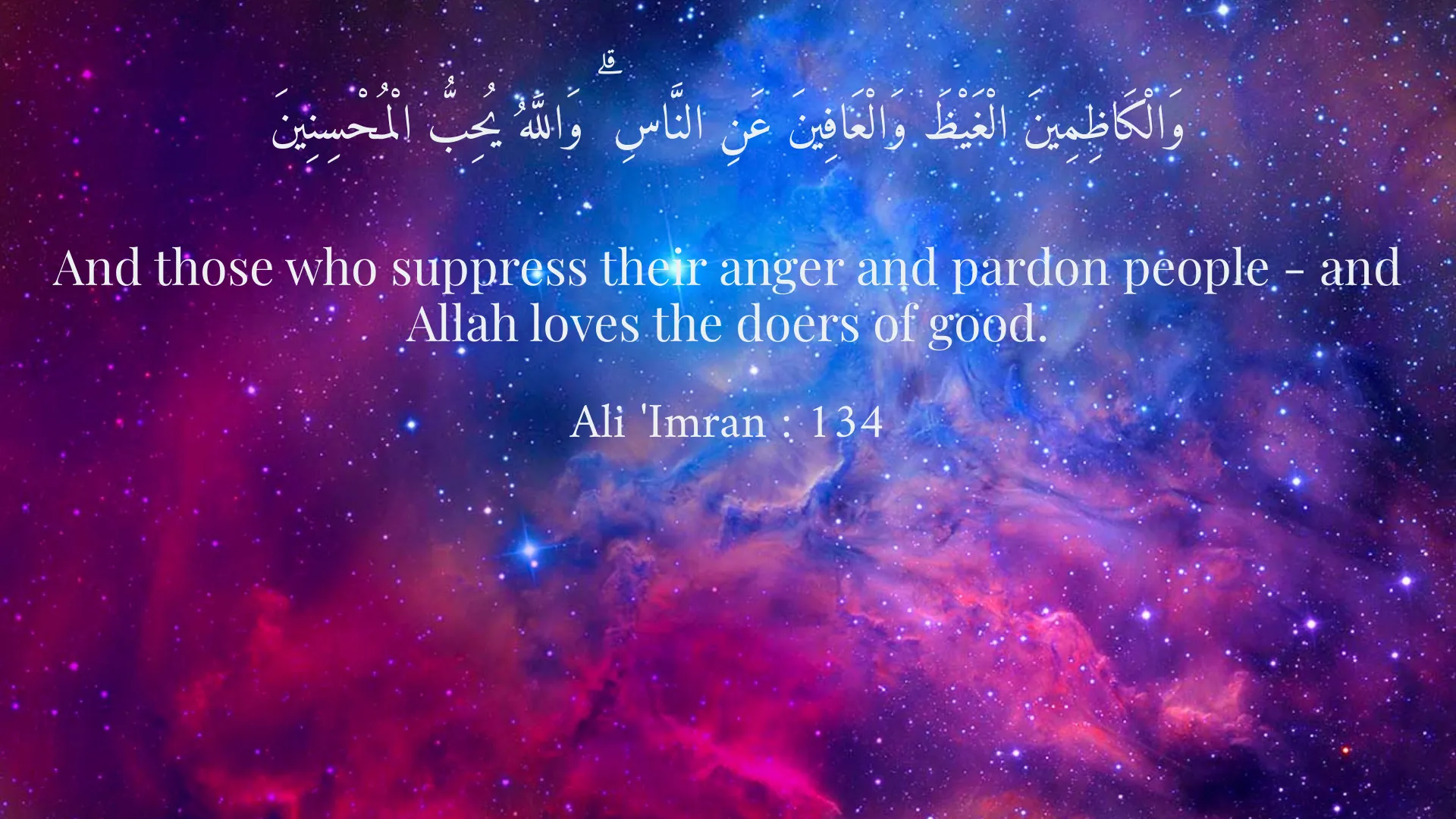
وَالْكَاظِمِينَ الْغَيْظَ وَالْعَافِينَ عَنِ النَّاسِ ۗ وَاللَّهُ يُحِبُّ الْمُحْسِنِينَ
And those who suppress their anger and pardon people - and Allah loves the doers of good.
Ali 'Imran : 134
يَا أَيُّهَا الَّذِينَ آمَنُوا اسْتَعِينُوا بِالصَّبْرِ وَالصَّلَاةِ ۚ إِنَّ اللَّهَ مَعَ الصَّابِرِينَ
O you who have believed, seek help through patience and prayer. Indeed, Allah is with the patient.
Al-Baqarah : 153
وَإِمَّا يَنزَغَنَّكَ مِنَ الشَّيْطَانِ نَزْغٌ فَاسْتَعِذْ بِاللَّهِ ۚ إِنَّهُ هُوَ السَّمِيعُ الْعَلِيمُ
And if an evil suggestion comes to you from Satan, then seek refuge in Allah. Indeed, He is the All-Hearing, the All-Knowing.
Fussilat : 36
الَّذِينَ آمَنُوا وَتَطْمَئِنُّ قُلُوبُهُم بِذِكْرِ اللَّهِ ۗ أَلَا بِذِكْرِ اللَّهِ تَطْمَئِنُّ الْقُلُوبُ
Those who have believed and whose hearts are assured by the remembrance of Allah. Unquestionably, by the remembrance of Allah hearts are assured.
Ar-Ra'd : 28
Short Story
I heard that an angry king sentenced a prisoner to death. In that moment of despair, the prisoner uttered a harsh word to the king, which further incensed him. A wise minister present at the court sought permission from the king to interpret the prisoner's words. The minister said: "O King, he said: 'Those who suppress their anger and pardon people - and Allah loves the doers of good.'" The king was pleased with this interpretation and pardoned the prisoner. Another malevolent minister interjected, saying: "O King, he actually cursed you!" The king replied: "His lie, which led to a good deed, is more pleasing to me than your truth, which would have led to evil." This beautiful story teaches us how, with wisdom and forbearance, the flame of anger can be extinguished and replaced by forgiveness and kindness, even in moments of extreme provocation. It illustrates that patience and self-control are vital not only for our inner peace but also for fostering peace and goodness in our relationships with others.