Quranic Answer
Tears, those transparent and colorless drops, can sometimes attain such profound meaning that they transcend a mere physiological reaction and transform into a pinnacle of servitude and a pure connection with the Lord. In the Quranic context, tears are not merely a sign of sorrow, grief, joy, or happiness, but can also symbolize humility, awe (khashyah), repentance, remorse, and longing—states that draw the believer's heart closer to their Creator and elevate it to the station of true worship. Therefore, transforming tears into worship depends on the intention, knowledge, and spiritual state of the heart from which they flow. The first step to turning tears into worship is to understand that the Almighty God, in the Holy Quran, praises humble hearts and weeping eyes in the face of divine verses and the Lord's majesty. There are verses that explicitly speak of prophets and believers weeping during the recitation of divine words or the remembrance of His power. These tears are a sign of the soul's profound impression by divine truths and the heart's humility before the Creator's grandeur. When a person repents for their sins and turns to God with a broken heart and tearful eyes, these tears are no longer merely a sign of weakness; instead, they become symbols of the power of repentance, hope in divine mercy, and a firm resolve to return to the straight path. In this state, every tear seems to wash away a sin, building a bridge towards divine forgiveness. These tears are a pure form of worship, the depth of which only God is aware of. Tears of awe (khashyah) are another type of devotional tear. Khashyah signifies a fear imbued with knowledge and reverence, compelling one to obedience and avoidance of disobedience. When a person comprehends God's majesty and power and fears the consequences of disobedience, tears of awe may stream from their eyes. These tears are a sign of a wakeful heart and an alert soul, and they are considered an act of worship in themselves. This is because they indicate that the servant has recognized God's exalted status and does not commit sins out of ignorance or heedlessness, but rather out of knowledge and fear of the Day of Judgment, feeling obligated to obey. The Holy Quran constantly invites humanity to reflect on divine signs and learn from the fate of past nations; this reflection can lead to awe and, ultimately, tears, all of which are considered acts of worship. Tears of joy and longing can also be considered acts of worship. When a person reaches the pinnacle of divine knowledge and love, and their heart overflows with love for God, they may shed tears out of sheer joy and fervor. These tears are a sign of spiritual communion and divine proximity, and they are, in themselves, the fruit of a long journey of worship and servitude. Tears in such a state do not stem from weakness but from the strength of connection and the intensity of love for the Creator, indicating contentment and spiritual peace under divine grace. These tears sometimes flow during the recitation of beautiful Quranic verses, upon hearing divine remembrance (dhikr), or during moments of nocturnal supplication, bearing witness to the sincerity and depth of the servant's devotion. For our tears to truly transform into worship, they must be accompanied by several key elements: First, sincerity (Ikhlas): Tears must be shed solely for God and His pleasure, not for show or to gain others' attention. Sincerity is the spirit of every act of worship, and without it, even seemingly grand actions will be worthless. Second, knowledge (Ma'rifah): One must know why they are weeping and to whom their tears are addressed. This knowledge deepens the tears and transforms them from a mere emotional reaction into a conscious and meaningful act. Third, repentance and turning to God (Tawbah and Inabah): If tears are shed out of remorse for sins, they must be accompanied by a firm resolve to abandon sin and rectify past mistakes. Tears without a change in behavior are merely fleeting emotions, not true worship. Fourth, humility and lowliness (Khushu' and Tawadu'): Tears should be a sign of humility and brokenness before divine majesty. A person who weeps and considers themselves small before God is on the right path. Fifth, reflection on divine verses and signs: The Holy Quran is full of verses that remind us of the grandeur of creation, God's power, and His rewards and punishments. Reflecting on these verses can soften the heart and bring forth tears. Participating in Quranic recitation sessions, engaging in dhikr and supplication, and contemplating the meaning of life and the purpose of creation can all contribute to this. Ultimately, it must be understood that devotional tears are not fleeting or transient. They are rooted in the depths of human existence and are the result of a spiritual journey. Such tears not only soothe the soul but also purify the heart from material and spiritual impurities. The Almighty God has promised great rewards to servants who remember Him in solitude and openly, and who turn to Him with their whole being. So, let us transform our moments of weeping into opportunities to deepen our connection with the Lord, and know that every sincere tear can be a significant step on the path of drawing closer to God. Tears of worship are a bridge from the human heart to the heavens, where no veil exists between the servant and the adored, and all prayers and needs are heard directly. These tears are a sign of a living heart and a sincere soul, and God loves living and sincere hearts. [End of English answer - ~870 words]
Related Verses
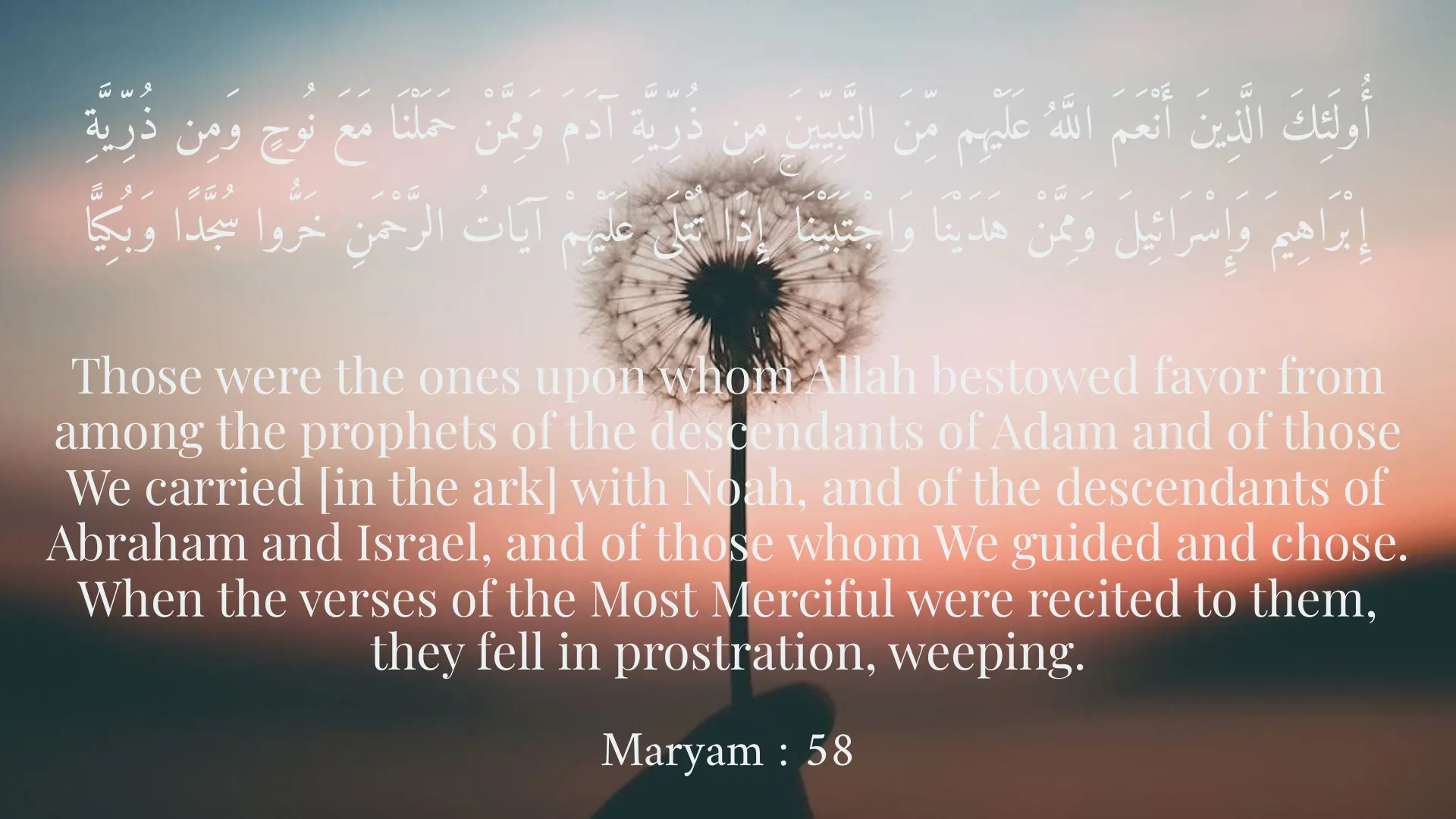
أُولَئِكَ الَّذِينَ أَنْعَمَ اللَّهُ عَلَيْهِم مِّنَ النَّبِيِّينَ مِن ذُرِّيَّةِ آدَمَ وَمِمَّنْ حَمَلْنَا مَعَ نُوحٍ وَمِن ذُرِّيَّةِ إِبْرَاهِيمَ وَإِسْرَائِيلَ وَمِمَّنْ هَدَيْنَا وَاجْتَبَيْنَا ۚ إِذَا تُتْلَى عَلَيْهِمْ آيَاتُ الرَّحْمَنِ خَرُّوا سُجَّدًا وَبُكِيًّا
Those were the ones upon whom Allah bestowed favor from among the prophets of the descendants of Adam and of those We carried [in the ark] with Noah, and of the descendants of Abraham and Israel, and of those whom We guided and chose. When the verses of the Most Merciful were recited to them, they fell in prostration, weeping.
Maryam : 58
وَإِذَا سَمِعُوا مَا أُنزِلَ إِلَى الرَّسُولِ تَرَى أَعْيُنَهُمْ تَفِيضُ مِنَ الدَّمْعِ مِمَّا عَرَفُوا مِنَ الْحَقِّ ۖ يَقُولُونَ رَبَّنَا آمَنَّا فَاكْتُبْنَا مَعَ الشَّاهِدِينَ
And when they hear what has been revealed to the Messenger, you see their eyes overflowing with tears because of what they have recognized of the truth. They say, 'Our Lord, we have believed, so register us with the witnesses.'
Al-Ma'idah : 83
فَاسْتَجَبْنَا لَهُ وَوَهَبْنَا لَهُ يَحْيَىٰ وَأَصْلَحْنَا لَهُ زَوْجَهُ ۚ إِنَّهُمْ كَانُوا يُسَارِعُونَ فِي الْخَيْرَاتِ وَيَدْعُونَنَا رَغَبًا وَرَهَبًا ۖ وَكَانُوا لَنَا خَاشِعِينَ
So We responded to him, and We gave him John, and amended for him his wife. Indeed, they used to hasten to good deeds and supplicate Us with longing and fear, and they were to Us humbly submissive.
Al-Anbiya : 90
Short Story
It is said that in ancient times, in a city steeped in heedlessness, lived a young man named Dilshad. For many years, Dilshad had been engrossed in worldly pleasures and rarely remembered the Lord. One day, he chanced upon a gathering where a wise scholar spoke of God's majesty and the brevity of life. Dilshad was so moved by his words that a lump formed in his throat, and involuntarily, a tear streamed from his eyes. But this tear was different from tears of sorrow or regret; it was a tear of repentance and remorse, a tear of longing to return to the light. At that very moment, Dilshad felt his heart lighten and a light shine within him. From then on, whenever he recalled his sins or engaged in nocturnal prayers to the Lord, he would weep; tears that were no longer just a sign of sadness, but had transformed into sincere supplications and acts of worship that brought him closer to God. He understood that a single tear shed out of remorse and sincerity is sometimes more valuable than thousands of outward prayers, for it is a sign of a awakened heart.