Quranic Answer
Loneliness is a state that many individuals experience at various stages of life. This feeling can sometimes be overwhelming, leading to a sense of isolation and detachment. However, the perspective offered by the Holy Quran teaches us that every situation, even loneliness and solitude, can be transformed into a unique opportunity for growth, contemplation, and spiritual elevation. While the Quran does not directly address the word 'loneliness' in its modern psychological sense, it provides principles and guidance that help individuals, when faced with moments of solitude and isolation, to find a path to growth and a deeper connection with the Creator, rather than succumbing to despair and sorrow. It encourages utilizing this period for self-development and spiritual advancement. The first and most crucial step in this journey is to change one's perception of loneliness. Instead of viewing loneliness as a deficiency, a flaw, or a problem to be avoided, one can regard it as a sacred and fruitful space for introspection, self-discovery, and inner renewal. Let us remember that Prophet Muhammad (PBUH), before his prophethood, spent extended periods of time in solitary reflection in the Cave of Hira. This seclusion and isolation served as the groundwork for receiving divine revelation and initiating the greatest human transformation and a mission that reshaped history. This historical example clearly demonstrates that isolation, when accompanied by the right intention and a divine purpose, and directed towards self-focus and connection with the Creator rather than mere social withdrawal, not only prevents stagnation and despondency but also provides fertile ground for profound inner discoveries, deep self-awareness, and fundamental transformations. This type of solitude is, in essence, a 'seclusion with oneself and the Creator,' opening the doors to divine knowledge and inner insight, liberating the individual from worldly distractions. One of the most fundamental and effective ways to transform loneliness into an opportunity is through 'Dhikr' (remembrance of Allah) and 'Tafakkur' (contemplation). The human heart is intrinsically inclined towards tranquility, assurance, and connection with Absolute Truth. The Holy Quran states in Surah Ar-Ra'd, verse 28: "Those who have believed and whose hearts are assured by the remembrance of Allah. Unquestionably, by the remembrance of Allah hearts are assured." This verse clearly indicates that true and genuine peace of heart is achieved solely through the remembrance and invocation of God. When a person finds themselves in solitude, they are afforded a unique opportunity to direct their full attention, focus, and heartfelt presence towards Dhikr and the remembrance of Allah, free from external distractions and the clamor of the world. Reading the Quran with contemplation of its meanings, reciting glorifications (Tasbih), seeking forgiveness (Istighfar), and engaging in humble and sincere supplication (Du'a), are all powerful tools to fill the space of loneliness with the divine presence. This presence not only eradicates the sense of isolation and separation, freeing the soul from depression and despair, but also saturates the heart with certainty, tranquility, and peace, granting an inner spiritual strength that cannot be found in any gathering or superficial interaction with others. This remembrance of Allah is not merely lip service but a state of the heart that leads to a deeper presence and greater knowledge of the Lord, transforming loneliness into a fruitful spiritual retreat. 'Patience (Sabr) and Prayer (Salat)' are also essential pillars that the Quran recommends for facing life's difficulties, hardships, and challenges, and this recommendation applies to states like loneliness as well. In Surah Al-Baqarah, verse 153, it is stated: "O you who have believed, seek help through patience and prayer. Indeed, Allah is with the patient." Loneliness can be a form of divine test or trial that requires patience and steadfastness. By seeking refuge in prayer, a person establishes a direct and unmediated connection with the Creator, a connection that has no intermediaries and directly links the heart to the origin of existence. Prayer is not merely an obligation or a religious duty; it is an ascension that elevates the soul towards the heavens, and there, a person does not feel alone, for they are in the presence and audience of the Lord. Moments of solitude are the best and most opportune times to prolong prostrations (Sujood), deepen supplications (Qunoot), and communicate with Allah with one's entire being and sincere intention. These moments bestow a sublime meaning upon loneliness, transforming it from a heavy psychological burden into a blessing for spiritual growth and closeness to Allah. Furthermore, solitude offers an unparalleled opportunity for 'Tafakkur and Tadabbur' (deep contemplation and reflection). The Quran repeatedly calls upon humanity to deeply ponder the creation of the heavens and the earth, the wonders within themselves, and the divine signs and indications in the universe and within one's own being. Surah Al-Imran, verse 191 states: "Those who remember Allah while standing or sitting or [lying] on their sides and contemplate in the creation of the heavens and the earth, [saying], 'Our Lord, You have not created this in vain; exalted are You [above such a thing]; then protect us from the punishment of the Fire.'" It is in solitude that the human mind is freed from the clamor of the external world and daily preoccupations, allowing it to focus completely and delve into the depths of existential matters, the purpose of life, and the meaning of existence. This contemplation can involve reviewing one's past life, evaluating actions and decisions, planning meticulously for the future, and gaining a better understanding of the purpose of creation and humanity's place within it. During this time, one can identify their strengths and weaknesses and strive to improve and strengthen them. This deep and organized reflection lays the foundations for intellectual, personal, and spiritual growth, bestowing upon the individual insight and wisdom. Additionally, during periods of loneliness, one can engage in 'seeking knowledge and enlightenment.' Many great scholars, scientists, and mystics have spent long hours in solitude studying, researching, and deepening their knowledge. The Holy Quran places great emphasis on knowledge and learning, and on reflecting upon divine verses. Utilizing lonely times to deeply study the Quran and its interpretations (Tafsir), Hadith, the biography of the Prophet (PBUH) and the Ahlul Bayt (AS), or even other beneficial worldly sciences that help in better understanding the world, oneself, and society, can transform this period into a peak of intellectual and spiritual flourishing. This knowledge not only fills the void of loneliness and gives meaning to life but also prepares a person to play a more effective and constructive role in society in the future. Finally, it is essential to remember that Allah Almighty is always closer to a person than anything else. The Quran in Surah Qaf, verse 16, states: "And We are closer to him than [his] jugular vein." This verse indicates that a person is never truly alone, for God is closer to them than their jugular vein, always watching and present. This profound understanding transforms the feeling of loneliness into unparalleled tranquility and a permanent sense of divine presence. Solitude, instead of being a distance and separation, can be a bridge to achieving this closeness and the depth of divine presence. With this monotheistic and spiritual outlook, loneliness loses its negative connotation and becomes a precious opportunity for intimate communion with the Eternal and Everlasting Beloved, Allah. This communion not only ensures individual growth and moral perfections but also strengthens the foundations for eternal felicity and divine pleasure. Therefore, whenever you feel lonely, view it as a sign to return to yourself, focus on your inner being, and turn towards your Lord, and make the most of this opportunity for your spiritual, intellectual, and self-development to become a more complete human being.
Related Verses
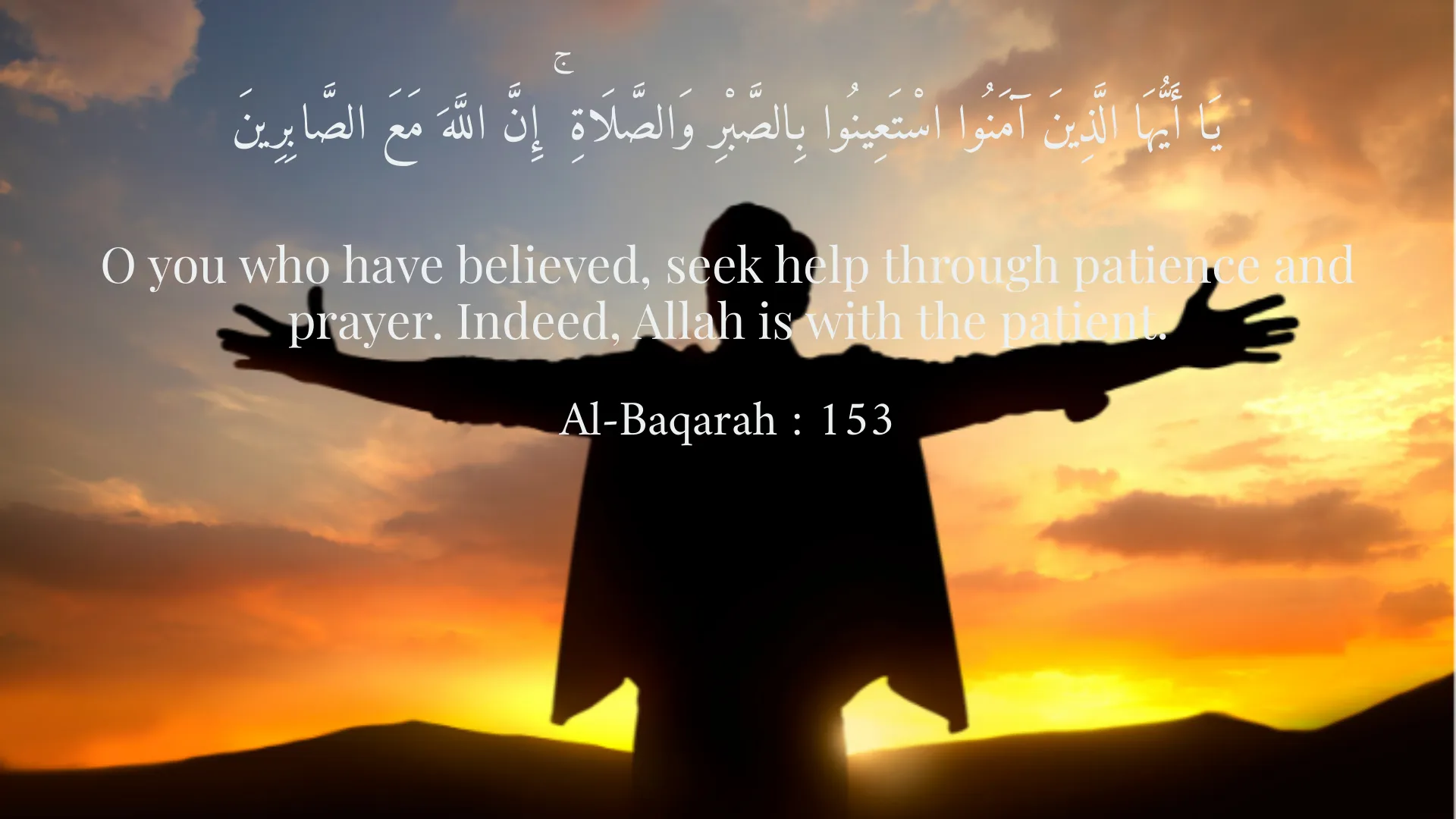
يَا أَيُّهَا الَّذِينَ آمَنُوا اسْتَعِينُوا بِالصَّبْرِ وَالصَّلَاةِ ۚ إِنَّ اللَّهَ مَعَ الصَّابِرِينَ
O you who have believed, seek help through patience and prayer. Indeed, Allah is with the patient.
Al-Baqarah : 153
الَّذِينَ آمَنُوا وَتَطْمَئِنُّ قُلُوبُهُم بِذِكْرِ اللَّهِ ۗ أَلَا بِذِكْرِ اللَّهِ تَطْمَئِنُّ الْقُلُوبُ
Those who have believed and whose hearts are assured by the remembrance of Allah. Unquestionably, by the remembrance of Allah hearts are assured.
Ar-Ra'd : 28
وَنَحْنُ أَقْرَبُ إِلَيْهِ مِنْ حَبْلِ الْوَرِيدِ
And We have already created man and know what his soul whispers to him, and We are closer to him than [his] jugular vein.
Qaf : 16
Short Story
A pure-hearted dervish spent his days in quiet seclusion, immersed in the remembrance of God and worship. A king heard of his state and wondered, "What need does this man have to withdraw from people and forsake the world?" He went to the dervish and asked, "O wise elder, why have you chosen this corner of solitude and distanced yourself from the company of people? Do you lack anything?" The dervish smiled and replied, "O King! In this solitude, I have found everything. Here, the heart is at peace, the mind is free, and I am in constant conversation with the true Beloved. People are sometimes lonely even in a crowd, but in my solitude, I am accompanied by the Creator of the worlds. This is an opportunity to see oneself and attain a deeper understanding of life and its purpose." The king pondered these words and realized that some moments of solitude are more fruitful than a hundred crowded gatherings, provided they are accompanied by wisdom.