Quranic Answer
Title: The Essence of Worship in Islamic Teachings Worship, in its essence, embodies the core of a human's relationship with Allah, serving as a critical touchstone for understanding one's faith and existence. To truly grasp the profound meaning of worship as depicted in the Holy Quran, we first need to explore its multifaceted definitions and implications, illuminating the significance it holds in the lives of Muslims around the globe. Worship signifies much more than prayer or fasting; it encapsulates the entire spectrum of servitude to Allah, reflecting a deeply personal and spiritual connection between the Creator and the created. At the heart of this relationship lies a profound declaration from the Quran in Surah Adh-Dhariyat that states, 'And I did not create the jinn and mankind except to worship Me.' This verse, found in verse 56, is pivotal in defining the purpose of creation. It illustrates that the primary objective of both human beings and jinn is the act of worshipping Allah. This concept places worship as a central pillar of existence; it is not merely an action but a fundamental aspect of human identity and existence. Worship, as conveyed by various interpretations, extends beyond the confines of ritual observance. While traditional acts such as praying (Salah) and fasting (Sawm) are undoubtedly critical components of worship in Islam, the Quran expands this definition considerably. In Surah Al-Baqarah, verse 177, Allah provides insight into what constitutes righteousness: 'Righteousness is in one’s faith in Allah and the Last Day...' This suggests that true worship encompasses every act performed with the sincere intention of attaining closeness to Allah. Such acts can range from charity (Zakat) and helping others, to simple daily actions carried out with the intention of pleasing Allah. To further understand the broader implications of worship, we must recognize that sincerity and pure intention are paramount. In Surah Al-Baqarah, verse 21, Allah addresses humanity directly, saying, 'O mankind, worship your Lord...' This call invites individuals to engage in worship that emanates from the heart, underscoring the importance of genuine effort and intent. When one combines servitude with authenticity, the worship transforms into a personal journey rather than merely fulfilling an obligation. This transformation is essential in nurturing a spiritual connection that resonates on an emotional level. The Quran provides numerous insights on how worship should manifest in the daily lives of Muslims. It is the underpinning of a Muslim's identity, guiding their actions, thoughts, and interactions with others. Worship is not merely an isolated act; it is deeply interwoven with how one lives their life in accordance with Islamic principles. For instance, engaging in honest business practices, honoring one's parents, or treating others with kindness and respect can all be acts of worship when they are performed with Allah's pleasure in mind. This illustrates that worship transcends the physical acts of devotion and encompasses all aspects of life as a Muslim. Understanding worship in daily life implies cultivating a loving relationship with Allah that fosters a continuous pursuit of His commands across various spheres of existence. This relationship cultivates a sense of accountability, pushing believers to conduct themselves ethically and compassionately. Furthermore, the Quran provides believers with various avenues for maintaining an engaged and living worship. The remembrance of Allah (Dhikr), engaging with the Quran, and seeking knowledge are all forms of worship that cultivate a deep connection with the Divine. Moreover, the concept of worship in Islam promotes community and encourages believers to act collectively for the common good. The teachings of Islam promote investing in societal welfare as a form of worship, suggesting that the efforts made towards uplifting humanity can bring individuals closer to Allah. Collaborating with others in community service, advocating for justice, and striving to eliminate social injustices can all be manifestations of worship, as they align with the ultimate aim of pleasing Allah. Additionally, in the Quran, Allah guides believers on how to maintain balance in worship to ensure that it does not become a mere routine devoid of spiritual essence. Surah Al-Ankabut, verse 45, reminds believers to recite the Quran and establish prayer, but essentially emphasizes that prayer prevents immoral and unjust actions. This verse conveys a critical lesson that true worship should inspire moral behavior and social responsibility. Islam's comprehensive understanding of worship ultimately leads to the transformation of the individual and, by extension, society at large. The belief that every earnest action can lead to worship invites Muslims to be more intentional and mindful in their lives. It creates a sense of purpose, pushing believers to reflect on their intentions constantly and aspire for growth. As a contemplative practice, worship can also be a means for personal development and spiritual awakening. It encourages Muslims to engage in self-reflection and to evaluate their roles as caretakers of the earth, guided by Allah's teachings and ethical mandates. The intrinsic qualities of love, mercy, and compassion permeate through acts of worship, allowing individuals to develop their spiritual and moral character. Moreover, this understanding provides solace and guidance during times of hardship and challenges. Believers find strength in their worship and commitment to Allah, recognizing that their struggles are met with divine compassion, further enhancing their relationship with the Divine. In conclusion, to understand the true meaning of worship requires a multifaceted approach that integrates the essential teachings of the Quran. Worship embodies an intrinsic part of a Muslim's identity and purpose, extending well beyond an obligation to perform rituals. It is a dynamic relationship characterized by sincerity, intention, and love for Allah. Incorporating this comprehensive understanding of worship into daily life transforms mundane activities into meaningful acts of devotion, ultimately enriching one's spiritual journey and nurturing a compassionate and just society. By recognizing that every good deed performed sincerely for the sake of Allah counts as worship, believers can strive to fulfill their life's purpose walking the path of righteousness, servitude, and devotion to their Creator.
Related Verses
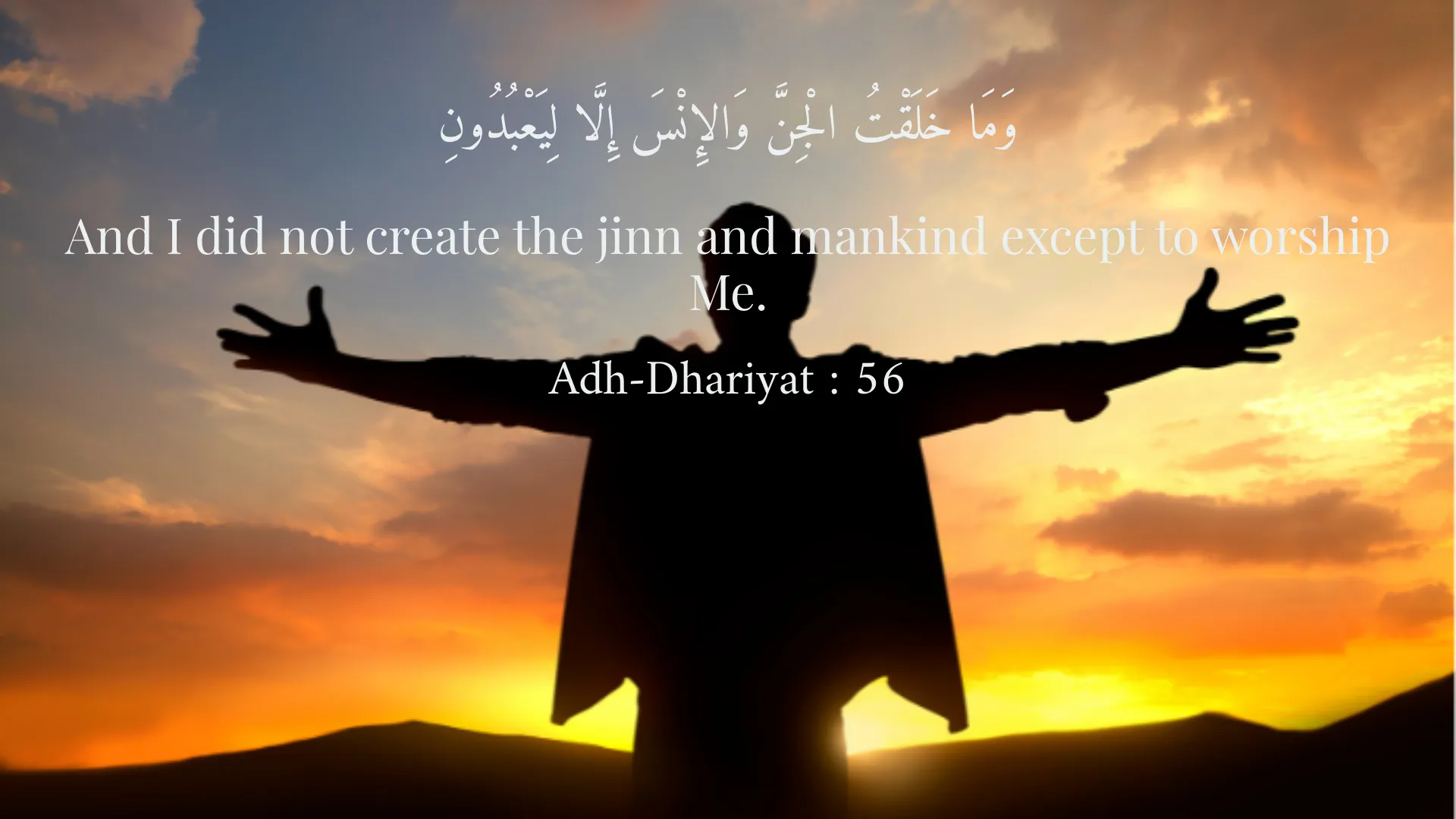
وَمَا خَلَقْتُ الْجِنَّ وَالإِنْسَ إِلَّا لِيَعْبُدُونِ
And I did not create the jinn and mankind except to worship Me.
Adh-Dhariyat : 56
لَيسَ الْبِرَّ أَن تُوَلُّوا وُجُوهَكُمْ قِبَلَ الْمَشْرِقِ وَ الْمَغْرِبِ ۖ وَلَكِنَّ الْبِرَّ مَن آمَنَ بِاللَّهِ وَ الْيَوْمِ الْآخِرِ ...
Righteousness is not that you turn your faces toward the east or the west, but [true] righteousness is in one who believes in Allah and the Last Day...
Al-Baqarah : 177
يَا أَيُّهَا النَّاسُ اعْبُدُوا رَبَّكُمُ الَّذِي خَلَقَكُمْ وَالَّذِينَ مِن قَبْلِكُمْ لَعَلَّكُمْ تَتَّقُونَ
O mankind, worship your Lord, who created you and those before you, that you may become righteous.
Al-Baqarah : 21
Short Story
Once upon a time, there was a man named Hasam who was searching for the meaning and purpose of his life. One day, he visited a religious scholar and asked him how he could discover the true meaning of worship. The scholar said, 'Worship does not only encompass prayers and fasting, but every good deed done with a sincere intention is also an act of worship.' Hasam replied, 'I always thought worship was confined to specific acts.' The scholar smiled and said, 'Worship is a deep relationship with Allah that should come from the depths of the heart.' With this understanding, Hasam decided to perform every good action with sincere intention for Allah, and through this, he felt the true meaning of worship within himself.