Quranic Answer
Human life is replete with ups and downs, sweet moments and bitter experiences. From the perspective of the Holy Quran, these hardships and challenges are not merely afflictions or misfortunes, but rather unique opportunities for growth, elevation, and drawing closer to Allah Almighty. The Quran teaches us that every difficulty holds a hidden wisdom within it and can serve as a launching pad for our spiritual and personal perfection. To utilize hardships for growth, Quranic teachings offer specific pathways. The first and most fundamental step is to seek refuge in patience (Sabr) and prayer (Salat). Allah says in Surah Al-Baqarah, verse 153: "O you who have believed, seek help through patience and prayer. Indeed, Allah is with the patient." Patience here is not merely passive endurance; it is an active and constructive form of patience. It means perseverance in the face of problems, not despairing, and seeking solutions with reliance on Allah. Prayer, too, is a direct connection with the Creator that brings tranquility to the human heart in difficult moments and grants the strength to persevere. These two are like two wings that keep a person steady amidst life's storms and attract Allah's aid. With patience, our perspective on problems changes, allowing us to find the hidden lessons in every adverse event. Prayer is the pillar of faith and the ascension of the believer, helping us maintain our connection with the inexhaustible source of power in all circumstances. The second crucial point is understanding the nature of divine trials and tests (Ibtila). The Quran repeatedly emphasizes that life is a testing ground, and humans are tested with various calamities and hardships to reveal the extent of their faith and the truth of their being. In Surah Al-Baqarah, verse 155, Allah says: "And We will surely test you with something of fear and hunger and a loss of wealth and lives and fruits, but give good tidings to the patient." This verse clearly indicates that hardships are an integral part of life, and their purpose is not to torment, but to purify and refine the soul and elevate the degree of faith. Just as gold is purified by intense heat, so too does a human being become more refined and pure in the crucible of events. These tests are an opportunity to discover our inner capacities, strengthen our will, and attain deeper self-knowledge and knowledge of God. Every challenge unveils a layer of our hidden potentials and transforms us into a stronger version of ourselves. The third Quranic strategy is complete reliance on Allah (Tawakkul). Tawakkul means entrusting affairs to Allah after exerting all necessary efforts and taking all precautions. When a person is overwhelmed by problems, they feel weak and helpless. But by relying on Allah, immense strength is transferred to them, and they gain conviction that Allah is the best supporter and guide. In Surah At-Talaq, verse 3, we read: "And whoever relies upon Allah – then He is sufficient for him. Indeed, Allah will accomplish His purpose. Allah has already set for everything a [decreed] extent." This reliance grants a remarkable tranquility to a person, reducing their worries, because they know that whatever the outcome, it is for their good and welfare, and Allah will never abandon them. True Tawakkul eliminates the fear of the future and gives a person the courage to face the unknown, as they are sure that they have a powerful backing. The fourth point is reflection and learning from hardships. The Quran invites us to ponder over Allah's signs, both in nature and in life's events. Every difficulty can be a great lesson for us; a lesson about our weaknesses, our need for God, the transient nature of this world, or the importance of blessings whose value we did not appreciate. Prophet Yusuf (Joseph) (peace be upon him), after years of suffering and separation from his family, attained a high status and said: "...Indeed, he who fears Allah and is patient, then indeed, Allah does not allow to be lost the reward of the doers of good." (Yusuf: 90). This example and thousands of other examples in the Quran and the history of the prophets show that hardships can be a path to growth and advancement, if we look at them with an eye to learn lessons and use them to rectify our behavior and thoughts. This analytical view of suffering removes us from a state of victimhood and transforms us into active learners and growing individuals. The fifth aspect is gratitude in all circumstances. It may seem strange to be grateful at the peak of bitterness, but the Quran teaches us to always be grateful. Gratitude, even for the smallest blessings, makes a person's perspective positive and prevents them from sinking into negativity. When we pay attention to the positive aspects of life, even in the midst of difficulties, we find greater ability to cope and find solutions. This grateful outlook opens the doors of divine wisdom to us and strengthens feelings of richness and hope. Allah says in Surah Ibrahim, verse 7: "If you are grateful, I will surely increase you [in favor]; but if you deny, indeed, My punishment is severe." This verse indicates that gratitude, even in the midst of suffering, can lead to increased blessings and ease. Ultimately, every hardship can be a bridge to greater closeness to Allah. When a person sees themselves at the height of their weakness and helplessness, they inevitably turn to the only true refuge, Allah. These moments form the deepest spiritual connections and draw the heart towards the Creator. It is in these circumstances that prayers emanate from the depths of the heart, and sincere repentance and supplication take shape. This closeness to Allah is the greatest spiritual growth and perfection that arises from the bitterest experiences. Therefore, hardships are not the end of the road, but the beginning of a new path towards self-improvement, knowledge of God, and human perfection. By relying on the teachings of the Quran, every difficulty can be a ladder to higher levels of spirituality and eternal happiness.
Related Verses
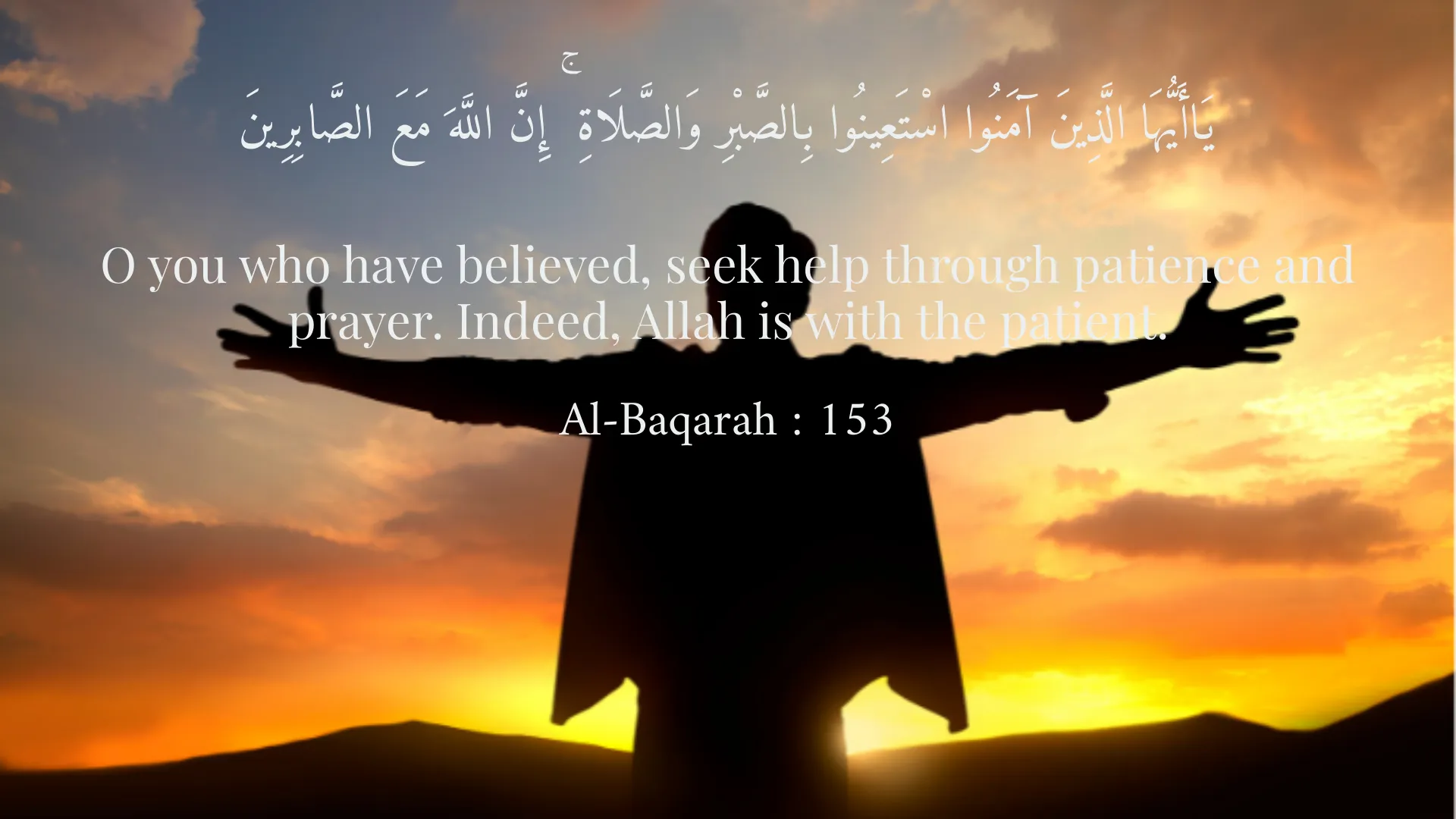
يَاأَيُّهَا الَّذِينَ آمَنُوا اسْتَعِينُوا بِالصَّبْرِ وَالصَّلَاةِ ۚ إِنَّ اللَّهَ مَعَ الصَّابِرِينَ
O you who have believed, seek help through patience and prayer. Indeed, Allah is with the patient.
Al-Baqarah : 153
وَلَنَبْلُوَنَّكُم بِشَيْءٍ مِّنَ الْخَوْفِ وَالْجُوعِ وَنَقْصٍ مِّنَ الْأَمْوَالِ وَالْأَنفُسِ وَالثَّمَرَاتِ ۗ وَبَشِّرِ الصَّابِرِينَ
And We will surely test you with something of fear and hunger and a loss of wealth and lives and fruits, but give good tidings to the patient,
Al-Baqarah : 155
وَمَن يَتَوَكَّلْ عَلَى اللَّهِ فَهُوَ حَسْبُهُ ۚ إِنَّ اللَّهَ بَالِغُ أَمْرِهِ ۚ قَدْ جَعَلَ اللَّهُ لِكُلِّ شَيْءٍ قَدْرًا
And whoever relies upon Allah – then He is sufficient for him. Indeed, Allah will accomplish His purpose. Allah has already set for everything a [decreed] extent.
At-Talaq : 3
Short Story
In a bygone era, in the city of Shiraz, there lived a well-reputed merchant, known for his generosity and cheerful disposition. But fate took a turn, and a sudden strong wind blew upon his ship of commerce, taking all he possessed. He moved from his luxurious abode to a humble corner, and the bitterness of destitution made his life arduous. He would sigh through the nights until dawn and walk with a broken heart during the days. One night, he dreamt of a wise old man with a radiant face who said to him: "O son, do not imagine that these hardships are anything but a prelude to greater sweetness. Just as a seed must pass through the darkness of the womb to become, and a grain must break through the soil to sprout, so too must your soul pass through the crucible of suffering to attain elevation. Be patient and rely upon Him who said: 'Indeed, with hardship, there is ease.'" The merchant woke up, his heart filled with peace, and his outlook on life transformed. With the little strength he had, he rose and began to work, but this time not for accumulating wealth, but with a spirit full of contentment and reliance on God. He had learned that suffering is a teacher that, if you are a diligent student, will lead you to the pinnacle of wisdom and tranquility. One day, his business prospered again, but this time not with the arrogance of the past, but with humility and gratitude that had sprouted from the depths of those bitter experiences. He was no longer just a merchant, but a sage who had tasted the sweet flavor of growth from the bitterness of life, and he always remembered Saadi's words: "Accustom yourself to patience and contentment, for you will not always find your heart's desire instantly."