Quranic Answer
True peace is a treasure sought by many in today's tumultuous world. Amidst the turbulent waves of life, people yearn for a safe haven where worries and anxieties subside. The Holy Quran, as a divine guide, outlines a comprehensive roadmap for achieving real and lasting peace. This peace is not of the fleeting worldly pleasures, but rather stems from the depths of the soul and a connection to the source of all existence, Almighty God. The teachings of religion, particularly in Islam, are not merely a set of rigid rituals and worship, but a way of life that, when understood and acted upon, can lead to tranquility and inner contentment. The central pillar and beating heart of peace from a Quranic perspective is the 'remembrance of Allah' (Dhikr Allah). Allah Almighty explicitly states in Surah Ar-Ra'd, verse 28: "Alladhina amanu wa tatma'innu qulubuhum bidhikri Allahi 'ala bidhikri Allahi tatma'innul qulub" (Those who have believed and whose hearts are assured by the remembrance of Allah. Unquestionably, by the remembrance of Allah hearts are assured). This verse reveals a fundamental truth: true peace is not found in wealth or status, nor in fleeting pleasures, nor in escaping from realities. Rather, it lies in a strong connection with the Creator, Who holds all existence in His grasp. The remembrance of Allah is not just about repeating words; it is a constant awareness of His presence in every moment of life, a recognition of His infinite power, wisdom, and mercy. When a person feels Allah's presence in every action, from the smallest decision to the greatest challenge, and knows that a powerful and compassionate Observer sees them, their heart is emptied of temptations and worries. This remembrance gives a person inner strength, assuring them that they are not alone in the face of difficulties, but have a firm and eternal support. Through prayer, supplication (du'a), recitation of the Quran, and even contemplation of creation, this remembrance is strengthened, purifying the human soul from material impurities and bestowing upon it a sense of peace and security. Another crucial way to achieve peace is through 'patience and prayer' (Sabr and Salat). The Holy Quran states in Surah Al-Baqarah, verse 153: "Ya ayyuhalladhina amanu ista'inu bissabri wassalati innallaha ma'as-sabireen" (O you who have believed, seek help through patience and prayer. Indeed, Allah is with the patient). Human life is constantly accompanied by ups and downs, hardships, and calamities. In this context, whoever is endowed with the blessing of patience can withstand these problems and not lose heart. Patience does not mean passivity or unconditional surrender; rather, it means active resistance, planning to overcome problems, and enduring their consequences with reliance on Allah. Prayer also plays a central role in this journey. Prayer, beyond physical movements, is an intimate conversation with the Lord. These are moments when a person detaches from the clamor of the world and directs their entire being towards the Creator. In prayer, a person lays down all their burdens and sorrows, and with a lighter spirit, gains new strength to continue their path. This daily and repeated connection calms the heart and reminds the person that they are not alone and have strong support. 'Trust in Allah' (Tawakkul) is another key element in achieving inner peace. In Surah At-Talaq, verse 3, Allah says: "Wa man yatawakkal alallahi fahuwa hasbuh; innallaha balighu amrih; qad ja'alallahu likulli shay'in qadra" (And whoever relies upon Allah - He is sufficient for him. Indeed, Allah will accomplish His purpose. Allah has already set for everything a [decreed] extent). Trust does not mean inaction or abandoning responsibilities; rather, it means exerting all reasonable effort and then entrusting the outcome to Allah's wise will. When a person believes that Allah desires their good and that whatever happens is ultimately for their benefit, worries and anxieties depart from them. They know that even if the desired outcome is not achieved, there is wisdom in it, and Allah has ordained the best for them. This confidence and assurance create a strong shield against despair and hopelessness, freeing the heart from turmoil. Furthermore, 'recitation and contemplation of the Quran,' 'righteous deeds,' 'gratitude,' and 'contentment' are other pillars for achieving Quranic peace. The Holy Quran is a healing for hearts, and its recitation with contemplation brings light and insight. Righteous deeds, such as being kind to others, helping the needy, respecting the rights of parents and neighbors, bring peace to the soul both in this world and the hereafter. Gratitude for Allah's countless blessings makes a person's outlook positive and prevents them from focusing on what they lack and regretting. Contentment and not being overly attached to material possessions also reduce the pressure and stress of seeking more. In summary, Islam provides a comprehensive and complete program for life, by adhering to its principles, including remembrance, prayer, patience, trust, and righteous deeds, one can achieve a true and lasting peace that no worldly storm will be able to destroy. This peace is the inner satisfaction that keeps the light of hope alive even in the most difficult circumstances and guides a person towards perfection and eternal bliss.
Related Verses
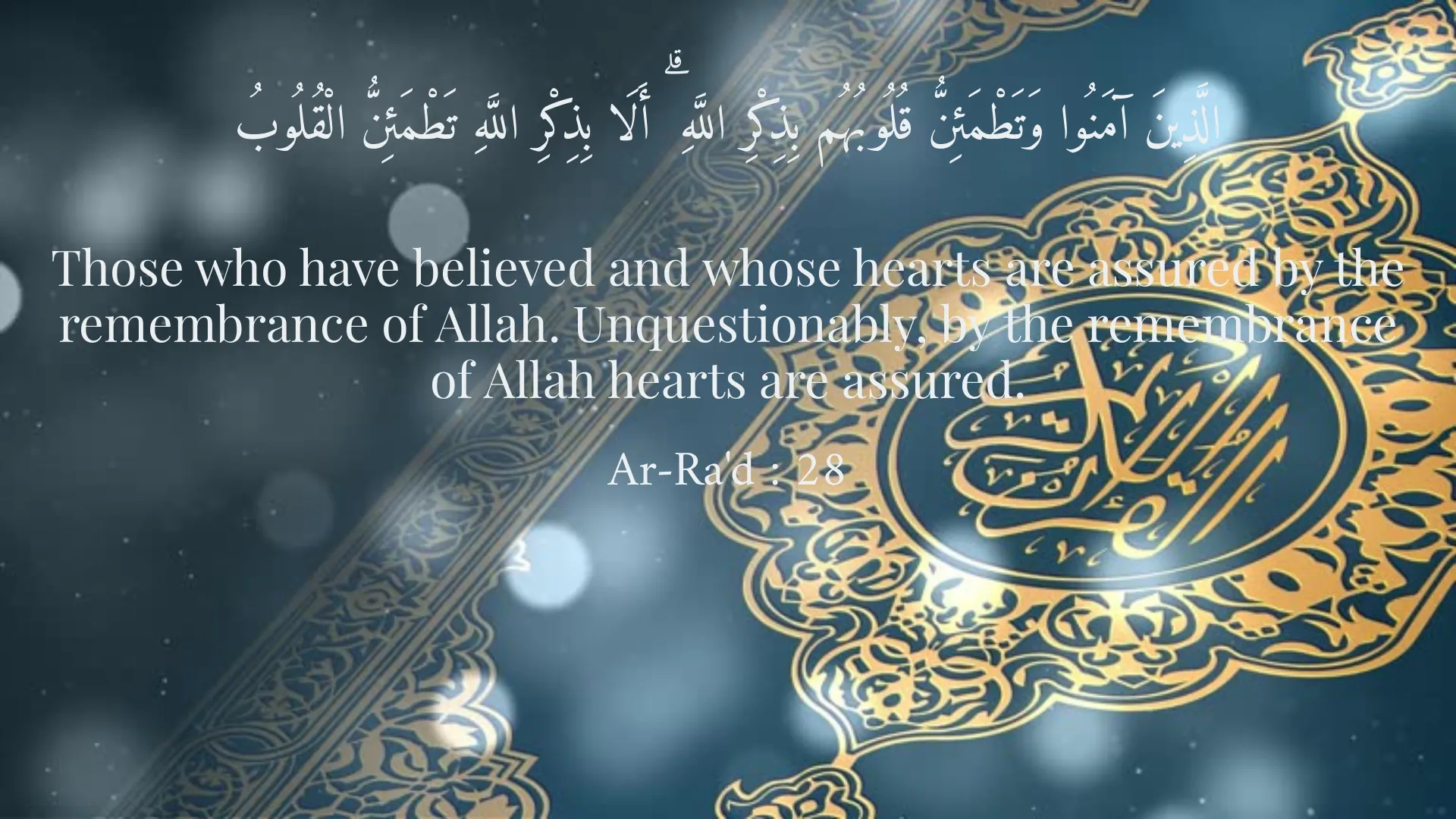
الَّذِينَ آمَنُوا وَتَطْمَئِنُّ قُلُوبُهُم بِذِكْرِ اللَّهِ ۗ أَلَا بِذِكْرِ اللَّهِ تَطْمَئِنُّ الْقُلُوبُ
Those who have believed and whose hearts are assured by the remembrance of Allah. Unquestionably, by the remembrance of Allah hearts are assured.
Ar-Ra'd : 28
يَا أَيُّهَا الَّذِينَ آمَنُوا اسْتَعِينُوا بِالصَّبْرِ وَالصَّلَاةِ ۚ إِنَّ اللَّهَ مَعَ الصَّابِرِينَ
O you who have believed, seek help through patience and prayer. Indeed, Allah is with the patient.
Al-Baqarah : 153
وَمَن يَتَوَكَّلْ عَلَى اللَّهِ فَهُوَ حَسْبُهُ ۚ إِنَّ اللَّهَ بَالِغُ أَمْرِهِ ۚ قَدْ جَعَلَ اللَّهُ لِكُلِّ شَيْءٍ قَدْرًا
And whoever relies upon Allah - He is sufficient for him. Indeed, Allah will accomplish His purpose. Allah has already set for everything a [decreed] extent.
At-Talaq : 3
Short Story
It is narrated that a wealthy and powerful king, despite all his blessings and the splendor of his kingdom, always felt a sense of turmoil and unease in his heart. One day, he heard that in a corner of the city, a simple and destitute dervish lived, who was always joyful and peaceful. The king, astonished by the dervish's state, went to him and said, "O man of God, with all my wealth and power, I have no peace, but you, with all your poverty, how are you so content?" The dervish smiled and replied, "O King, the difference is that you have tied your heart to this perishable world and fear losing it, but I have entrusted my heart to the Everlasting and whatever I possess is His gift. My heart is at peace in the remembrance of the Truth, free from the fear of losing anything. The more you attach your heart to this world, the more your anxiety will increase, and the more you detach from it, the greater your peace will become. True peace is not in possessing but in letting go and entrusting your heart to the Creator." The king was touched by the dervish's words and thereafter strove to lessen his worldly attachments and increase his remembrance of God, and in this way, tasted the flavor of true peace.