Quranic Answer
In the rich and profound teachings of the Holy Quran, spirituality is presented not merely as an aspect of life, but as the very essence and fundamental cornerstone of true human growth. Real growth, from a Quranic perspective, extends far beyond material successes or social status; it is an inner transformation that brings humanity closer to its true self and to its Creator. The Quran provides comprehensive and practical strategies for utilizing spirituality on the path of genuine growth, which we will elaborate upon in detail. The first and most fundamental step in using spirituality for growth is the "remembrance of Allah" or "Dhikr Allah." The Holy Quran explicitly states that inner peace and reassurance of the heart are achieved only through the remembrance of Allah. This constant remembrance goes beyond mere repetition of words; it encompasses a heartfelt presence, contemplation of divine verses, and an understanding of the Creator's majesty and mercy. When the human heart finds tranquility through the remembrance of Allah, it is liberated from worldly agitations and gains the necessary strength to face challenges and make sound decisions. This tranquility serves as the bedrock for any kind of growth and elevation. In moments of hardship and ease, Dhikr Allah acts as a life-saving anchor, keeping the ship of human existence steady amidst life's storms. This mental presence helps individuals become less entangled in satanic whispers and carnal desires, guiding them more effectively towards perfection. The next step is "Tazkiyah al-Nafs," or the purification of the soul. The Quran emphasizes that true salvation and success depend on purifying the soul from moral vices and cultivating virtuous qualities. This process demands deep self-awareness, where an individual recognizes their weaknesses and strives to rectify them. Tazkiyah al-Nafs involves combating pride, envy, malice, greed, and other undesirable traits, while fostering patience, gratitude, generosity, humility, and kindness. This purification helps individuals remove internal obstacles on their path to growth, moving towards perfection with a lighter and purer spirit. For instance, Quranic verses consistently highlight the importance of patience in the face of adversities and gratitude for blessings. These two qualities alone can transform a person's outlook on life and assist them in their spiritual journey. Tazkiyah al-Nafs also includes repentance and frequent turning back to Allah, as humans are prone to error and require continuous purification. A third strategy is "Amal Salih," or righteous deeds. Spirituality in Islam is not confined to heartfelt beliefs; it must manifest in one's actions and conduct. True growth occurs when faith and spiritual convictions translate into good and beneficial deeds within society. Serving God's creation, helping the needy, respecting the rights of others, upholding justice, and speaking truth are all examples of righteous deeds that stem from an individual's spirituality. The Holy Quran repeatedly mentions faith and righteous deeds together, attributing success to those who embody both aspects in their lives. These righteous actions not only benefit society but also contribute to strengthening the soul and expanding one's spiritual capacity. When a person extends a helping hand to another, they are, in fact, growing themselves and reinforcing their human dimension. This link between spirituality and social responsibility is a distinctive feature of Islam, connecting individual growth with collective well-being. Furthermore, "Tadabbur in the Quran" (deep reflection on the Quran) and "Tafakkur in creation" (contemplation of creation) are other powerful spiritual tools for growth. The Quran is a book of guidance, and reflecting on its verses opens new vistas of knowledge and insight for humanity. The deeper one delves into the divine verses and contemplates them, the more one realizes the majesty and wisdom of Allah. Similarly, observing and contemplating the order and beauty of creation, from the smallest particles to the vastest galaxies, increases faith and deepens the spiritual connection with the Creator. This reflection and contemplation help individuals understand their place in existence, better comprehend the purpose of life, and escape from confusion and aimlessness. This understanding, in turn, is a driving force for spiritual growth, impelling individuals towards acquiring more knowledge and performing better deeds. Ultimately, utilizing spirituality for real growth is a continuous and lifelong process. This path is strengthened by acts of worship such as prayer (Salat), fasting (Sawm), supplication (Dua), and recitation of the Quran (Tilawah), each of which, in its own way, strengthens the human connection with the Source of existence and refines the soul. Prayer, as the pillar of faith, is an opportunity for direct communion with Allah and a daily renewal of covenant. Fasting is an exercise in self-discipline and control of desires. Supplication is an expression of need and dependence on Allah, strengthening reliance. The sum of these practices places individuals on a path where they take a greater step towards perfection each day, experiencing a life full of meaning, peace, and purpose. Real growth is that which leads to moral excellence, spiritual insight, and a deep sense of inner tranquility, preparing one for eternal life in the Divine presence. Therefore, spirituality is not an additional aspect, but the vital blood flowing through the veins of life, without which no growth can be complete or sustainable.
Related Verses
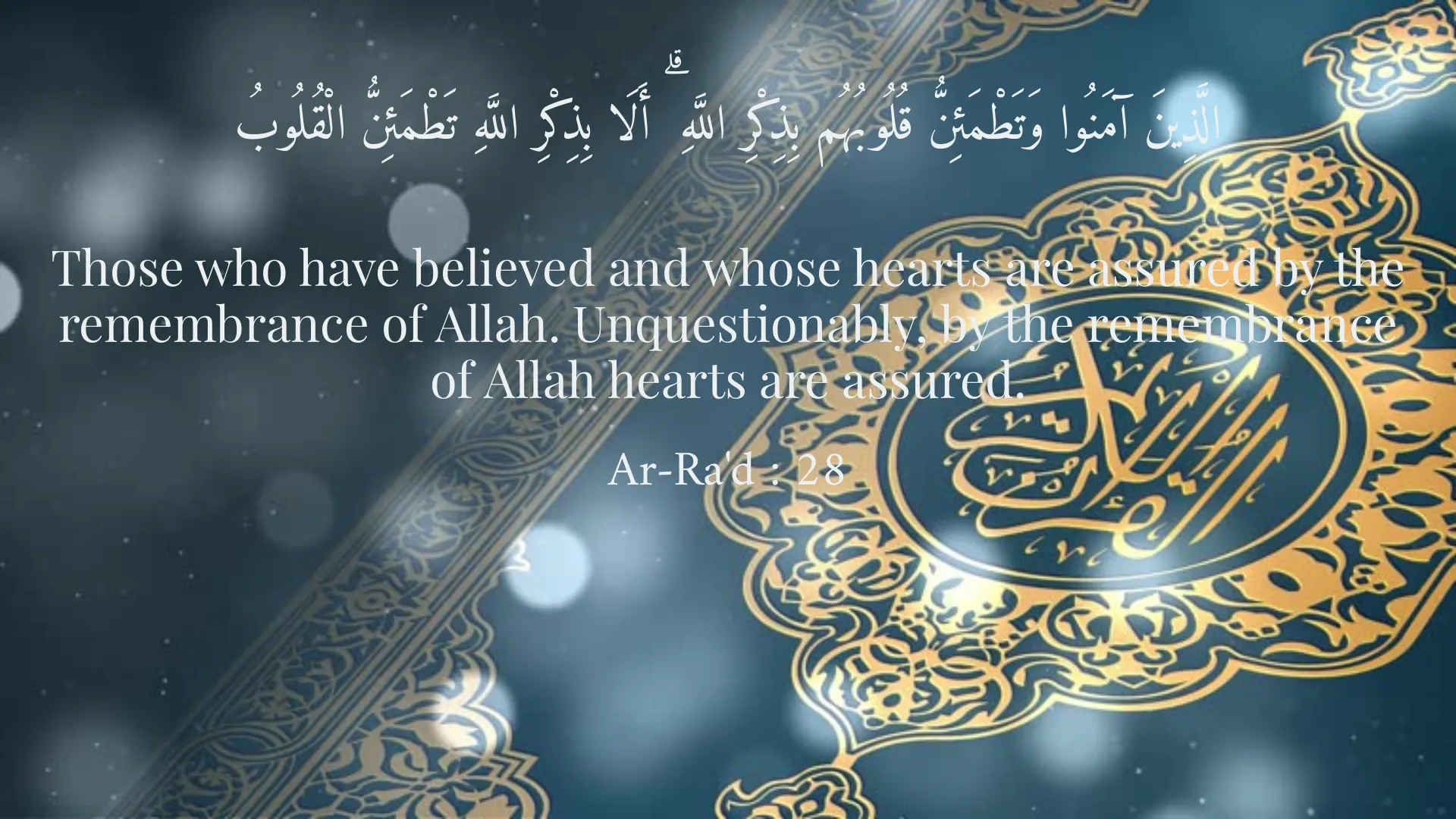
الَّذِينَ آمَنُوا وَتَطْمَئِنُّ قُلُوبُهُم بِذِكْرِ اللَّهِ ۗ أَلَا بِذِكْرِ اللَّهِ تَطْمَئِنُّ الْقُلُوبُ
Those who have believed and whose hearts are assured by the remembrance of Allah. Unquestionably, by the remembrance of Allah hearts are assured.
Ar-Ra'd : 28
قَدْ أَفْلَحَ مَن زَكَّاهَا
He has succeeded who purifies it,
Ash-Shams : 9
وَقَدْ خَابَ مَن دَسَّاهَا
And he has failed who corrupts it.
Ash-Shams : 10
وَمَا خَلَقْتُ الْجِنَّ وَالْإِنسَ إِلَّا لِيَعْبُدُونِ
And I did not create the jinn and mankind except to worship Me.
Adh-Dhariyat : 56
Short Story
One day, a dervish was conversing with Sheikh Sa'di, complaining about his worldly anxieties. The Sheikh, with a kind smile, said: "My friend, contentment and inner peace you shall not find in any treasure, unless you connect your heart to the source of tranquility, which is the remembrance of God. It is said that a wealthy king was constantly worried his treasures might be stolen, yet a penniless dervish sat by a spring, saying: 'If kings knew the true taste of my peace, they would fight for it with swords.' Spirituality is this hidden treasure that frees you from the bonds of fears and leads you to true growth." These words of Sheikh Sa'di enlightened the dervish's heart, and he understood that true growth begins from within, not from without.