Quranic Answer
The Holy Quran, as the guiding word of Allah, provides a comprehensive and unparalleled roadmap for the growth and development of human character. This sacred book is not merely a collection of rigid laws, but rather a profound ocean of wisdom, recommendations, and stories that can refine the human soul and guide it towards becoming the best version of itself. Utilizing the Quran for character improvement is a continuous and deep process that begins with understanding and acting upon its teachings, manifesting in all aspects of life. The first step on this journey is to reflect deeply and contemplate the verses of the Quran (Tadabbur). Simply reading without comprehension and contemplation is like passing by a clear spring without drinking from its water. The Quran invites us to ponder over creation, the history of past nations, and the wisdom behind its injunctions. This contemplation enhances our insight into ourselves, the world, and the Creator, helping us to better understand our place in this universe. When we connect profoundly with the divine verses, they become not just words on paper, but a light within our hearts that illuminates our life path. This light allows us to better see our character flaws and find strong motivation for self-correction and change. For instance, verses related to Allah's attributes, such as being The Most Gracious and The Most Merciful, guide us towards cultivating kindness and forgiveness within ourselves, while verses pertaining to justice and fairness direct us towards impartiality and abstaining from oppression. The second dimension is the practical implementation of the Quran's ethical teachings. The Quran is filled with moral recommendations for building a balanced and virtuous character. For example, Taqwa (God-consciousness), emphasized in many verses, is the root and foundation of all goodness. Taqwa means being constantly aware of Allah's presence and striving to live in accordance with His pleasure, which includes abstaining from prohibitions and fulfilling obligations. This self-awareness prevents one from lying, backbiting, arrogance, envy, and other moral vices, and guides them towards truthfulness, trustworthiness, humility, empathy, and benevolence. The Quran teaches us how to behave with our parents (Surah Al-Isra, verse 23), our neighbors, the poor and needy (Surah An-Nisa, verse 36), and even with our enemies (Surah Al-Ma'idah, verse 8). Each of these directives is a practical lesson for improving social relations and personal growth. For example, Surah Al-Hujurat (verses 11 and 12) explicitly prohibits mockery, backbiting, and suspicion, offering clear guidance for proper conduct in society. The third approach is to emulate Quranic personalities. The Quran narrates the stories of prophets and righteous individuals so that we may learn from their experiences and characters. The patience of Ayub (Job), the steadfastness of Nuh (Noah), the justice of Dawud (David), the wisdom of Luqman, and the chastity of Maryam (Mary) are just a few examples of role models who can inspire us to strengthen our moral virtues. Studying the stories of these personalities and reflecting on how they faced challenges and difficulties helps us to react in more righteous and ethical ways in similar situations. Prophet Muhammad (PBUH), whose character is described as 'exalted' (Surah Al-Qalam, verse 4), was himself a living Quran, and his life is the best example for actualizing Quranic teachings. The fourth strategy is continuous repentance (Tawbah) and seeking forgiveness (Istighfar). The Quran teaches us that humans are prone to error, but the door of Allah's mercy and forgiveness is always open. Admitting mistakes, regretting them, and striving to make amends are essential parts of the character improvement process. Repentance not only cleanses sins but also infuses a new spirit into a person, preparing them for a new and better beginning. This return to Allah strengthens the will to avoid errors and adhere to moral principles. The fifth point is steadfastness and perseverance (Sabr). Character improvement is not an overnight process. It requires patience, diligence, and persistence. The Quran repeatedly emphasizes the importance of patience in times of adversity, in obedience to Allah, and in abstaining from disobedience (Surah Al-Asr, verse 3). This virtue empowers us to withstand internal and external challenges and not deviate from the path of growth. Every time a temptation to do something inappropriate arises, recalling Quranic verses about patience and its reward can give us the strength to resist. Ultimately, using the Quran to improve one's character means living by the Quran. It means not merely keeping the Quran in our homes or on shelves, but enshrining it in our hearts and souls, and measuring every moment of our lives by its guiding light. This will lead to profound self-building, strengthening of will, inner peace, and ultimately, the satisfaction of Allah and ourselves. The Quran is a healing for spiritual ailments and a guide to reaching human perfection. The more we immerse ourselves in it and apply its teachings in our lives, the purer, more balanced, and more radiant our character will become. This path is one towards perfection, felicity, and the attainment of lasting tranquility in both worlds.
Related Verses
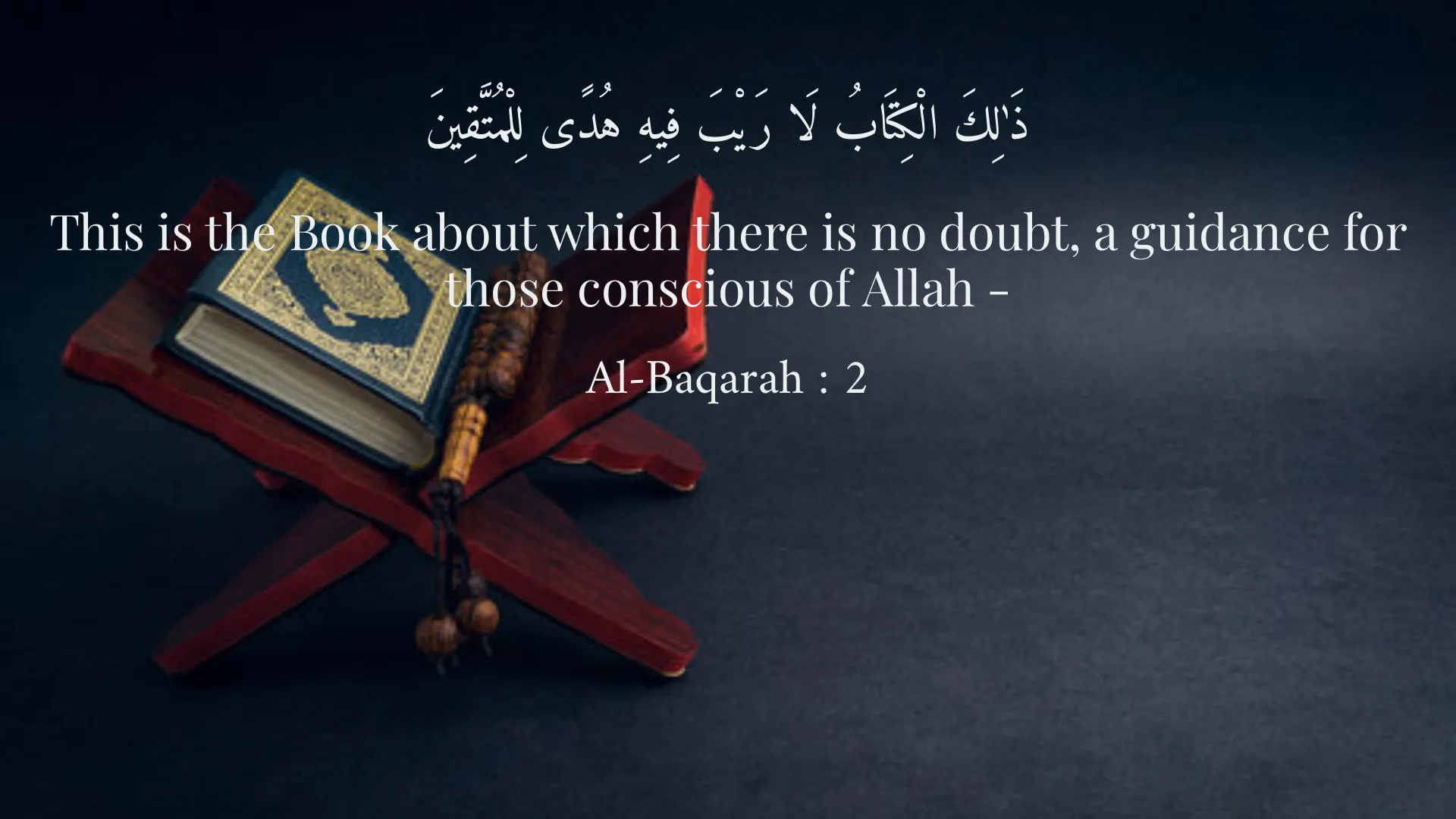
ذَٰلِكَ الْكِتَابُ لَا رَيْبَ فِيهِ هُدًى لِلْمُتَّقِينَ
This is the Book about which there is no doubt, a guidance for those conscious of Allah -
Al-Baqarah : 2
يَا أَيُّهَا الَّذِينَ آمَنُوا اجْتَنِبُوا كَثِيرًا مِنَ الظَّنِّ إِنَّ بَعْضَ الظَّنِّ إِثْمٌ وَلَا تَجَسَّسُوا وَلَا يَغْتَبْ بَعْضُكُمْ بَعْضًا أَيُحِبُّ أَحَدُكُمْ أَنْ يَأْفُرَ لَحْمَ أَخِيهِ مَيْتًا فَكَرِهْتُمُوهُ وَاتَّقُوا اللَّهَ إِنَّ اللَّهَ تَوَّابٌ رَحِيمٌ
O you who have believed, avoid much [negative] assumption. Indeed, some assumption is sin. And do not spy or backbite each other. Would one of you like to eat the flesh of his brother when dead? You would detest it. And fear Allah; indeed, Allah is Accepting of repentance and Merciful.
Al-Hujurat : 12
وَلَا تَمْشِ فِي الْأَرْضِ مَرَحًا إِنَّكَ لَنْ تَخْرِقَ الْأَرْضَ وَلَنْ تَبْلُغَ الْجِبَالَ طُولًا
And do not walk upon the earth exultantly. Indeed, you will never tear the earth [apart] or reach the mountains in height.
Al-Isra : 37
Short Story
One day, a young man approached a wise sage, sighing deeply, and said: "O Master, I wish to be a better person, but my inner self constantly pulls me towards shortcomings. Show me a way to polish my character with the light of divine knowledge." The sage, with a kind smile, replied: "O my son, you shall not unlock the heart's door except with the key of the Quran. Whenever you desire a virtue, read its corresponding verse and reflect upon it. If you wish to shed pride, look at the verses of humility. If you seek patience, read the story of Job. The young man returned home with firm resolve and dedicated hours each day to contemplating the Quran. Before long, the mirror of his being became clear, and everyone marveled at his inner purity and noble character, for he had understood that every word of the Quran is a seed that, if planted in the soil of the heart, yields the fruit of an exalted character.