Quranic Answer
Strengthening willpower, that intrinsic force enabling us to overcome challenges, make sound decisions, and adhere to our goals, is one of humanity's most fundamental needs on the path to perfection and well-being. The Holy Quran, as the divine word and a comprehensive guide for life, is replete with teachings that significantly aid in bolstering willpower, not only directly but also by nurturing various dimensions of human existence. This assistance can be examined through several key aspects, each supporting the others, collectively forming a robust foundation for an ironclad will. Firstly, and perhaps most importantly, in strengthening willpower from a Quranic perspective, is the "recognition of and faith in God's absolute power." When a person understands that an eternal power supports them and that no obstacle can stand against God's will, their heart finds tranquility, and they are freed from fears and doubts. This practical monotheism uproots the seeds of weakness and despair from the heart, replacing them with hope and unwavering determination. The Quran repeatedly emphasizes that there is no creature on earth whose provision is not upon Allah, and no one possesses or governs the universe but Him. This belief transcends a person's reliance on their own unstable self, connecting them to the ultimate source of power. Secondly, the factor of "patience and perseverance" is crucial. The Quran, in numerous verses, highlights the importance of patience, considering it the key to overcoming many difficulties. Patience, here, means enduring hardships, steadfastness in obedience to God, and resistance against sin. This type of patience is an active, volitional act that gradually strengthens a person's willpower. Surah Al-Baqarah, verse 153, explicitly invites believers to seek help through patience and prayer: "O you who have believed, seek help through patience and prayer. Indeed, Allah is with the patient." Patience makes a person resilient against temptations and obstacles, granting them the ability to remain steadfast on the path of truth even in difficult circumstances and to adhere to their goals. Prayer, as a pillar of faith, also significantly contributes to self-discipline and willpower by instilling regularity and discipline in life, as its performance requires continuous decision and will. Thirdly, a Quranic strategy is "reliance upon Allah (Tawakkul)" after exhausting all possible efforts. Tawakkul means surrendering the outcome to God, not abandoning effort. This belief that Allah is the best Helper and Supporter frees a person from anxiety and worry caused by uncertainties, allowing them to move towards their goals with greater peace and strength. Tawakkul eradicates the fear of failure and boosts one's courage to act. Surah Al-Imran, verse 160, states: "If Allah should aid you, no one can overcome you; but if He should forsake you, who is there that can aid you after Him? And upon Allah let the believers rely." This verse demonstrates that reliance on God not only strengthens willpower but also assures a person that they are never alone in any situation. Fourthly, the approach of "steadfastness and perseverance on the righteous path" is emphasized. In Surah Hud, verse 112, the Quran states: "So remain steadfast as you have been commanded, and [also] those who have repented with you, and do not transgress. Indeed, He is Seeing of what you do." Steadfastness (Istiqamah) means unwavering commitment and not deviating from the path of truth and divine objectives. This persistence requires strong willpower and firm resolve. When a person adopts a lofty and divine goal and perseveres in it, their willpower is immensely strengthened. This concept includes steadfastness in worship, in upholding morality, in seeking knowledge, and in confronting carnal and satanic temptations. Fifth, the aspect of "self-control and avoiding desires" is repeatedly addressed. The Quran frequently calls upon humanity to control their lower selves (nafs) and to refrain from following their desires. Carnal desires and passions are the greatest enemies of willpower. Overcoming these desires immensely strengthens the will. Fasting, abstaining from prohibitions, and practicing piety are all exercises for reinforcing self-control and willpower. Each time a person resists a temptation, they strengthen their willpower muscle. The Quran warns that following desires leads one away from the remembrance of God and the path of truth, and this deviation results in weakness of will and slackness in fulfilling duties. Finally, "reflection on the stories of prophets and holy figures" mentioned in the Quran can be a great source of inspiration for strengthening willpower. Stories such as Job's patience, Moses' steadfastness against Pharaoh, and the Prophet Muhammad's perseverance against persecution are all prominent examples of iron wills. These stories show humanity that with reliance on God and perseverance, even the greatest obstacles can be overcome. By providing practical role models, the Quran teaches us how to achieve success in life's journey by relying on faith and firm resolve. In summary, the Quran assists in strengthening willpower not only through direct admonitions but also by creating a comprehensive intellectual and spiritual framework. This framework includes deep faith in God, the practice of patience and perseverance, heartfelt reliance on God, steadfastness to principles, and self-control. Living according to Quranic teachings means building a will that never surrenders to any difficulty and constantly strives towards perfection. This is a continuous journey where every step taken reinforces the will and stabilizes one's existence.
Related Verses
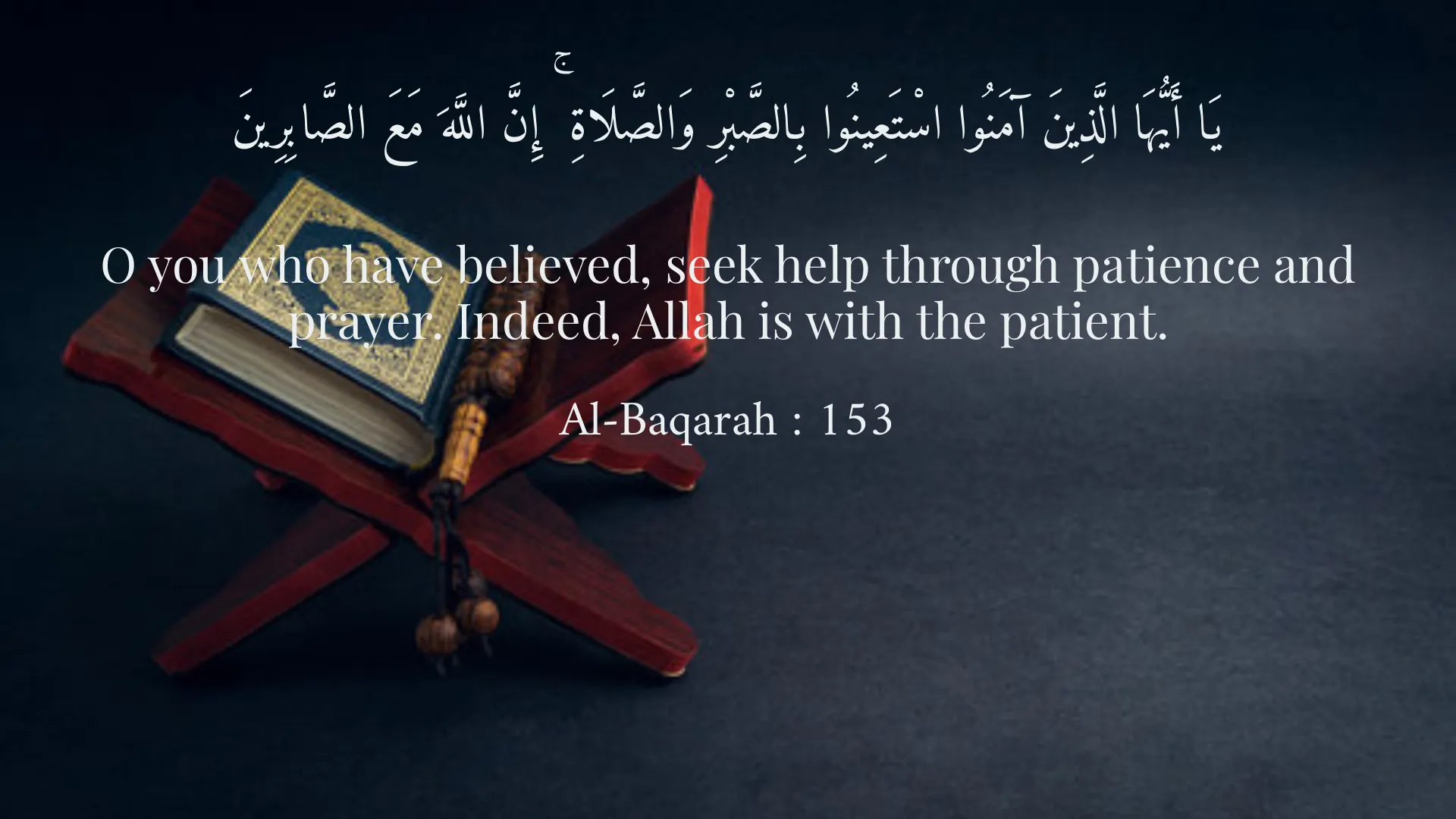
يَا أَيُّهَا الَّذِينَ آمَنُوا اسْتَعِينُوا بِالصَّبْرِ وَالصَّلَاةِ ۚ إِنَّ اللَّهَ مَعَ الصَّابِرِينَ
O you who have believed, seek help through patience and prayer. Indeed, Allah is with the patient.
Al-Baqarah : 153
إِن يَنصُرْكُمُ اللَّهُ فَلَا غَالِبَ لَكُمْ ۖ وَإِن يَخْذُلْكُمْ فَمَن ذَا الَّذِي يَنصُرُكُم مِّن بَعْدِهِ ۗ وَعَلَى اللَّهِ فَلْيَتَوَكَّلِ الْمُؤْمِنُونَ
If Allah should aid you, no one can overcome you; but if He should forsake you, who is there that can aid you after Him? And upon Allah let the believers rely.
Al-Imran : 160
فَاسْتَقِمْ كَمَا أُمِرْتَ وَمَن تَابَ مَعَكَ وَلَا تَطْغَوْا ۚ إِنَّهُ بِمَا تَعْمَلُونَ بَصِیرٌ
So remain steadfast as you have been commanded, and [also] those who have repented with you, and do not transgress. Indeed, He is Seeing of what you do.
Hud : 112
Short Story
It is narrated that in Saadi's time, there was a merchant who harbored a dream of finding a treasure. For years, he traversed deserts and crossed seas in its pursuit, but always returned disappointed. His friends admonished him, saying, 'What wisdom prioritizes fruitless toil over comfort?' Yet, the merchant's resolve was firm, and each time, recalling the words of the wise that 'men of the path never lose their resolve,' he would set forth again. One day, at the peak of exhaustion and despair, he met a wise old man. The elder said: 'Young man, your treasure lies not in earth nor in water, but hidden within your willpower. Whenever you entrust your heart to God and step firmly, even rocky terrain will smooth out.' The merchant gained new strength from the elder's words, put his trust in God, and with a stronger will, continued his journey. Ultimately, he found the true treasure in his perseverance, achieving not only what he desired but also understanding that inner strength is more valuable than any external treasure.