Quranic Answer
The pursuit of lasting and true peace has always been one of humanity's deepest aspirations. In today's turbulent and challenging world, finding this inner and enduring tranquility is not just a desire but a vital necessity. The Holy Quran, as the divine word, offers comprehensive and complete guidance for achieving this peace, which stems from a deep connection with the Creator of the universe and an understanding of humanity's place in this world. Lasting peace from the Quranic perspective is more than the result of external circumstances; it is the outcome of an internal, heartfelt state attained through faith, righteous deeds, and submission to the Divine will. This peace is not acquired through wealth or status, nor by avoiding apparent problems, but is rooted in the depths of the human soul and in its connection to the inexhaustible source of existence. One of the most central teachings of the Quran for achieving peace is the 'remembrance of Allah' or 'Dhikrullah'. In Surah Ar-Ra'd, verse 28, Allah Almighty explicitly states: "Those who have believed and whose hearts are assured by the remembrance of Allah. Unquestionably, by the remembrance of Allah hearts are assured." This verse lays the foundation for inner peace. The remembrance of Allah is not merely the repetition of words, but encompasses reflection on divine verses, contemplation of creation, recitation of the Quran, supplication (du'a), and heartfelt presence in worship. When a person occupies their heart with the remembrance of Allah, they are freed from material and worldly anxieties. Anxieties decrease and give way to assurance and tranquility. This remembrance reminds a person that they are not alone and that a supreme, all-knowing power is always watching over and supporting them. In moments of hardship and ease, by relying on this remembrance, one can be safe from spiritual turmoil. This continuous presence in mind and heart not only leads to spiritual peace but also helps in better managing life's stresses and challenges, because the individual knows that everything is in the hands of the Absolute Power and He guides them towards good. Faith and reliance on Allah (Tawakkul) are another pillar for achieving lasting peace. True faith in Allah Almighty provides a broader perspective on life and liberates a person from worldly limitations. One who truly believes in God knows that whatever befalls them has a divine wisdom behind it and contains good for them. Tawakkul means complete trust in Allah's planning and will, and entrusting the outcomes of affairs to Him, after striving and endeavoring. When a person truly relies on God, they are freed from the heavy burden of future worries and past regrets. They know that Allah is the best planner and provider, and He never abandons His servants. This reliance empowers an individual to face adversities with greater peace, because they are confident that Allah is their best supporter and will ultimately make things turn out for their benefit. This sense of security and trust forms the foundation of a deep and lasting peace that no storm can destroy. Patience (Sabr) and Prayer (Salat) are two other powerful tools that the Quran emphasizes for attaining peace. In Surah Al-Baqarah, verse 153, we read: "O you who have believed, seek help through patience and prayer. Indeed, Allah is with the patient." Patience here does not mean passivity, but rather perseverance and steadfastness in the face of difficulties, hardships, and temptations. A patient person experiences deep inner peace because they know that every difficulty has an end and can be overcome with perseverance. Patience increases one's capacity to endure adversities and allows them to view matters with a deeper perspective, finding the best solutions. Prayer, as the pillar of faith and the ascension of the believer, is a moment of direct connection with the Creator. During prayer, the human soul finds tranquility, worldly concerns are set aside, and the heart turns towards the source of eternal peace. Performing prayer with presence of heart is not just a religious obligation but a profound meditation that purifies the mind and boosts spiritual energy. This continuous connection provides a person with stability and fortitude that cannot be found anywhere else. Furthermore, engaging in righteous deeds and charity also plays a significant role in achieving peace. Helping others, assisting the needy, and acting justly not only brings peace to society but also creates deep peace in the hearts of those who do good. The feeling of satisfaction from helping fellow humans is one of the most beautiful manifestations of inner peace. Finally, the Holy Quran, by emphasizing that this world is a transient place and true perfection is found in the Hereafter, helps individuals to be freed from excessive attachments to material possessions. Attachment to wealth, power, and status often becomes a source of anxiety and restlessness. Verses 29 and 30 of Surah Al-Fajr address the tranquil souls, stating: "O tranquil soul! Return to your Lord, well-pleased and pleasing [to Him]. So enter among My [righteous] servants, and enter My Paradise." These verses portray the ultimate state of a soul that has achieved peace: a soul that attained assurance in this world through the remembrance of Allah, reliance, and righteous deeds, and returns to its Lord in the Hereafter with complete satisfaction. True peace lies in being content with what God has provided and letting go of greed and covetousness. Repentance and seeking forgiveness for sins also lift the heavy burden of conscience, paving the way for inner peace. Moreover, forgiving others' faults cleanses the heart of resentment and anger, which are among the biggest obstacles to peace. By following these Quranic teachings, one can achieve a lasting and profound peace that not only brings comfort in this world but also ensures their happiness in the Hereafter. This peace is a divine gift bestowed upon sincere seekers, and its key lies in faith, remembrance of Allah, patience, and righteous deeds.
Related Verses
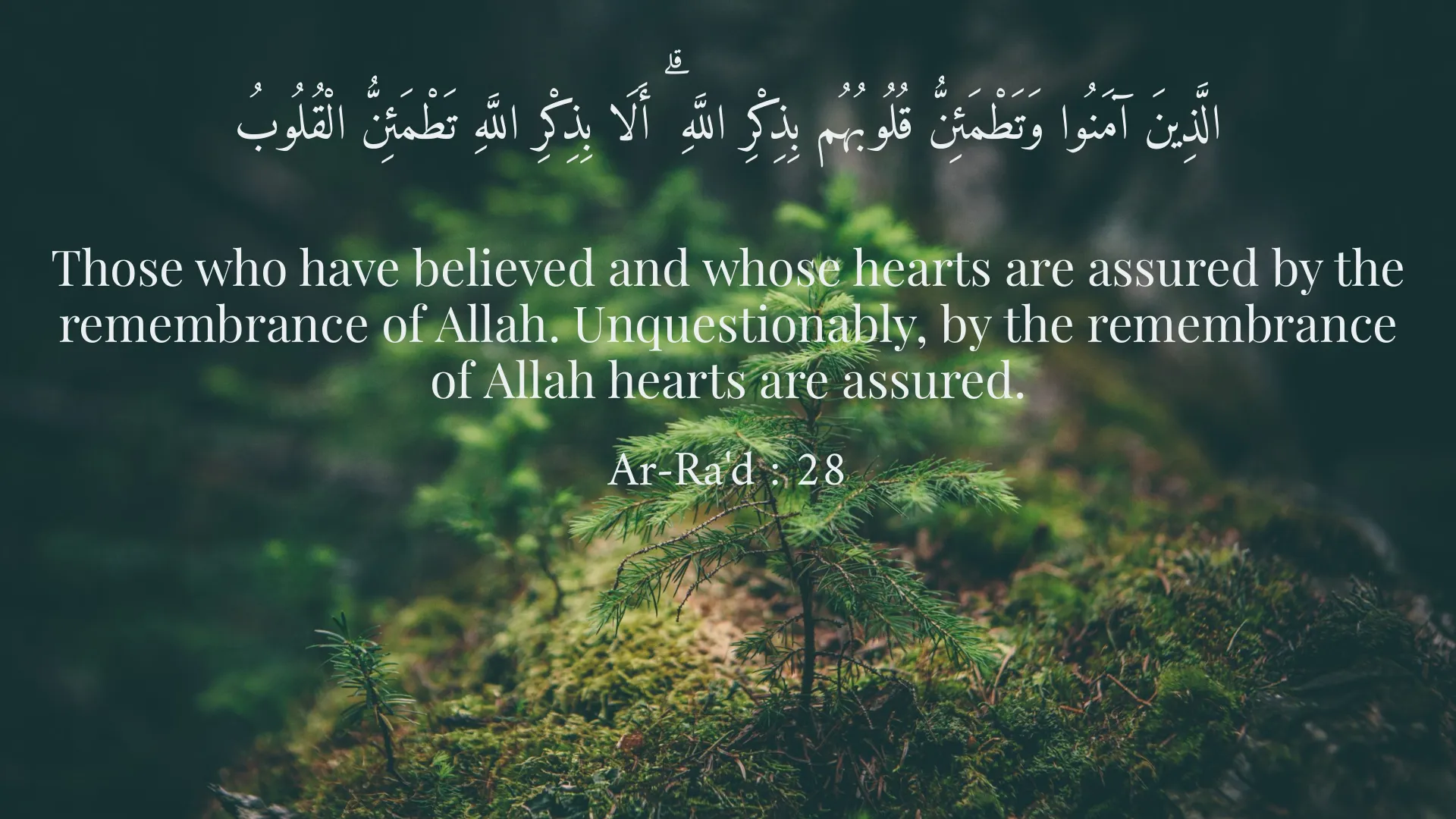
الَّذِينَ آمَنُوا وَتَطْمَئِنُّ قُلُوبُهُم بِذِكْرِ اللَّهِ ۗ أَلَا بِذِكْرِ اللَّهِ تَطْمَئِنُّ الْقُلُوبُ
Those who have believed and whose hearts are assured by the remembrance of Allah. Unquestionably, by the remembrance of Allah hearts are assured.
Ar-Ra'd : 28
يَا أَيُّهَا الَّذِينَ آمَنُوا اسْتَعِينُوا بِالصَّبْرِ وَالصَّلَاةِ ۚ إِنَّ اللَّهَ مَعَ الصَّابِرِينَ
O you who have believed, seek help through patience and prayer. Indeed, Allah is with the patient.
Al-Baqarah : 153
يَا أَيَّتُهَا النَّفْسُ الْمُطْمَئِنَّةُ
O tranquil soul!
Al-Fajr : 27
ارْجِعِي إِلَىٰ رَبِّكِ رَاضِيَةً مَّرْضِيَّةً
Return to your Lord, well-pleased and pleasing [to Him].
Al-Fajr : 28
فَادْخُلِي فِي عِبَادِي
So enter among My [righteous] servants,
Al-Fajr : 29
وَادْخُلِي جَنَّتِي
and enter My Paradise.
Al-Fajr : 30
Short Story
It is narrated in Saadi's Gulistan that a king once saw a jester who, despite his poverty and lack of possessions, lived with utmost peace and joy. The king asked him, "How is it that with all these shortcomings, your heart is free from sorrow and you possess such tranquility?" The jester replied with a smile: "O King! I am your jester, and my heart is joyful because I do not dwell on what I lack, and I am content with what I have. But you, with all your kingdom and wealth, worry every day that someone might covet your throne or surpass you. Your concerns are endless, so how can you find peace?" The king listened to his words thoughtfully and understood that true peace lies in the contentment of the heart and freedom from the bonds of greed and worldly ambitions, not in an abundance of wealth and power.