Quranic Answer
The State of Contentment: A Comprehensive Exploration Contentment is generally understood as a state of satisfaction, peace, and fulfillment. However, within a spiritual context, especially in relationship with the divine, contentment takes on deeper meanings and implications. The significance of contentment in relation to one's faith, particularly within the Islamic tradition, is profound. It encompasses a harmonious relationship with God that leads to internal peace and reassurance. The Holy Quran serves as an essential guide for Muslims aiming to achieve a state of contentment, providing key paths to attain it, including faith, piety, repentance, patience, and gratitude. The Importance of Faith and Piety One of the foremost steps towards achieving contentment is through faith and piety. Faith in Allah is the foundation of a believer's life, shaping their worldview and guiding their actions. In Surah Al-Imran, verse 135, Allah conveys that those who lead their lives with piety and faith will receive His mercy. This verse highlights the intrinsic link between living a life steeped in faith and experiencing divine mercy. The practice of piety—defined as conducting oneself in a manner that is righteous and obedient to Allah—serves to strengthen that faith and cements the bonds between an individual and the Creator. When individuals embrace faith and piety, they become more aware of Allah's presence in their lives, which leads to a greater sense of accountability and purpose. This awareness fosters contentment as individuals find peace in knowing they are part of a divine plan, guided by their faith. Faith becomes the compass that directs believers through life's tumultuous journey, offering solace during challenging times. Furthermore, piety serves as a shield, protecting individuals from despair and discontent that can arise from worldly temptations. The Promise of Forgiveness Another crucial aspect of attaining contentment lies in the notion of seeking forgiveness and repenting for one's sins. In Surah Az-Zumar, verse 53, Allah extends a profound assurance to His servants that they should not despair of His mercy, for He forgives all sins. This comforting message reinforces the idea that no matter how grievous one's shortcomings may be, the door to repentance remains open. The act of seeking forgiveness can relieve the heavy burdens of guilt and shame, allowing individuals to embrace a renewed sense of hope and optimism. Repentance is more than just asking for forgiveness; it involves sincere remorse for past actions and a commitment to pursue a better path moving forward. This transformative process not only reconciles an individual with their Creator but also cultivates a sense of inner peace. By affirming that they can start anew at any moment, believers are able to dissolve feelings of regret and foster lasting contentment. Patience in Hardships Patience is a cardinal virtue in Islam and is intricately linked to achieving contentment. Life's inevitable challenges test an individual's resolve, often leading to moments of doubt and despair. In Surah Al-Baqarah, verse 155, Allah reminds believers that they will certainly face trials, such as fear and hunger, to identify the patient. This verse frames hardships as opportunities for spiritual growth, rather than pure suffering. Therefore, patience during arduous times becomes essential on the path to achieving contentment. By exercising patience, individuals manifest their trust in Allah’s wisdom and timing. This demonstrates an understanding that trials and tribulations are temporary and often serve a greater purpose. When faced with difficulties, a patient heart recognizes that they are not alone; they are accompanied by Allah's support and guidance. This realization can ignite a profound sense of contentment, stemming from the belief that every struggle has the potential to lead to growth and eventual ease. Gratitude in Ease Just as patience is necessary during hardships, gratitude plays a vital role during times of ease and comfort. Expressing thankfulness for the blessings in life is a powerful practice that cultivates a habit of contentment. Gratitude shifts the focus from what one lacks to appreciating what one possesses. It invites positivity and joy into individuals’ lives, reinforcing the connections they share with others and with God. In recognizing and acknowledging blessings—both big and small—individuals can foster a deep-seated sense of contentment. This proactive approach to gratitude not only enhances one’s relationship with Allah but also opens the heart to heal past grievances and cultivate joy. By promoting a mindset of appreciation, believers begin to view life through a lens of positivity, which directly correlates to their overall sense of fulfillment. Strengthening the Connection with Allah In summary, attaining the revered state of contentment requires a multifaceted approach rooted in strengthening one’s connection with Allah. This connection is built through unwavering faith and piety, seeking forgiveness for past transgressions, practicing patience during trying times, and expressing gratitude during moments of ease. These elements work harmoniously to fortify an individual’s journey toward divine contentment. As individuals navigate through life's challenges and joys, trust in Allah becomes a guiding principle that leads them down a path of fulfillment. Embracing this mindset empowers believers, allowing them to cultivate resilience in hardship and gratitude in abundance. Ultimately, the quest for contentment becomes less about external circumstances and more about the internal peace that arises from an authentic relationship with God. This path not only enhances one’s personal faith but also aligns with the greater purpose of existence—finding joy and meaning in every moment of life. Through consistent effort and sincere devotion, individuals can arrive at the state of contentment that is promised by their Creator, enabling them to live lives enriched with peace and satisfaction.
Related Verses
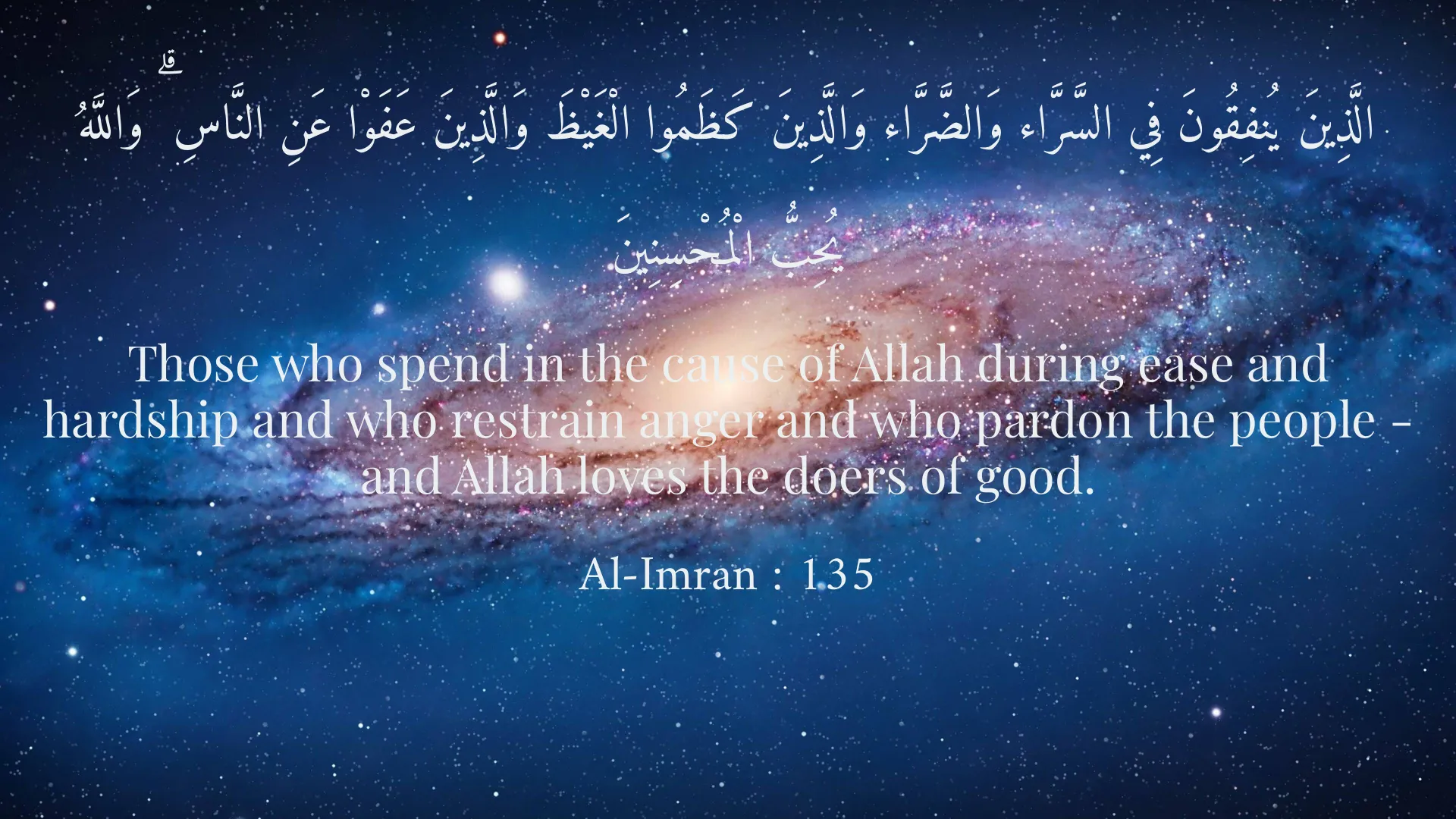
الَّذِينَ يُنفِقُونَ فِي السَّرَّاء وَالضَّرَّاء وَالَّذِينَ كَظَمُوا الْغَيْظَ وَالَّذِينَ عَفَوْا عَنِ النَّاسِ ۗ وَاللَّهُ يُحِبُّ الْمُحْسِنِينَ
Those who spend in the cause of Allah during ease and hardship and who restrain anger and who pardon the people - and Allah loves the doers of good.
Al-Imran : 135
قُلْ يَا عِبَادِيَ الَّذِينَ آمَنْتُمْ اتَّقُوا رَبَّكُمْ ۖ لَلَّذِينَ أَحْسَنُوا فِي هَذِهِ الدُّنْيَا حَسَنَةٌ ۖ وَأَرْضُ اللَّهِ وَاسِعَةٌ ۗ إِنَّمَا يُوَفَّى الصَّابِرُونَ أَجْرَهُمْ بِغَيْرِ حِسَابٍ
Say, 'O My servants who have believed, fear your Lord. For those who do good in this world is good, and the land of Allah is extensive. Indeed, the patient will be given their reward without account.'
Az-Zumar : 53
وَلَنَبْلُوَنَّكُم بِشَيءٍ مِّنَ الْخَوْفِ وَالْجُوعِ وَنَقْصٍ مِّنَ الْأَمْوَالِ وَالْأَنفُسِ وَالثَّمَرَاتِ ۗ وَبَشِّرِ الصَّابِرِينَ
And We will surely test you with something of fear and hunger and a loss of wealth and lives and fruits, but give good tidings to the patient.
Al-Baqarah : 155
Short Story
One day, a person named Adel was in search of happiness and peace. He complained about the hardships he faced in life. Suddenly, he remembered the verses of the Quran and decided to get closer to God. He spent more time in prayer and contemplation, and he practiced patience during his hardships. Adel discovered that with faith and effort alongside God, he felt more content and at peace.