Quranic Answer
In the contemporary era, as our lives become increasingly intertwined with the digital world, establishing a 'healthy digital identity' has become paramount. This identity is a reflection of our personality, values, and interactions in the online sphere, encompassing social media profiles, comments, user-generated content, and every digital footprint we leave behind. Although the Holy Quran does not directly address 'digital identity,' its universal principles and teachings serve as a guiding light for every aspect of life, including our behavior and presence in cyberspace. By drawing inspiration from Quranic teachings, we can shape our digital identity in a way that not only benefits ourselves but also brings good and blessings to society, leading to divine pleasure. The first and foremost Quranic principle in building a healthy digital identity is 'truthfulness and sincerity.' In the Holy Quran, Allah repeatedly commands believers to be truthful and to abstain from lying and deception. A healthy digital identity begins by avoiding pretense, exaggeration, or the creation of a false persona. This means presenting our true selves, not an idealized and unrealistic version. The profiles, photos, and information we share should be a reflection of our genuine being. Deceit and hypocrisy in the digital space, just like in the real world, are condemned and can lead to mistrust and harm to relationships. Allah says in Surah At-Tawbah, verse 119: "O you who have believed, fear Allah and be with the truthful." This verse reminds us that truthfulness is not merely an ethical trait but a divine obligation that must be observed in all aspects of life, including online interactions. The second principle is 'responsibility and awareness of the consequences of actions.' In the digital space, there might be an illusion that our actions are without consequence, but the Quran teaches us that every action, whether small or large, will be recorded and accounted for. Allah says in Surah Az-Zalzalah, verses 7 and 8: "So whoever does an atom's weight of good will see it, And whoever does an atom's weight of evil will see it." These verses emphasize that none of our deeds remain hidden, and our digital footprint is no exception. Every post, every like, every comment, and every piece of content we share forms a part of our digital identity and can have long-term effects. Therefore, responsibility in choosing the content, tone, and message we publish is crucial. We must ask ourselves: Is this content constructive? Does it harm others? Does it defame anyone? Is it wasting my time? Having this critical perspective on our online presence protects us from missteps and from creating a negative digital identity. The third important principle is 'good speech and abstinence from backbiting, slander, and idle talk.' The digital space sometimes becomes a platform for aggression, rumor-mongering, and disrespect. The Quran strongly prohibits such behaviors. In Surah Al-Hujurat, verse 12, it is stated: "O you who have believed, avoid much [negative] assumption. Indeed, some assumption is sin. And do not spy or backbite each other. Would one of you like to eat the flesh of his brother when dead? You would detest it. And fear Allah; indeed, Allah is Accepting of repentance and Merciful." This verse clearly forbids us from backbiting and spying, which in the digital world can manifest as sharing others' private information or speaking ill of them. Our digital identity should be a symbol of decorum, respect, and the promotion of healthy discourse. We must strive for our comments to be constructive, not destructive. We should refrain from spreading false news and rumors, and instead, promote truth and righteousness. The fourth principle is 'moderation and avoidance of extremism in online presence.' Like any other blessing, excessive and immoderate use of digital space can lead to addiction, isolation, and neglect of real-life duties. The Quran advises us to observe moderation in all matters and to avoid extravagance and excess. Wise time management and avoiding spending long hours aimlessly in virtual spaces are crucial parts of building a healthy digital identity. This means managing time, setting priorities, and using digital tools for personal growth and beneficial communication, not for escaping reality or futile entertainment. We can use the digital space for acquiring knowledge, sharing insights, connecting with righteous individuals, and performing good deeds. In doing so, we transform our digital identity into a useful and fruitful tool. Ultimately, by observing these Quranic principles – truthfulness, responsibility, good speech, and moderation – we can build a digital identity that not only preserves our credibility and respect in the virtual world but also enables us to convey positive and divine messages to others, making a constructive impact on the online community. This identity will be a reflection of our faith and a manifestation of Quranic ethics in the digital age.
Related Verses
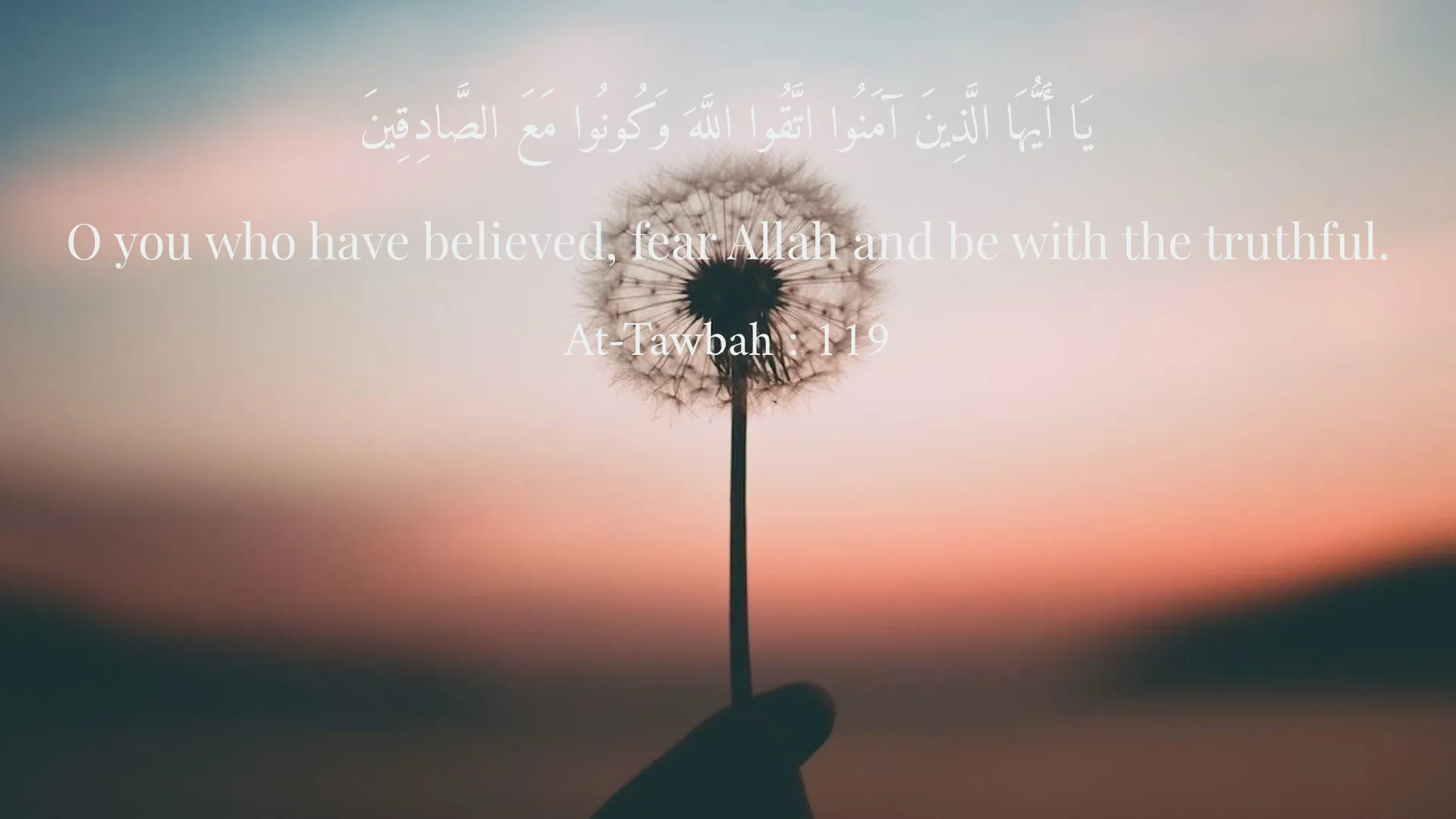
يَا أَيُّهَا الَّذِينَ آمَنُوا اتَّقُوا اللَّهَ وَكُونُوا مَعَ الصَّادِقِينَ
O you who have believed, fear Allah and be with the truthful.
At-Tawbah : 119
فَمَن يَعْمَلْ مِثْقَالَ ذَرَّةٍ خَيْرًا يَرَهُ
So whoever does an atom's weight of good will see it,
Az-Zalzalah : 7
وَمَن يَعْمَلْ مِثْقَالَ ذَرَّةٍ شَرًّا يَرَهُ
And whoever does an atom's weight of evil will see it.
Az-Zalzalah : 8
يَا أَيُّهَا الَّذِينَ آمَنُوا اجْتَنِبُوا كَثِيرًا مِّنَ الظَّنِّ إِنَّ بَعْضَ الظَّنِّ إِثْمٌ ۖ وَلَا تَجَسَّسُوا وَلَا يَغْتَب بَّعْضُكُم بَعْضًا ۚ أَيُحِبُّ أَحَدُكُمْ أَن يَأْكُلَ لَحْمَ أَخِيهِ مَيْتًا فَكَرِهْتُمُوهُ ۚ وَاتَّقُوا اللَّهَ ۚ إِنَّ اللَّهَ تَوَّابٌ رَّحِيمٌ
O you who have believed, avoid much [negative] assumption. Indeed, some assumption is sin. And do not spy or backbite each other. Would one of you like to eat the flesh of his brother when dead? You would detest it. And fear Allah; indeed, Allah is Accepting of repentance and Merciful.
Al-Hujurat : 12
Short Story
It is narrated that a wise man once told his students: "O children, in every deed you undertake, both in public and in private, be as though all people, all angels, and God Himself are witnesses and observers of your actions." A student asked: "O wise one, how can we be like this, while many of our deeds are done in solitude?" The wise man smiled and said: "Is it not true that every word you utter and every action you perform is recorded in a ledger? In your modern world, every word you write in cyberspace and every picture you share is like an inscription that remains forever, and sooner or later you will see its reflection. So strive that your name and identity, both in the real world and in the virtual world, be a symbol of honesty, good speech, and decorum, for the more virtuous you are, the more good name and good identity you will leave behind." This wise counsel was like a light that illuminated the path of the students in a world that would later be called "digital."