Quranic Answer
The question of how one can converse with God is one of the most profound and beautiful inquiries in human spirituality, leading to the very essence of a believer's existence. In Islam, particularly through the luminous teachings of the Holy Quran and the sunnah of the Prophet Muhammad (peace be upon him), this sacred dialogue is not merely possible but is the cornerstone of a vibrant, living faith. It’s a dynamic, two-way exchange: we speak to God through our devotion and supplications, and God speaks to us through His divine revelations, His creation, and the myriad signs He places in our lives. This multifaceted conversation transcends mere verbal exchange, encompassing various acts of worship, profound contemplation, and the sincere endeavor to live a life in harmony with divine guidance. It is a constant, intimate connection that nourishes the soul, provides unparalleled solace and direction, and imbues life with a sublime meaning. Part One: Our Speaking to God (Our Side of the Conversation) 1. Prayer (Salat): The Direct Audience with the Divine. The daily prescribed prayers (Salat) are arguably the most fundamental and structured form of direct, personal communication with God. When a believer stands for prayer, they consciously turn their entire being – mind, body, and soul – towards their Creator. The opening declaration, "Allahu Akbar" (God is the Greatest), immediately shifts perspective, acknowledging His supreme majesty and bringing a profound sense of humility. Within the prayer, the recitation of Surah Al-Fatiha, "The Opening," is a central and profoundly communicative act. As the Prophet Muhammad (PBUH) explained, God responds to each verse of Al-Fatiha recited by the worshipper, making it a true dialogue. We praise Him ("Alhamdulillahir Rabbil Alamin" - All praise is due to Allah, Lord of the worlds), acknowledge His sovereignty ("Maliki Yawmid Deen" - Master of the Day of Judgment), seek His guidance ("Iyyaka Na’budu wa Iyyaka Nasta’een" - It is You we worship and You we ask for help), and humbly request His blessings and protection. The subsequent physical acts of bowing (Ruku') and prostration (Sujud) are powerful expressions of submission and reverence. In prostration, particularly, a believer is at their closest point to God, whispering their innermost thoughts, fears, hopes, and gratitude directly to the Almighty. This intimate moment is where the soul pours out its unburdened self, finding solace in complete surrender. Salat is not just a ritual; it's a dedicated spiritual rendezvous, a time to consciously disconnect from the clamor of the world and reconnect with the Source of all existence. It’s a rhythmic, constant reaffirmation of faith and dependence, strengthening our bond with every prostration and every whispered word. 2. Supplication (Du'a): The Heart's Unfiltered Cry. Beyond the structured prayers, Du'a is the purest, most spontaneous, and unmediated form of conversation with God. It is an intimate whispering of the heart, a plea that can be offered at any time, in any place, for anything – big or small. The Quran emphatically encourages us to call upon God: "And your Lord says, 'Call upon Me; I will respond to you.'" (Surah Ghafir 40:60). This verse is a direct, unconditional invitation from God Himself, promising a response. Du'a is far more than just asking for needs; it is a profound expression of absolute reliance on God, a recognition of our inherent weakness and His boundless omnipotence. It encompasses heartfelt praise (hamd), sincere thanksgiving (shukr), earnest seeking of forgiveness (istighfar), pouring out worries, expressing deep desires, and seeking precise guidance in life's myriad decisions. Whether in moments of overwhelming joy or profound despair, a believer instinctively turns to God in Du'a, confident that He listens, understands every nuance, and responds in a manner that is ultimately best, according to His infinite wisdom and mercy. It is a direct, open line to the Divine, accessible to every soul, regardless of their worldly status or circumstances. Through Du'a, we lay bare our vulnerabilities, strengthen our trust in God's plan, and deepen our personal, unbreakable bond with Him, realizing that no knot is too tangled for His hands to untie, and no burden too heavy for Him to carry. 3. Remembrance (Dhikr): The Continuous Pulse of Connection. Dhikr is the conscious, continuous remembrance of God, encompassing a vast array of practices from repeating specific phrases like "Subhanallah" (Glory be to Allah), "Alhamdulillah" (All praise is due to Allah), "Allahu Akbar" (God is the Greatest), to simply reflecting on God's beautiful names and attributes (Asma al-Husna) and His blessings upon us. Dhikr is the spiritual lifeline that keeps God at the forefront of our minds and hearts throughout our daily lives. It transforms mundane activities into acts of worship and subtle conversation, filling the heart with profound peace and serenity. As the Quran beautifully states: "Unquestionably, by the remembrance of Allah hearts are assured." (Surah Ar-Ra’d 13:28). This constant state of mindfulness and remembrance maintains an open channel of communication, ensuring that our hearts and minds are perpetually attuned to the Divine presence. It elevates everyday existence into a continuous state of spiritual engagement, making us feel God's presence in every breath, every thought, and every step we take. It is a cultivation of inner awareness that turns the entire world into a tapestry of divine signs, making our lives saturated with His sacred presence. 4. Recitation and Reflection on the Quran: Listening to and Responding to Divine Words. When we recite the Quran, we are engaged in an act of reading God's direct, eternal words revealed to humanity. In this sense, it is God speaking to us. However, the conversation becomes a two-way street when we actively engage in Tadabbur – deep reflection and contemplation upon its meanings. By pondering its wisdom, striving to understand its commands, internalizing its parables, and committing to implementing its teachings, we are actively responding to God's speech to us. The Quran is not merely a book; it is a living guide, a source of light and healing. Engaging with it intellectually, emotionally, and spiritually is a profound way to interact with the Divine will, wisdom, and boundless knowledge. It illuminates our path, answers our deepest questions, and purifies our hearts, leading us from the darkness of ignorance and misguidance towards the light of true guidance. 5. Seeking Forgiveness (Istighfar) and Repentance (Tawbah): The Sincere Plea for Renewal. Acknowledging our human frailties, admitting our shortcomings, and sincerely seeking God's forgiveness (Istighfar) is a powerful, humbling, and utterly essential form of conversation. It signifies true humility, deep remorse for errors, and a sincere desire to turn away from wrong and return to the straight path. God, being Al-Ghafur (The Most Forgiving) and Ar-Rahim (The Most Merciful), loves those who turn to Him in genuine repentance (Tawbah). This act of asking for forgiveness is a direct plea for divine mercy and an admission of our profound need for His grace, opening a channel for spiritual cleansing, divine compassion, and profound renewal of the soul, thereby refreshing and strengthening our relationship with Him. Part Two: God Speaking to Us (His Messages in Our Lives) 1. Through the Quran: The Direct and Everlasting Divine Address. As mentioned, the Quran is God's direct, unchanging message to humanity. It is His speech, His ultimate guidance, His timeless wisdom. When we diligently read, study, and understand the Quran, we are actively listening to God. Its verses speak directly to our hearts, guide our ethical decisions, provide clear answers to life's complex questions, and illuminate the path to spiritual fulfillment and salvation. The more we immerse ourselves in the Quran, the clearer God's "voice" becomes in guiding our lives and shaping our worldview, finding in every verse a sign of His presence and guidance. 2. Through Signs (Ayat) in the Universe: The entire creation, from the smallest atom to the grandest galaxy, is replete with "Ayat" – signs – of God's existence, His infinite power, intricate wisdom, and boundless mercy. From the delicate design of a single snowflake to the majestic cycle of day and night, from the miracle of photosynthesis to the complex web of life itself, God speaks to us through His creation. Reflecting deeply on these signs (Tadabbur) is a profound way of listening to God's continuous messages about His unparalleled greatness, His meticulous design, and our humble yet significant place within His grand cosmic order. It's an ongoing, silent conversation where every aspect of nature whispers His praise and testifies to His infinite power and knowledge. 3. Through Inner Inspiration and Guidance (Ilham): While not revelation (Wahy) reserved for prophets, God often guides us through subtle inner thoughts, feelings, or a deep sense of certainty (Ilham). This divine inspiration can manifest as a sudden clarity in decision-making, a surge of strength in the face of adversity, or an inexplicable feeling of peace amidst chaos. It is a gentle, often intuitive nudge from the Divine, guiding us towards what is right and beneficial. Discerning this inner guidance requires a purified heart, spiritual attentiveness, and a strong connection with God, enabling us to perceive and act upon these divine whispers. 4. Through Trials and Blessings in Life: God communicates with us through the very tapestry of our life experiences. Trials and tribulations, while challenging, can be a test of faith, a means of purification, or a way to draw us closer to Him, teaching us patience, reliance, and resilience. Conversely, blessings and ease are constant reminders of His boundless generosity, kindness, and mercy, prompting profound gratitude (shukr) and humility. Each experience, whether seemingly good or challenging, carries a unique divine message meant to refine our character, deepen our understanding, and strengthen our faith. These are His subtle ways of shaping us and guiding us toward spiritual maturity, showing that He is always watchful and managing our affairs. In essence, conversing with God is about cultivating a conscious, active, and sincere relationship with Him in every facet of our lives. It is about remembering Him constantly through Dhikr, turning to Him in all circumstances through Du'a and Salat, listening attentively to His guidance through His revelation (the Quran) and His magnificent creation, and striving with utmost sincerity to live in a way that is pleasing to Him. This continuous, vibrant engagement transforms a believer's life into a perpetual, intimate dialogue with the Divine, bringing unparalleled peace, profound purpose, and boundless spiritual fulfillment. It is a journey of humility, deep reflection, and unwavering trust in the All-Hearing, All-Knowing, and Ever-Present Lord. The more we sincerely seek to converse with Him, the more He reveals Himself to us, not just through words, but through the very fabric of our existence and the tranquility He bestows upon our hearts. This constant communication makes God a living, tangible reality in our daily lives, transforming our struggles into opportunities for immense spiritual growth and our joys into moments of deeper, more meaningful gratitude. It instills an unshakeable sense of purpose and direction, knowing that every step we take is observed, understood, and guided by the One who loves us more than any earthly being. This profound relationship is the ultimate goal of spiritual striving, a sacred bond that transcends the physical realm and connects the soul directly to its Creator, offering enduring solace, immense strength, and unwavering hope through all of life's seasons. It makes us feel that we are never truly alone, for God is always near, listening, responding, and orchestrating matters in ways that are ultimately best for us and always helping us on the path to well-being and perfection.
Related Verses
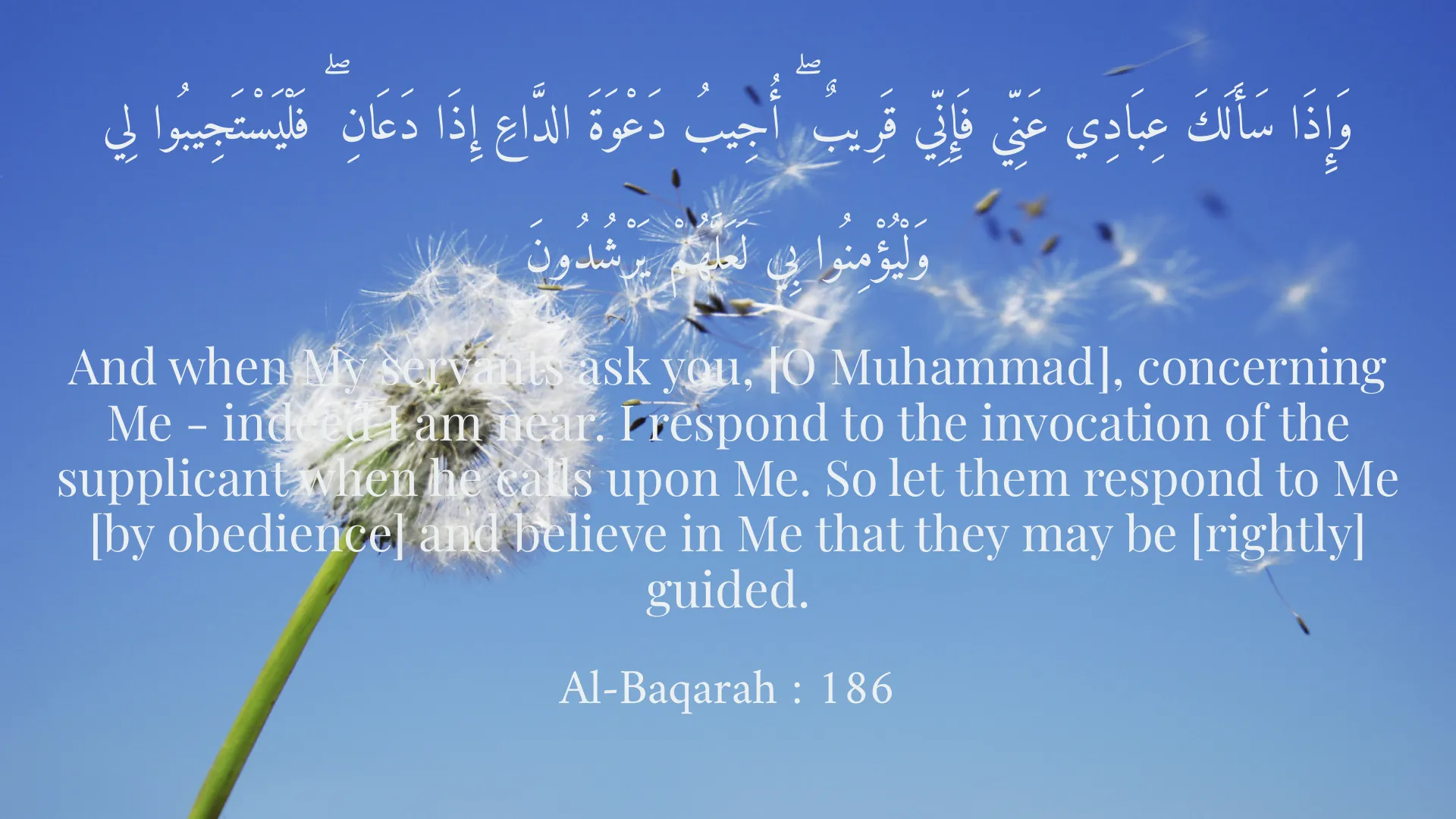
وَإِذَا سَأَلَكَ عِبَادِي عَنِّي فَإِنِّي قَرِيبٌ ۖ أُجِيبُ دَعْوَةَ الدَّاعِ إِذَا دَعَانِ ۖ فَلْيَسْتَجِيبُوا لِي وَلْيُؤْمِنُوا بِي لَعَلَّهُمْ يَرْشُدُونَ
And when My servants ask you, [O Muhammad], concerning Me - indeed I am near. I respond to the invocation of the supplicant when he calls upon Me. So let them respond to Me [by obedience] and believe in Me that they may be [rightly] guided.
Al-Baqarah : 186
وَقَالَ رَبُّكُمُ ادْعُونِي أَسْتَجِبْ لَكُمْ ۚ إِنَّ الَّذِينَ يَسْتَكْبِرُونَ عَنْ عِبَادَتِي سَيَدْخُلُونَ جَهَنَّمَ دَاخِرِينَ
And your Lord says, 'Call upon Me; I will respond to you.' Indeed, those who disdain My worship will enter Hell [rendered] contemptible.
Ghafir : 60
الَّذِينَ آمَنُوا وَتَطْمَئِنُّ قُلُوبُهُم بِذِكْرِ اللَّهِ ۗ أَلَا بِذِكْرِ اللَّهِ تَطْمَئِنُّ الْقُلُوبُ
Those who have believed and whose hearts are assured by the remembrance of Allah. Unquestionably, by the remembrance of Allah hearts are assured.
Ar-Ra'd : 28
Short Story
It is narrated that in ancient times, there was a devout and worshipping man who spent his entire life in outward acts of worship and loud supplications. Every morning and evening, with a resonant voice and prolonged prayers, he would ask God for his needs, believing he was at the peak of conversation with the Divine. One day, by a stream, he saw a wise, elderly man sitting with a strange serenity, whispering to himself. The ascetic, out of curiosity, asked: 'O Sheikh, you sit here so peacefully, how do you speak with your Lord? For years, every morning and evening, I call upon Him with a loud voice, but it seems my voice doesn't reach Him.' The wise old man smiled kindly and said: 'Young man, the Lord is not flesh and blood that He should hear your shouts; He is the King of hearts. Conversation with Him is not with a loud voice, but with a pure heart and sincere intention. When your heart becomes tranquil and free from worldly concerns, a whisper from your heart reaches the Throne that no shout can ever attain. He is nearer than you imagine, and to hear your words, He needs no megaphone. In the silence of the heart and the privacy of intention, your whispers are more heard.' The ascetic came to his senses and realized that for years he had only worshipped outwardly, neglecting the inner dimension. From then on, he devoted himself to self-purification and purity of heart, and instead of shouting, he conversed with his Lord through inner whispers, tasting the sweet flavor of peace and closeness.