Quranic Answer
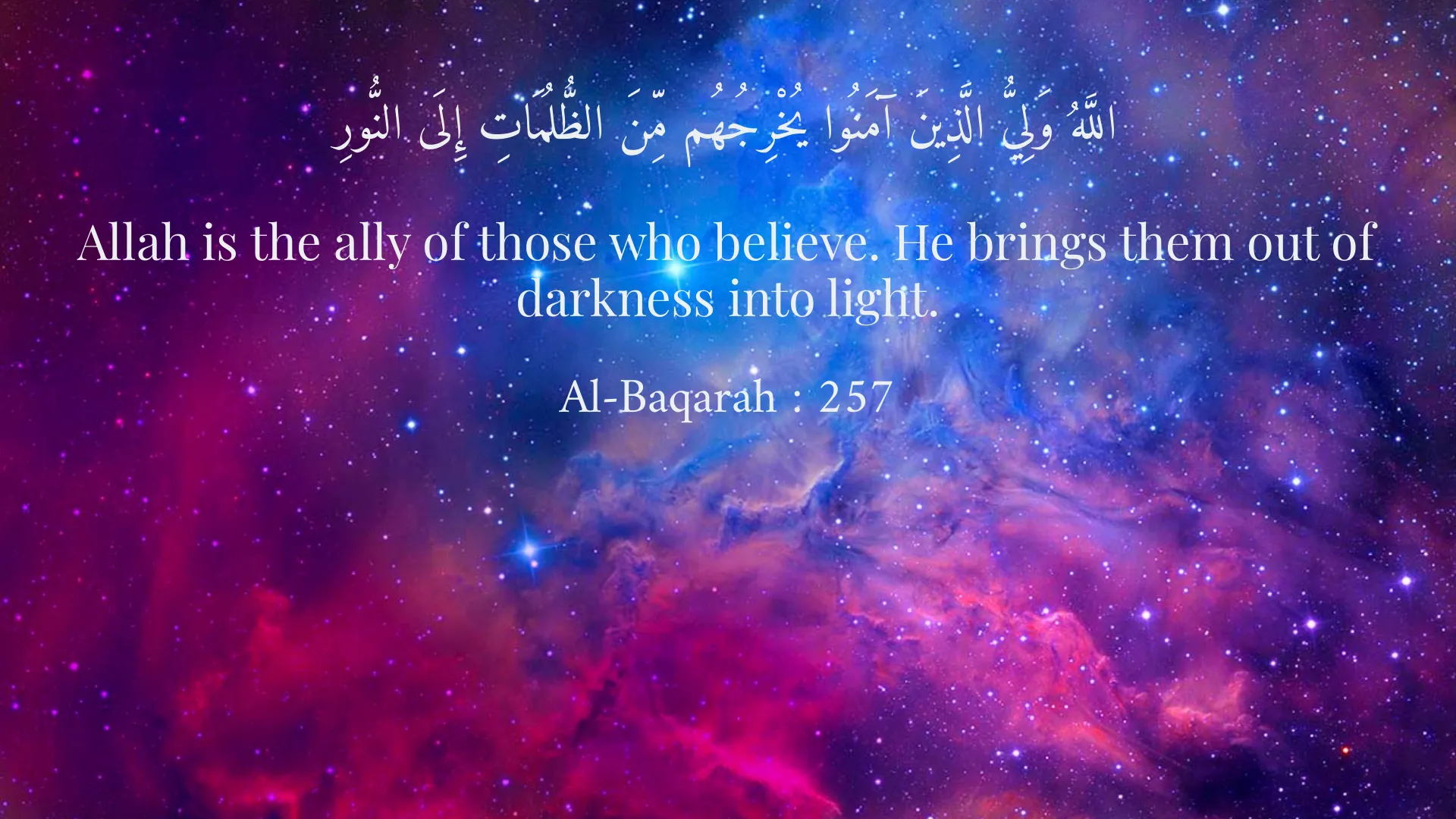
In the Holy Quran, light is not merely a physical phenomenon but a profound symbol of guidance, truth, and divine presence. It represents the clarity needed to navigate the complexities of life and offers hope in the midst of adversity. The concept serves as a central theme throughout Islamic teachings, emphasizing the transformative power of faith that can lead individuals from despair and confusion into a state of understanding and enlightenment. The Quran frequently draws on the imagery of light and darkness to express the dichotomy between belief and disbelief, righteousness and sin, and ultimately, the journey of a believer toward salvation. One of the most impactful references to this symbolism can be found in Surah Al-Baqarah, verse 257, which states, 'Allah is the ally of those who believe. He brings them out of darkness into light.' In this verse, the transition from darkness to light signifies more than just a physical relocation; it captures an essential change in one's spiritual state. Darkness is often associated with ignorance, despair, and moral ambiguity. It represents a life devoid of divine guidance, where individuals may feel lost and uncertain about their purpose. In contrast, light symbolizes enlightenment, understanding, and the steadfast guidance of Allah. This transition is pivotal for believers facing trials and tribulations. It reassures them that, despite the hardships they face, their faith can deliver them from their struggles into a realm of peace and clarity. It's important to note that this support is not limited to the external circumstances of one's life but also extends to the internal struggles, such as anxiety, doubts, and spiritual confusion. Furthermore, the verse affirms the idea of Allah as an ally—someone who stands by the believers and actively intervenes in their lives for their betterment. This indicates a relationship grounded in trust, where the believers turn to Him, often in moments of crisis, and find solace in His omnipresence and infinite wisdom. This divine companionship emboldens them to continue their journey toward light, encouraging perseverance and resilience in the face of adversity. In a similar vein, Surah An-Nur, verse 35, encapsulates the divine light of Allah with the phrase, 'Allah is the Light of the heavens and the earth.' Here, light is portrayed not just as a guiding force but as an encompassing presence in the universe, suggesting that everything exists in relationship to this light. It illustrates that, irrespective of the darkness experienced on a personal or societal level, Allah's light is always available, ready to illuminate even the darkest corners of existence. This light can manifest through various means, including revelations, prophetic teachings, and the companionship of the community of believers (Ummah). The Quran thus invites its readers to reflect upon the nature of this divine light and to seek out its illumination through sincere prayer and worship. The act of turning toward Allah in moments of distress is not merely an expression of desperation but rather a profound acknowledgment of His capabilities and mercy. It is through prayer and reflection that individuals reconnect with their creator and find the guidance they so desperately seek. Prayer, in Islamic thought, serves as both a spiritual practice and an avenue for personal empowerment. It fosters a sense of connection with Allah, reminding believers that they are never alone in their struggles. This connection is paramount, especially for those engaging with life’s most challenging trials. The solace found in prayer and self-reflection reinforces the belief that there is a consistent stream of divine light accessible to those who earnestly seek it. Moreover, this light is not confined within the parameters of Islamic belief but extends universally, illuminating the hearts of all who are sincere in their search for truth. It transcends cultural barriers, addressing fundamental human concerns of suffering and uncertainty intrinsic to the human experience. For believers, this acknowledgment of a higher purpose and divine guidance is foundational in achieving spiritual enlightenment. Consequently, as believers navigate their life's path, they are encouraged to cultivate faith and reliance on Allah as a means of overcoming darkness. The Quran teaches that life inherently contains challenges, yet with faith and perseverance, individuals can transcend their difficulties and experience profound inner peace. Having faith in God's wisdom can transform one’s perspective, turning burdens into blessings and trials into opportunities for spiritual growth. Indeed, it is essential to remember that darkness is a part of life’s natural rhythm; it is not something to be feared, but understood. The Quran acknowledges this reality, emphasizing that while darkness may surround us, faith offers a reliable source of light to carry us through. This principle inspires countless believers to maintain hope amid life’s inevitable challenges. In summary, the concept of light in the Holy Quran serves as an essential metaphor for guidance, truth, and divine presence amidst the trials and tribulations of life. The verses from Surah Al-Baqarah and Surah An-Nur remind believers that through faith, sincere prayers, and a commitment to reconnect with Allah, they can transition from darkness to light. By embracing this journey and relying on divine assistance, individuals can achieve a state of enlightenment and peace, transcending the darkness that life may present. Indeed, while darkness will always exist, with hope and unwavering faith in God, we can illuminate our lives and persist toward a brighter future.
Related Verses
اللَّهُ وَلِيُّ الَّذِينَ آمَنُوا يُخْرِجُهُم مِّنَ الظُّلُمَاتِ إِلَى النُّورِ
Allah is the ally of those who believe. He brings them out of darkness into light.
Al-Baqarah : 257
اللَّهُ نُورُ السَّمَاوَاتِ وَالْأَرْضِ
Allah is the Light of the heavens and the earth.
An-Nur : 35
Short Story
One day, a man named Mahmoud was immersed in darkness and despair. He wondered how he could reach the light. Suddenly, he remembered the verses of the Quran; they reminded him that he could always turn to Allah for refuge. Mahmoud decided to dedicate time daily for prayer and thought about Allah. With every prayer he recited and every word he contemplated, the darkness gradually faded away, and he began to feel more peace and light within himself.