Quranic Answer
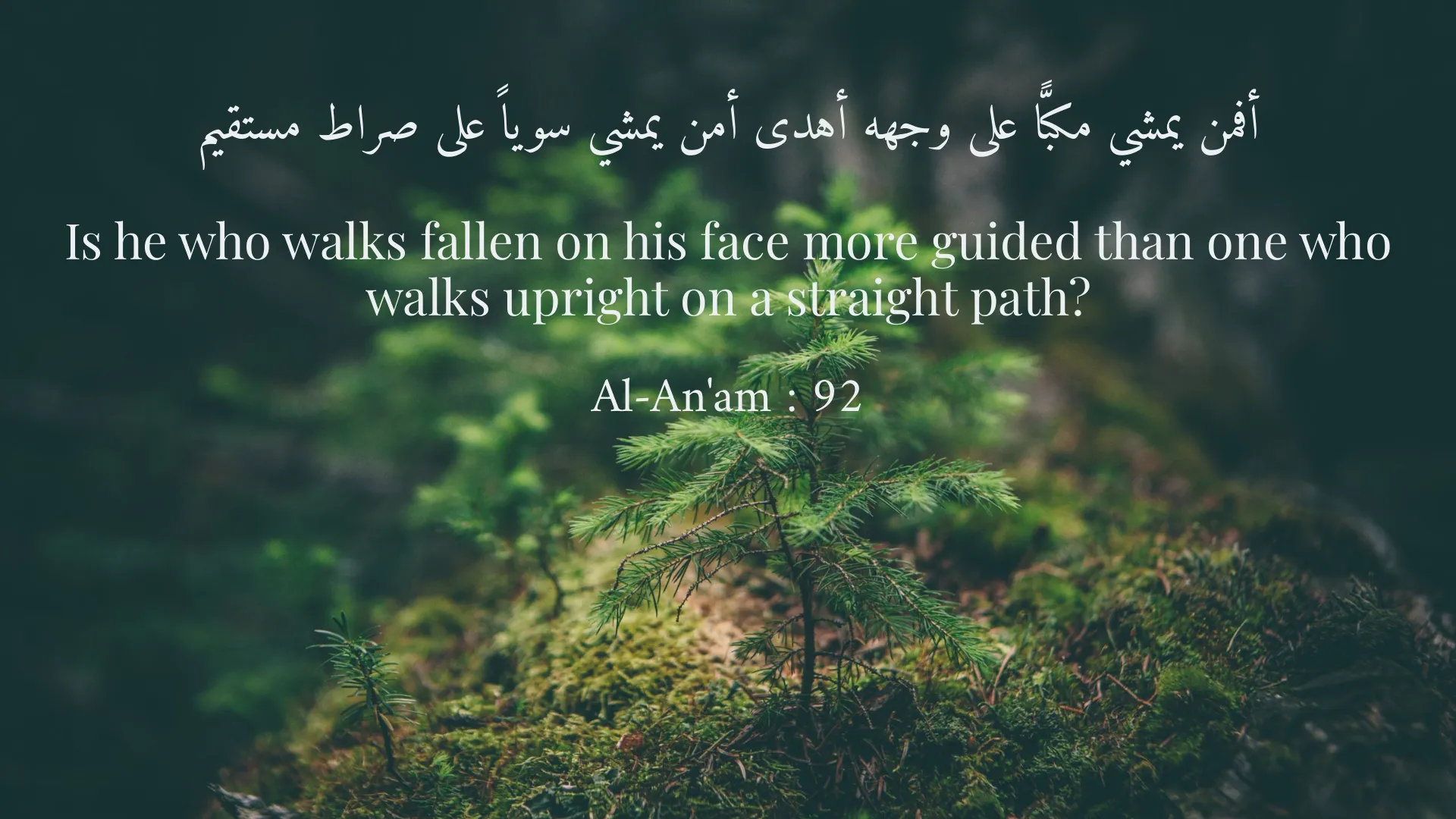
In the Holy Quran, light and guidance are emphasized as the most essential elements of believers' lives. The concepts of light and guidance hold a significant place in the spiritual journey of a Muslim. The Quran serves as a comprehensive guide, providing believers with the necessary tools and principles to navigate the complexities of life. It encourages individuals to seek light in times of darkness through faith, good deeds, and a sincere connection to Allah. This article delves into the profound symbolism of light in the Quran, exploring key verses that illustrate the importance of guidance and faith in the lives of believers. One of the powerful verses emphasizing this idea is found in Surah Al-An'am, verse 92, which states: 'Is he who walks fallen on his face more guided than one who walks upright on a straight path?' This verse serves as a profound reminder that the path of righteousness is illuminated by faith, while straying from this path leads to darkness. Walking upright symbolizes faith, integrity, and the conscious effort to align one's actions with the teachings of Allah. The verse calls upon believers to reflect on their spiritual state, urging them to rise above worldly distractions and seek guidance through prayer and righteous actions. In doing so, they become stronger in their faith, ultimately enabling them to navigate life with clarity and purpose. In moments of deep despair or uncertainty, it is essential to seek the light that comes from a sincere connection with Allah. When a person finds themselves engulfed in darkness, the best path towards finding enlightenment is through prayer, supplication, and remembrance of Allah. This relationship fosters a sense of solace and direction, allowing individuals to rediscover the strength to overcome challenges. The Quran emphasizes the importance of maintaining this connection, reminding believers to turn towards Allah in both times of ease and hardship. Surah An-Nur, verse 35, further illuminates the theme of light in the Quran, stating, 'Allah is the Light of the heavens and the earth.' This verse establishes Allah as the ultimate source of light and guidance for humanity. Just as the sun dispels darkness and brings warmth, Allah's presence provides clarity to the hearts of the believers. This metaphor illustrates that true guidance comes from recognizing Allah's authority and surrendering to His will. When individuals embrace this light, they find their way amid life's challenges, making Allah's guidance an intrinsic part of their everyday lives. The concept of light in the Quran is not merely an abstract notion; it encourages believers to take action. Surah Ash-Sharh, verses 5 and 6, remind us that 'Indeed, with hardship comes ease.' This verse encapsulates the Quranic perspective that adversity is not permanent and that Allah's assistance is always near. This sentiment reinforces the idea of hope and optimism during difficult times, urging believers to remain steadfast in their faith. Rather than succumbing to despair, they are encouraged to look towards the future and strive towards better circumstances. In challenging times, the message of the Quran serves as a beacon of hope. Believers can find comfort in the knowledge that Allah is always with them, guiding them through the darkness. The notion of light as a source of guidance compels individuals to cultivate hope, patience, and perseverance. This perspective is crucial, especially in today's fast-paced world, where individuals often find themselves overwhelmed by trials and tribulations. The act of seeking light emphasizes the significance of community as well. The Quran encourages believers to support one another, fostering an atmosphere of cooperation and empathy. When believers shine their light on each other, they collectively combat the darkness that engulfs humanity. In doing so, they embody the teachings of Islam, adhering to the principles of charity, kindness, and support. The journey towards faith and enlightenment requires dedication and sincerity. It is essential for believers to engage in self-reflection and strive for spiritual growth. This growth is facilitated through acts of worship, such as prayer and remembrance (dhikr), which foster a deeper understanding of Allah's presence in their lives. Additionally, engaging in good deeds and charitable actions serves as a practical manifestation of the light one seeks. By helping others, individuals participate in the divine mission of bringing light to the world, thus transforming their surroundings into spaces of hope and positivity. Moreover, the symbolism of light in the Quran transcends the individual journey; it also points towards collective progress as a community. When believers come together, sharing their experiences and wisdom, they create a powerful source of light that can lead others out of darkness. The Quran places a strong emphasis on unity and cooperation, recognizing that together, believers can achieve a greater transcendence that leads to collective enlightenment. In conclusion, light and guidance are central themes in the Holy Quran, profoundly impacting the lives of believers everywhere. As illustrated through key verses, believers are reminded that faith and good deeds are their guiding lights in times of darkness. The relationship with Allah, nurtured through prayer and remembrance, offers comfort and direction during the trials of life. As believers strive towards creating a supportive community, they spread this light even further, illuminating the world around them. Ultimately, the Quran serves as a comprehensive guide, urging individuals to seek enlightenment within themselves, while fostering hope and resilience amidst adversity. As they move forward on their spiritual journey, believers discover that Allah is indeed the Light of the heavens and the earth, guiding them ever closer to Him.
Related Verses
أفمن يمشي مكبًّا على وجهه أهدى أمن يمشي سوياً على صراط مستقيم
Is he who walks fallen on his face more guided than one who walks upright on a straight path?
Al-An'am : 92
اللَّهُ نُورُ السَّمَاوَاتِ وَالْأَرْضِ
Allah is the Light of the heavens and the earth.
An-Nur : 35
فَإنَّ مَعَ الْعُسْرِ يُسْرًا
Indeed, with hardship comes ease.
Ash-Sharh : 5
Short Story
One day, a man named Hossein found himself lost in the darkness of his life. He was searching for a way to find light and hope. When he referred to the verses of the Quran, he said to himself: 'Allah is the Light of the heavens and the earth.' He decided to overcome his problems and, with faith in Allah, seek a new light amidst darkness. Hossein learned that hope in God could illuminate the brightest path for him.