Quranic Answer
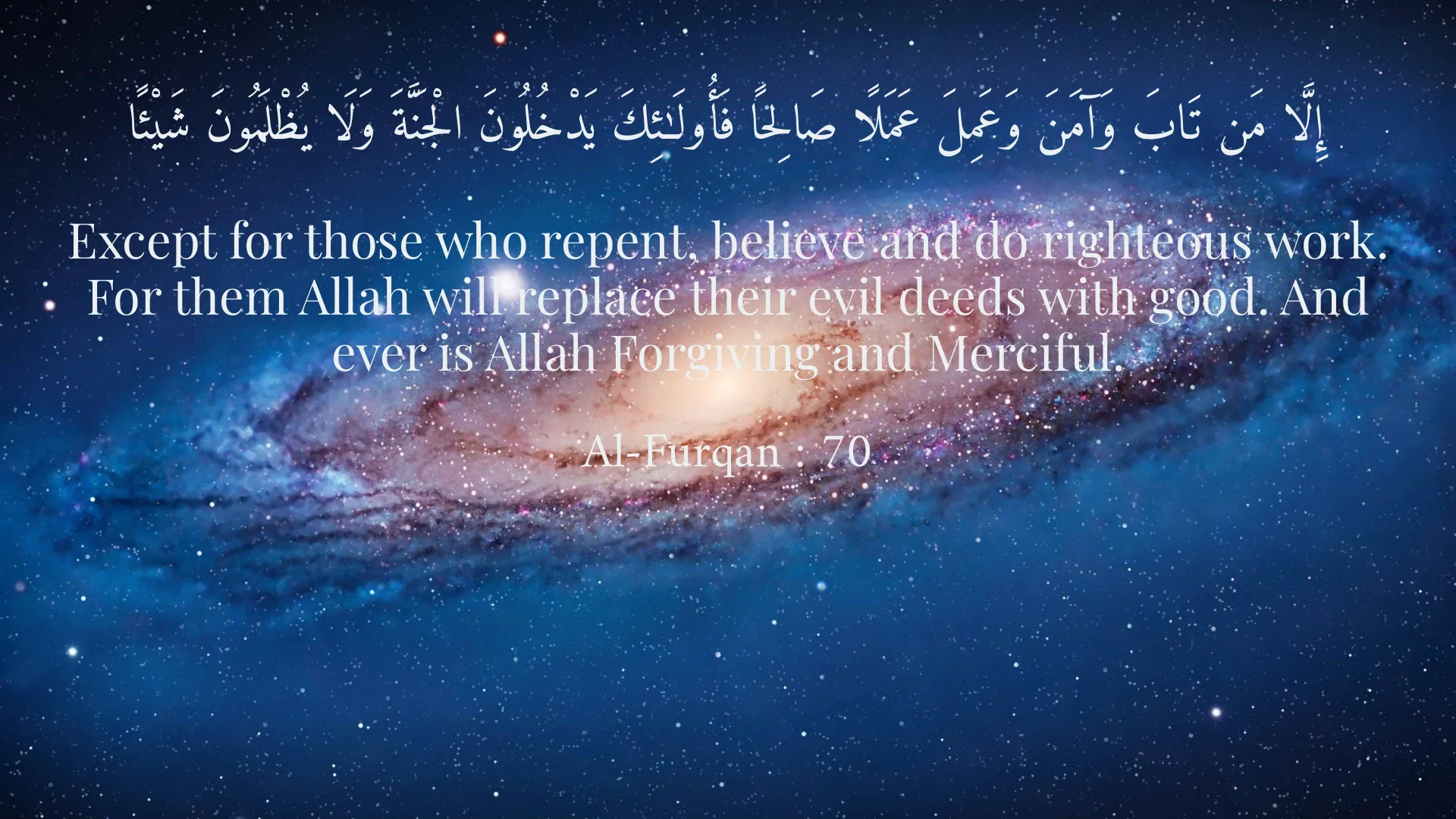
Living with the Quran can serve as a comprehensive guide for individuals, allowing them to lead a better life. The Quran is not merely a religious text but a way of life that delineates the necessary principles and guidelines for both spiritual and mundane existence. From moral ethics to personal conduct, the Quran addresses various aspects of life, encouraging its followers to nurture their souls and instill positive behavior in their day-to-day actions. Through its verses, the Quran provides fundamental lessons on compassion, justice, and personal development, empowering believers to navigate the complexities of life more effectively. In Surah Al-Furqan, verse 70, it is emphasized: "Except for those who repent, believe and do righteous work. For them Allah will replace their evil deeds with good. And ever is Allah Forgiving and Merciful." This passage echoes an essential truth about human nature; everyone errs, but the key to redeeming oneself lies in repentance and good deeds. The act of repentance is among the most profound elements of faith. It is a sincere commitment to abandon one’s past wrongdoings while seeking forgiveness from God. This transformative journey encourages individuals to self-reflect, acknowledge their shortcomings, and stride towards righteousness through actions that uplift both themselves and those around them. Righteous actions encompass a myriad of behaviors, including charity, honesty, justice, and respect for others. Engaging in acts of charity, or giving back to the community, not only helps those in need but strengthens the bond between individuals and fosters a sense of empathy. Ensuring honesty in dealings creates a trustworthy social fabric, promoting an environment where honesty thrives. Additionally, showing respect to others cultivates mutual understanding and facilitates peaceful coexistence—elements that are paramount in today’s increasingly diverse societies. Furthermore, the Quran asserts its status as an unwavering source of guidance in Surah Al-Baqarah, verse 2: "This is the Book about which there is no doubt, a guidance for those conscious of Allah." This declaration serves to enlighten believers that the Quran is not merely a set of rules but rather a compass designed for those who are mindful of their Creator. Being conscious of Allah (Taqwa) involves living with awareness that the divine presence pervades all actions, guiding adherents to act justly and ethically. The Quran functions as a roadmap—not only delineating what is morally correct but also helping believers navigate their struggles, providing solace and fostering resilience. By delving into the Quran and acting upon its commands, individuals are invited to embark on a transformative journey that challenges them to become better versions of themselves. Engaging with the Quran is not a one-time task but a lifelong commitment. The regular study of its verses enables believers to internalize its teachings, offering new insights and revelations pertinent to life’s varying situations. Through this continual learning process, one acquires spiritual wisdom which translates into enhanced emotional intelligence, allowing for a more profound understanding of both oneself and others. The Quran further emphasizes humility and sincerity in worship. In Surah Al-Mu'minun, verses 1 and 2, it states: "Indeed, the believers have succeeded. They who are during their prayer humbly submissive." Humility is an essential attribute that fosters sincerity in prayer and a connection with God. In recognizing one’s limitations and dependence on the divine, believers are motivated to approach life with a sense of gratitude and peace. The Quran thus instills a spiritual essence that transcends mere ritualistic practices, urging followers to approach prayer and interactions with the divine with intentions that are pure and heartfelt. The overarching message of the Quran is clear: by adhering to its teachings and practicing its principles, one can attain a better and more meaningful life. In a world filled with distractions, the Quran serves as an anchor, guiding individuals towards tranquility and purpose. Whether in moments of joy or despair, its teachings are applicable and relevant, enriching the experiences of believers and helping them build a foundational strength that endures life's tribulations. Moreover, the principles derived from the Quran extend beyond the confines of personal benefit; they also advocate for societal improvement. The Quran urges believers to act justly in their communities, fostering justice, equality, and social accountability. Engaging in sober discussions, supporting the vulnerable, and promoting constructive dialogue reflects the moral compass that the Quran embodies. Such actions not only enhance individual integrity but also stimulate social cohesion and collective betterment, creating a positive ripple effect within communities. In conclusion, living by the Quran’s teachings does not merely enhance individual lives; it lays the groundwork for a better society. Through sincere acts of repentance, faith, and charity, individuals can transform their lives and, by extension, the world around them. The Quran equips believers with the tools needed to navigate life's complexities while nurturing a sense of peace, purpose, and fulfillment. In embracing its guidance, one can cultivate a life of integrity, compassion, and deep-rooted faith, ultimately attaining serenity in this life and the hereafter.
Related Verses
إِلَّا مَن تَابَ وَآمَنَ وَعَمِلَ عَمَلًا صَالِحًا فَأُولَـٰئِكَ يَدْخُلُونَ الْجَنَّةَ وَلَا يُظْلَمُونَ شَيْئًا
Except for those who repent, believe and do righteous work. For them Allah will replace their evil deeds with good. And ever is Allah Forgiving and Merciful.
Al-Furqan : 70
ذَٰلِكَ الْكِتَابُ لَا رَيْبَ ۛ فِيهِ ۛ هُدًى لِلْمُتَّقِينَ
This is the Book about which there is no doubt, a guidance for those conscious of Allah.
Al-Baqarah : 2
قَدْ أَفْلَحَ الْمُؤْمِنُونَ
Indeed, the believers have succeeded.
Al-Mu'minun : 1
Short Story
Once upon a time, there was a young man named Adel who was searching for a way to improve his life. One night, he was alone in his room, reading verses from the Quran. Suddenly, a verse caught his attention that said, "Except for those who repent, believe and do righteous work." He realized he needed to come closer to God and make positive changes in his life. After that, Adel decided to change his life by doing good deeds and helping others. He also improved his relationship with his parents and spent more time with them. Gradually, he felt peace and happiness in his life.