Quranic Answer
Living a Quranic lifestyle fundamentally involves aligning every facet of our lives with the profound teachings of the Holy Quran. The Quran, regarded as the holy book of Islam, is not only a religious scripture but serves as a comprehensive guide to living righteously in a complex world. Its core teachings emphasize the importance of faith, ethical conduct, community relationships, inner peace, and balance in one’s daily life. To begin with, faith and belief stand as the cornerstone of a Quranic lifestyle. Believers are called to cultivate an unwavering faith in Allah and the Prophet Muhammad (PBUH). The Quran articulates this essential component of faith in numerous verses, with Surah Al-Baqarah, verse 177 being particularly illuminating. This verse states, 'Righteousness is not that you turn your faces towards the East or the West, but [true] righteousness is in one who believes in Allah, the Last Day, the Angels, the Book, and the Prophets.' Here, it is clear that righteousness transcends mere ritual acts of worship; it requires a profound belief in Allah and a commitment to righteous deeds. This verse underscores that faith should manifest in actions—our belief in Allah must inspire us to act according to His commandments. Furthermore, a Quranic lifestyle is intricately linked with how we treat others. Kindness and benevolence are pillars of Islamic teachings, compelling believers to foster positive relationships with those around them. Surah Al-Hujurat, verse 10, posits that 'The believers are but brothers, so make settlement between your brothers.' This verse highlights the imperative of harmony and peace within the community. A Quranic lifestyle urges us to engage in acts of charity and assistance to those in need, share our wealth, time, and resources generously, and strive to build a society anchored in compassion and mutual respect. It reminds believers that supporting each other aids not only the individual but strengthens the entire community. Moreover, personal inner peace and piety are significant aspects of living according to the Quran. Surah Az-Zumar, verse 22 reflects on this notion: 'Is one whose heart Allah has opened to Islam, so he is in light from his Lord, like one who is in darkness?' This verse beautifully illustrates the transformative power of faith, suggesting that those who embrace Islam find enlightenment and serenity in their hearts. Emphasizing the importance of spirituality and an intimate connection with Allah, it is essential for believers to engage in regular prayers, meditation, and self-reflection. Cultivating a deep connection with the divine results in a relaxed spirit and a secure heart, fostering mental clarity and emotional stability in our lives. Additionally, living a Quranic life underscores the necessity for balance. The Quran calls for a holistic approach to life that harmonizes various realms, including worship, work, leisure, and personal wellness. Achieving a balance allows individuals to lead fulfilling lives that please Allah while also serving their communities effectively. It can be easy to become overly engrossed in the demands of work or personal pursuits, but the Quran advises moderation. The Prophet Muhammad (PBUH) himself exemplified this balance, engaging in worship, spending time with family, and fulfilling community duties. Striking a balance among these areas not only enriches an individual’s life but also enhances their ability to contribute positively to society. The Quran also addresses the moral dimensions of life in detail. It encourages believers to commit righteous acts, uphold justice, and avoid sinful behavior. Surah Al-Ma’idah, verse 8 instructs, 'O you who have believed, be persistently standing firm in justice, witnesses in justice, and do not let the hatred of a people prevent you from being just.' This guiding principle implores individuals to be fair and just in all dealings, regardless of personal biases. Striving to embody justice in our actions cultivates a moral fabric in society, exemplifying the Quranic ethos that righteousness and social equity are intertwined. Furthermore, fostering a sense of accountability towards one's actions can motivate personal growth and community improvement, both of which are vital to living a meaningful Quranic life. Additionally, our emotions and mental states are crucial elements that echo the teachings of the Quran. Emotional resilience and positivity contribute significantly to a healthy life in accordance with Quranic principles. Surah Al-Baqarah, verse 45 assures believers that patience and prayer are the means to overcome challenges: 'And seek help through patience and prayer, and indeed, it is difficult except for the humbly submissive.' This assurance guides followers to navigate difficulties with a composed and patient demeanor, fostering emotional intelligence and spiritual strength—key components of a Quranic lifestyle. To conclude, embracing a Quranic lifestyle encapsulates a holistic approach to life, interweaving faith, actions, interpersonal relationships, inner tranquility, and balance. Such an approach not only soothes and uplifts the individual but also nurtures a thriving community founded on justice, kindness, and moral excellence. By rooting ourselves in the teachings of the Quran, we can navigate our lives with purpose and fulfillment, adhering to divine guidance while serving humanity thoughtfully. Ultimately, living according to the Quran inspires individuals to lead lives that reflect the essence of Islam—faith in action, harmony with others, and a profound connection to Allah.
Related Verses
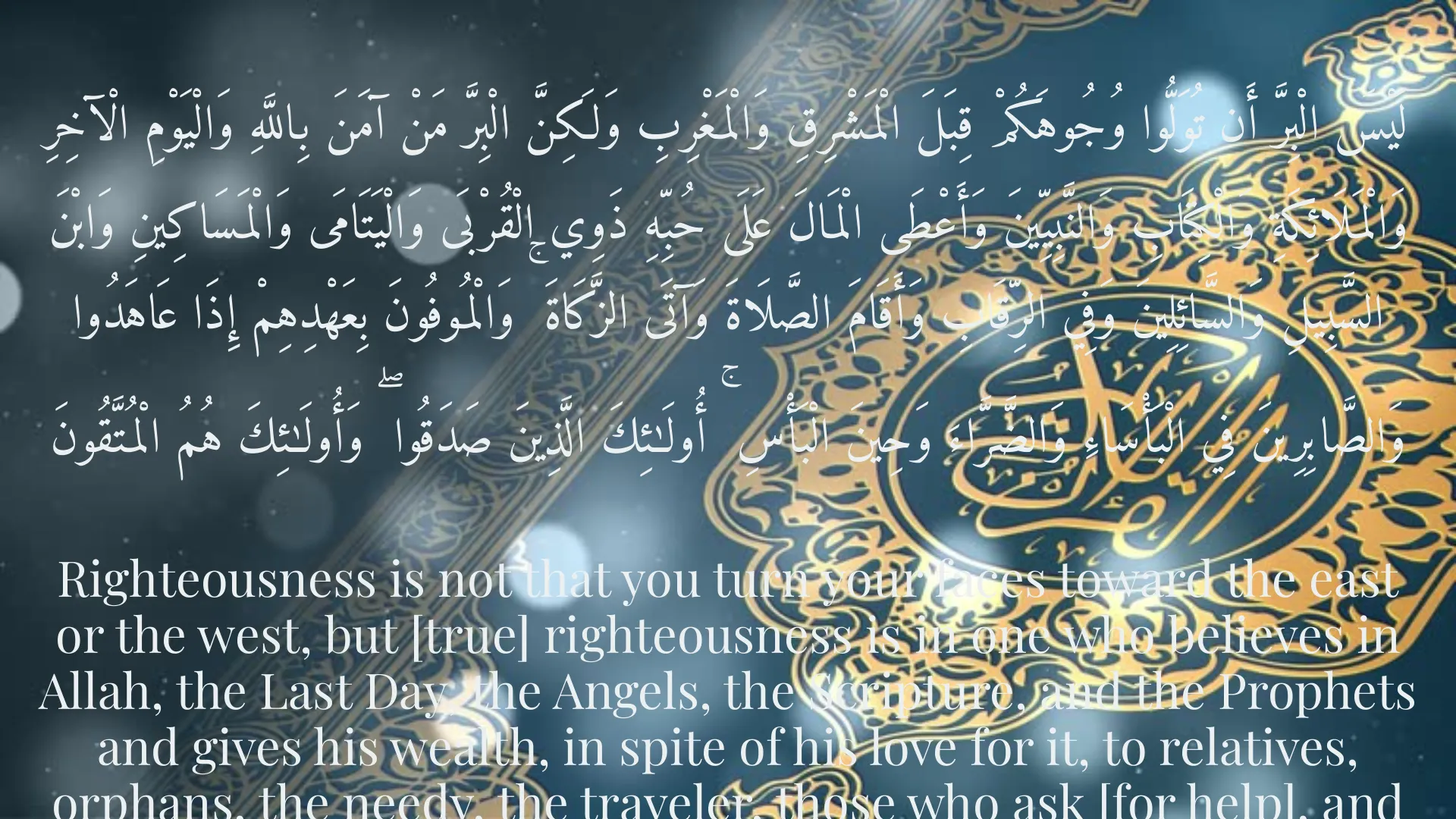
لَيْسَ الْبِرَّ أَن تُوَلُّوا وُجُوهَكُمْ قِبَلَ الْمَشْرِقِ وَالْمَغْرِبِ وَلَكِنَّ الْبِرَّ مَنْ آمَنَ بِاللَّهِ وَالْيَوْمِ الْآخِرِ وَالْمَلَائِكَةِ وَالْكِتَابِ وَالنَّبِيِّينَ وَأَعْطَى الْمَالَ عَلَى حُبِّهِ ذَوِي الْقُرْبَى وَالْيَتَامَى وَالْمَسَاكِينِ وَابْنَ السَّبِيلِ وَالسَّائِلِينَ وَفِي الرِّقَابِ وَأَقَامَ الصَّلَاةَ وَآتَى الزَّكَاةَ ۚ وَالْمُوفُونَ بِعَهْدِهِمْ إِذَا عَاهَدُوا وَالصَّابِرِينَ فِي الْبَأْسَاءِ وَالضَّرَّاءَ وَحِينَ الْبَأْسِ ۚ أُولَـٰئِكَ الَّذِينَ صَدَقُوا ۖ وَأُولَـٰئِكَ هُمُ الْمُتَّقُونَ
Righteousness is not that you turn your faces toward the east or the west, but [true] righteousness is in one who believes in Allah, the Last Day, the Angels, the Scripture, and the Prophets and gives his wealth, in spite of his love for it, to relatives, orphans, the needy, the traveler, those who ask [for help], and for freeing slaves; and establishes prayer and gives zakah; and [who] fulfill their promise when they promise; and [who] are patient in poverty and hardship and during battle. Those are the ones who have been true, and it is those who are the righteous.
Al-Baqarah : 177
إِنَّمَا الْمُؤْمِنُونَ إِخْوَةٌ فَأَصْلِحُوا بَيْنَ أَخَوَيْكُمْ ۖ وَاتَّقُوا اللَّهَ لَعَلَّكُمْ تُرْحَمُونَ
The believers are but brothers, so make settlement between your brothers. And fear Allah that you may receive mercy.
Al-Hujurat : 10
أَفَمَن شَرَحَ اللَّهُ صَدْرَهُ لِلْإِسْلاَمِ فَهُوَ عَلَى نُورٍ مِّن رَّبِّهِ ۖ فَـمَا لَهُ وَمَا عَلَيْهِ
Is one whose breast Allah has expanded to [contain] Islam, so he is upon light from his Lord, [like one whose heart is hardened]? Thus wretched is the state of those who disbelieve.
Az-Zumar : 22
Short Story
One day, Adel was pondering how he could truly be a good Muslim and live a Quranic lifestyle. He decided to read the Quran and reflect on its verses every morning after Fajr prayer. After some time, he realized that his connection with God had deepened, and he felt more peaceful in his life. He also decided to donate a portion of his income to those in need and participate in charitable activities. Over time, Adel noticed that his life was not only positive for himself but also had a beneficial impact on others.