Quranic Answer
Addiction to external validation is a state where an individual's self-worth and identity are heavily dependent on the opinions and judgments of others. This dependency can lead to anxiety, low self-esteem, and a loss of one's true life path, as the person constantly strives to act in accordance with others' expectations, even if these expectations contradict their own inner beliefs and values. The Holy Quran, with its profound and foundational approach, offers powerful solutions for liberating oneself from this type of dependency, guiding individuals towards inner independence and reliance on a more stable source: Allah Almighty. 1. Tawhid and Tawakkul: Reliance on the Sole Absolute Power The foundation of liberation from dependency on others' validation lies in a deep understanding of Tawhid; that is, the truth that no power, good, or harm occurs except by the permission of Allah. When a person truly comprehends this in their heart, they realize that others' praise or criticism ultimately has no lasting impact on their destiny or true worth. The Quran repeatedly emphasizes this point: "Hasbunallahu wa Ni'mal Wakeel" (Quran 3:173); meaning, "Sufficient for us is Allah, and [He is] the best Disposer of affairs." This verse is an invitation to absolute reliance on Allah. When a person's trust in God becomes complete, they no longer feel the need to cling to the volatile and unstable validations of human beings for a sense of security and worthiness. They know that Allah is both the Hearer and Knower of all their deeds and intentions, and if He is pleased, no criticism can harm them, and no praise can divert them from the path of truth. This reliance bestows an inner strength upon the individual, freeing them from the shackles of superficial judgments and enabling them to tread their rightful path with serenity and confidence. This sense of divine sufficiency empowers one to stand firm on divine principles, even when facing disapproval or opposition from others, rather than conforming to popular trends. 2. The Purpose of Life: The Pleasure of Allah, Not His Creation The Quran identifies the primary purpose of human creation as the worship and servitude of Allah. "And I did not create the jinn and mankind except to worship Me" (Quran 51:56). This servitude encompasses not only apparent acts of worship like prayer and fasting but extends to all aspects of life, from how one interacts with others to personal decision-making. When a person's focus shifts from gaining people's approval to gaining Allah's pleasure, their criteria and priorities transform. They no longer think, "What will others say?" but rather, "What does Allah want?" This shift in perspective lifts a heavy burden from the individual. One is no longer forced to wear a mask or play a role to gain societal approval. They can live authentically, with sincerity and devotion, because only the Creator's pleasure matters to them. This approach naturally leads to inner integrity and profound peace. When a person's actions and words are aligned with divine pleasure, even if they initially face opposition, their steadfastness and authenticity ultimately grant them a deep sense of self-esteem and worth that no external validation can match. 3. Knowing the Self and the Source of True Worth The Quran teaches that true worth is not found in the eyes of others, but in one's relationship with Allah and the righteous deeds performed. The verse "Indeed, the most noble of you in the sight of Allah is the most righteous of you" (Quran 49:13) clearly states that the criterion for honor and superiority in the sight of Allah is piety (taqwa), not status, wealth, or fame. This verse creates an internal revolution. When an individual understands that their worth is measured by their piety and purity, not by the number of likes or praises from people, they no longer need to pretend or engage in futile competition for attention. They can calmly and confidently focus on their spiritual and moral growth. This understanding helps one escape the trap of comparison and envy. They realize that everyone has their own path and mission, and the only true arbiter of their performance is Allah. This Quranic self-awareness strengthens self-esteem from within and allows the individual to live according to divine values, not according to the fluctuations of public opinion. 4. Patience and Steadfastness on the Path of Truth The Quran repeatedly emphasizes the importance of patience (sabr) and steadfastness. On the journey of life, especially when one seeks to break free from unhealthy dependencies, they may encounter resistance, neglect, or even criticism from others. This is where verses pertaining to patience and firmness of resolve become crucial. Allah says in the Quran: "O you who have believed, seek help through patience and prayer. Indeed, Allah is with the patient." (Quran 2:153). This verse advises believers to seek assistance through patience and prayer when faced with difficulties and challenges. Breaking free from addiction to validation is a time-consuming process that requires perseverance. This patience does not mean ignoring all external feedback but rather not allowing it to determine one's existential worth or dictate all decisions. One learns to distinguish between constructive feedback and destructive, baseless judgments. This steadfastness ultimately leads to personal maturity and inner contentment, as the individual knows they have walked their path according to divine principles and with reliance on Allah. 5. The Importance of Consultation and Choosing Righteous Companions While the Quran emphasizes reliance on Allah and independence from people, it does not advocate for social isolation. Rather, it advises believers to consult on important matters and to associate with righteous and faithful individuals. "And their affair is [determined by] consultation among themselves" (Quran 42:38). This consultation and companionship with the righteous are not for seeking validation but for benefiting from others' wisdom and insight. Righteous friends are those who guide one towards Allah and divine values, not towards seeking superficial attention or validation. Instead of feeding the addiction to validation, they help the individual understand their true worth and live accordingly. Choosing the right companions can create a supportive environment where one feels less need to seek validation from everyone and focuses more on divine approval. In conclusion, liberating oneself from addiction to others' validation through the teachings of the Quran is an inner journey that begins with a correct understanding of one's place before God and continues by cultivating reliance, sincerity in intention, patience, steadfastness, and choosing the path of truth. This journey not only frees the individual from the heavy burden of external expectations but also grants them peace, genuine self-esteem, and a meaningful, purposeful life based on divine pleasure. The Quran teaches us that our true worth is not in the eyes of creation, but in the merciful and just gaze of our Lord.
Related Verses
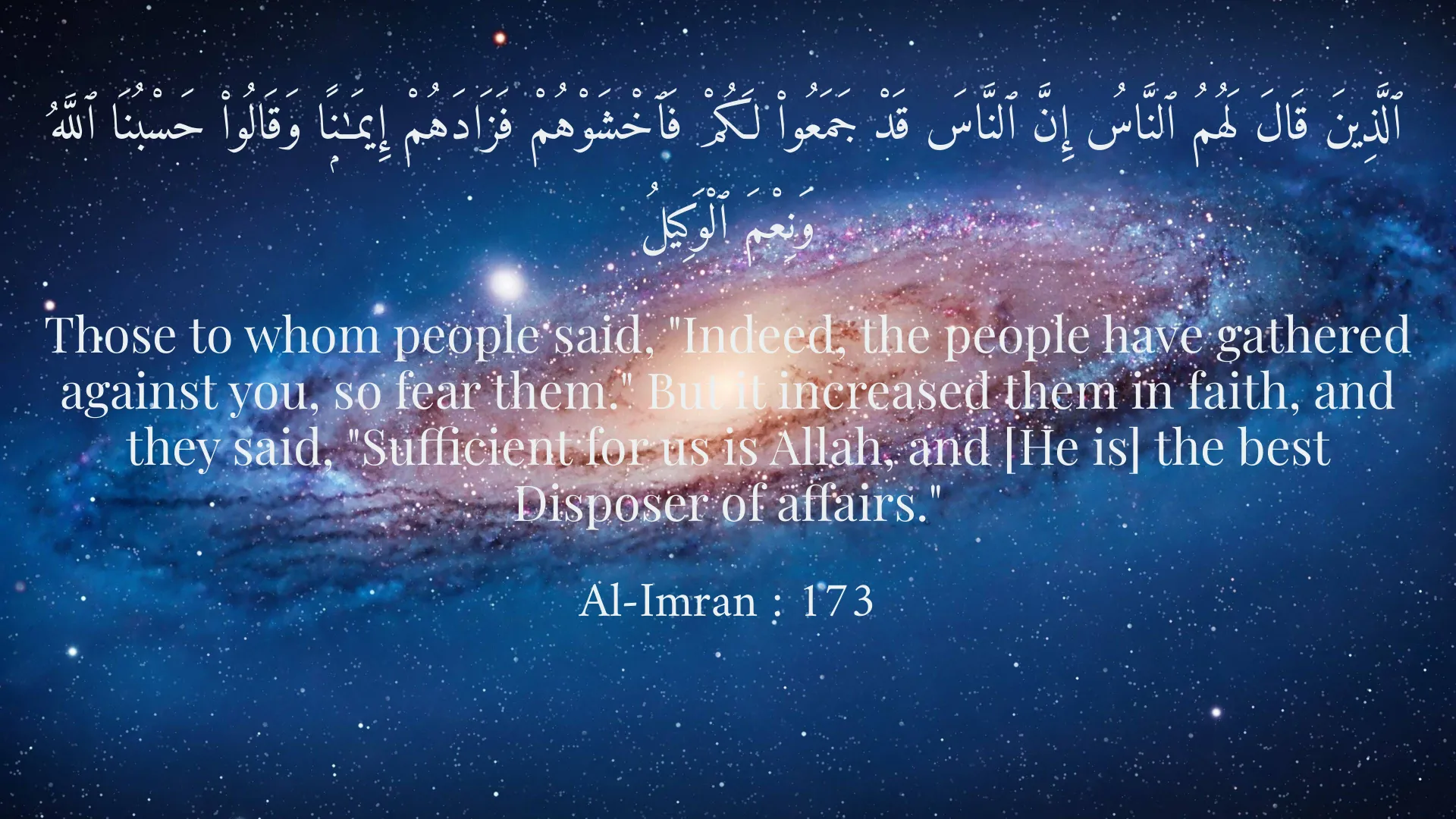
ٱلَّذِينَ قَالَ لَهُمُ ٱلنَّاسُ إِنَّ ٱلنَّاسَ قَدْ جَمَعُواْ لَكُمْ فَٱخْشَوْهُمْ فَزَادَهُمْ إِيمَـٰنًۭا وَقَالُواْ حَسْبُنَا ٱللَّهُ وَنِعْمَ ٱلْوَكِيلُ
Those to whom people said, "Indeed, the people have gathered against you, so fear them." But it increased them in faith, and they said, "Sufficient for us is Allah, and [He is] the best Disposer of affairs."
Al-Imran : 173
أَلَيْسَ ٱللَّهُ بِكَافٍ عَبْدَهُۥ ۖ وَيُخَوِّفُونَكَ بِٱلَّذِينَ مِن دُونِهِۦ ۚ وَمَن يُضْلِلِ ٱللَّهُ فَمَا لَهُۥ مِن هَادٍ
Is Allah not sufficient for His Servant? And they threaten you with those besides Him. And whoever Allah leaves astray – there will be for him no guide.
Az-Zumar : 36
يَـٰٓأَيُّهَا ٱلنَّاسُ إِنَّا خَلَقْنَـٰكُم مِّن ذَكَرٍۢ وَأُنثَىٰ وَجَعَلْنَـٰكُمْ شُعُوبًۭا وَقَبَآئِلَ لِتَعَارَفُوٓا۟ ۚ إِنَّ أَكْرَمَكُمْ عِندَ ٱللَّهِ أَتْقَـٰكُمْ ۚ إِنَّ ٱللَّهَ عَلِيمٌ خَبِيرٌۭ
O mankind, indeed We have created you from male and female and made you peoples and tribes that you may know one another. Indeed, the most noble of you in the sight of Allah is the most righteous of you. Indeed, Allah is Knowing and Acquainted.
Al-Hujurat : 13
Short Story
In Sa'di's Gulistan, it is related that a king asked a dervish: "Why do you never ask for anything from anyone, and why do you appear self-sufficient regarding the approval and praise of people?" The dervish replied with a smile: "O King! I once experienced a day when, in order to gain people's satisfaction, I toiled from morning till night, doing whatever they asked of me. One called me stingy, another deemed me a hypocrite, and yet another turned away from me. When night fell, with a tired heart and a disturbed soul, I said to myself: 'O dervish, if you had spent even a moment of this time in seeking the pleasure of the Creator, not only would you not be tired, but you would find lasting peace.' From then on, I understood that my true worth is not in the eyes of people, but in the pleasure of the One who is Self-Sufficient. Whoever turns to Him becomes independent of the approval and disapproval of creation and finds a heart full of ease and gratitude." The king was moved by these words and understood the dervish's truth. This story reminds us that true peace and self-esteem depend on freeing oneself from the gaze and expectations of others and finding refuge in divine pleasure.