Quranic Answer
In a world increasingly challenged by moral ambiguities and a perceived decline in human and spiritual values, the concern for maintaining ethics becomes paramount. The Holy Quran, as the divine revelation, offers a comprehensive roadmap for human life, within which the preservation of ethics and spiritual elevation is entirely possible under all circumstances, even in environments marred by immorality. This roadmap is built upon strong foundations of faith, piety (Taqwa), patience (Sabr), trust in God (Tawakkul), and righteous deeds. The foremost and fundamental principle for remaining ethical in such an environment is "Taqwa," which encompasses God-consciousness, fear of God, and devoutness. Taqwa is not merely a fear of divine punishment but also includes a deep sense of God's constant presence, love for Him, and a fervent desire to earn His pleasure. When an individual internalizes the belief that they are constantly under God's watchful eye and that all their actions are recorded, a powerful motivation emerges to avoid sin and adhere to ethical principles. Allah states in Surah Al-Imran, verse 102: "O you who have believed, fear Allah as He should be feared and do not die except while you are Muslims." This verse indicates that Taqwa should be pursued to its fullest extent and maintained as a continuous state throughout one's life. This state of Taqwa acts as a protective shield, safeguarding the individual against temptations and environmental pressures that could lead to moral deviation. When one's inner being is illuminated by the light of Taqwa, their ability to discern right from wrong and good from bad is strengthened, making ethical decision-making easier and more intuitive. Taqwa is not just an internal state; it also shapes external behaviors, effectively immunizing the individual against societal moral corruption. The second principle is "Sabr (Patience) and Istiqamah (Steadfastness)." In the path of upholding ethics, especially within a society where many may gravitate towards immorality, an individual might face difficulties, ridicule, or even pressure to conform. The Holy Quran repeatedly emphasizes the importance of patience. In Surah Hud, verse 112, Allah says: "So remain on a straight course as you have been commanded, [you] and those who have turned back with you [to Allah], and do not transgress. Indeed, He is Seeing of what you do." This verse advises not only the Prophet Muhammad (PBUH) but all believers to remain firm and steadfast on the path of truth. Patience in the face of adversities, resilience against temptations, and endurance of difficulties arising from adherence to ethical principles are among the most crucial factors in preserving one's morality. Without patience, an individual might easily stray from the correct path when confronted with external pressures and readily succumb to waves of immorality. Steadfastness means to not give up on one's principles even when seemingly alone. Third, "Amr bil Ma'ruf wa Nahi anil Munkar" (enjoining what is right and forbidding what is wrong) plays an active role in preserving the moral health of society and, consequently, the individual's ethics. The Quran states in Surah Al-Imran, verse 104: "And let there be [arising] from you a nation inviting to [all that is] good, enjoining what is right and forbidding what is wrong, and those will be the successful." This social responsibility not only contributes to improving the state of society but also, by activating a sense of accountability within the individual, reinforces their commitment to ethical conduct. When a person feels obligated to promote good and oppose evil, they are compelled to first practice what they preach and abstain from what they forbid. This creates a mutually reinforcing process where personal integrity is intertwined with social responsibility, making the individual resilient against the temptations of indifference and inaction. Fourth, "Remembrance of Allah (Dhikr) and Establishment of Prayer (Salat)." In a bustling world filled with material allurements, the human heart can easily fall prey to heedlessness and temptation. The remembrance of Allah and continuous connection with Him through prayer bring tranquility to the heart and cleanse it from impurities. Prayer, as the pillar of religion, restrains one from indecency and evil, as mentioned in Surah Al-Ankabut, verse 45: "Indeed, prayer prohibits immorality and wrongdoing." This daily communion with the Creator helps individuals not to forget the primary purpose of life and to resist the superficial glitter of the world, making decisions based on divine values rather than fleeting desires. Fifth, "Choosing Righteous Company and Environment." The influence of environment and friends on one's character is undeniable. The Quran implicitly addresses this by inviting believers to distance themselves from gatherings of sin and falsehood. In Surah An-Nisa, verse 140, it states: "...then do not sit with them until they enter into another conversation. Indeed, if you did, you would then be like them..." Although this verse specifically refers to sitting with those who ridicule or deny God's verses, a general principle can be inferred: associating with immoral individuals can gradually lead one down the same path. Therefore, consciously choosing friends and environments that support ethical values is critically important. A healthy environment and righteous companions aid an individual on the path of ethics and prevent them from stumbling. Sixth, "Reflection on the Hereafter and the Recompense of Deeds." In a world where many pursue fleeting gains and instant gratifications, the reminder that worldly life is temporary and the true life is in the Hereafter helps individuals make more ethical decisions. Surah Fussilat, verse 18, states: "Then We save those who feared Allah, and We leave the wrongdoers therein [in Hell] on their knees." This perspective on the Hereafter provides a strong motivation for adhering to ethics and refraining from sin, even if it means facing difficulties in this world or being mocked. This insight increases an individual's inner resistance to the temporary allurements of the world and keeps the ultimate purpose of life alive in their mind. In summary, remaining ethical in a world full of immorality requires a comprehensive and sustained approach rooted in Quranic teachings. This is achieved by strengthening divine consciousness (Taqwa), practicing patience and steadfastness, playing an active role in enjoining good and forbidding evil, maintaining a strong connection with God through prayer and remembrance, making conscious choices about company and environment, and finally, always remembering the Day of Judgment and the ultimate purpose of creation. These principles not only help the individual stay on the right path but also transform them into an active agent for societal reform and improvement. By acting upon these teachings, one can become a guiding light in the darkness, and themselves remain protected from moral harms under the grace of Allah, experiencing a life filled with peace and divine contentment.
Related Verses
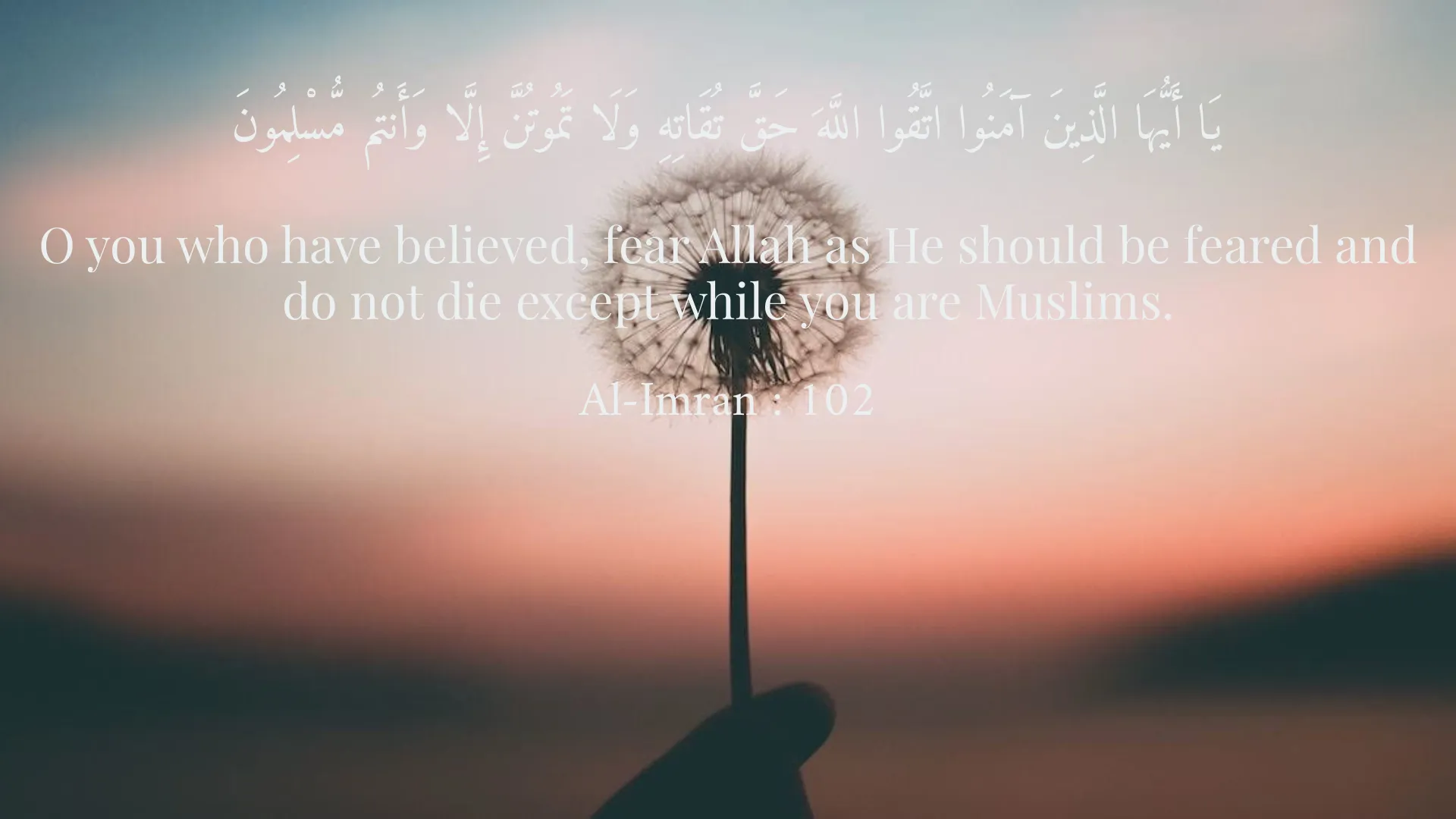
يَا أَيُّهَا الَّذِينَ آمَنُوا اتَّقُوا اللَّهَ حَقَّ تُقَاتِهِ وَلَا تَمُوتُنَّ إِلَّا وَأَنتُم مُّسْلِمُونَ
O you who have believed, fear Allah as He should be feared and do not die except while you are Muslims.
Al-Imran : 102
فَاسْتَقِمْ كَمَا أُمِرْتَ وَمَن تَابَ مَعَكَ وَلَا تَطْغَوْا ۚ إِنَّهُ بِمَا تَعْمَلُونَ بَصِیرٌ
So remain on a straight course as you have been commanded, [you] and those who have turned back with you [to Allah], and do not transgress. Indeed, He is Seeing of what you do.
Hud : 112
اتْلُ مَا أُوحِيَ إِلَيْكَ مِنَ الْكِتَابِ وَأَقِمِ الصَّلَاةَ ۖ إِنَّ الصَّلَاةَ تَنْهَىٰ عَنِ الْفَحْشَاءِ وَالْمُنكَرِ ۗ وَلَذِكْرُ اللَّهِ أَكْبَرُ ۗ وَاللَّهُ يَعْلَمُ مَا تَصْنَعُونَ
Recite what has been revealed to you of the Book and establish prayer. Indeed, prayer prohibits immorality and wrongdoing, and the remembrance of Allah is greater. And Allah knows that which you do.
Al-Ankabut : 45
وَقَدْ نَزَّلَ عَلَيْكُمْ فِي الْكِتَابِ أَنْ إِذَا سَمِعْتُمْ آيَاتِ اللَّهِ يُكْفَرُ بِهَا وَيُسْتَهْزَأُ بِهَا فَلَا تَقْعُدُوا مَعَهُمْ حَتَّىٰ يَخُوضُوا فِي حَدِيثٍ غَيْرِهِ ۙ إِنَّكُمْ إِذًا مِّنْهُمْ ۗ إِنَّ اللَّهَ جَامِعُ الْمُنَافِقِينَ وَالْكَافِرِينَ فِي جَهَنَّمَ جَمِيعًا
And He has already revealed to you in the Book that when you hear the verses of Allah being denied and ridiculed, then do not sit with them until they enter into another conversation. Indeed, if you did, you would then be like them. Indeed, Allah will gather the hypocrites and disbelievers in Hell all together.
An-Nisa : 140
Short Story
It is narrated that in ancient times, in a bustling city steeped in worldly affairs, there lived a wise and virtuous man. The people of the city increasingly pursued fleeting gains and worldly allurements, straying from the straight path of ethics. They broke promises, and lies and deceit, like weeds, grew rampant in the garden of their lives. Yet, this wise man, though he could have reaped immense profits by conforming to the crowd, never deviated from his path of rectitude and purity. One day, a wealthy merchant of the city, himself immersed in the mire of immorality, scoffed at him, saying: "O Sheikh, in these times when everyone thinks only of filling their own coffers, why do you remain so pure and guileless, like a dove of the sanctuary? Do you not fear poverty and destitution?" The wise man smiled and replied: "O merchant, you fill your purse with gold, and I fill my heart with the light of faith. You ponder what you leave behind in this world, and I ponder what I take with me to the everlasting abode. Though the city is full of the stench of hypocrisy and deceit, the sweet fragrance of honesty and truth perpetually flows within the privacy of my heart. What fear has he of the mighty waves of the sea, who has entrusted his ship to the Captain? Our hearts are firm with divine grace and consideration, and we know that immorality, however outwardly alluring, has no end but ruin. Though I may stand alone, I will not abandon the right path, for true peace lies in adherence to principles, not in conforming with the misguided." The merchant pondered these words and realized that the man possessed a treasure far more valuable than all the wealth of the world. And so it is that remaining ethical, even amidst immorality, is not only possible but brings true peace and felicity.