Quranic Answer
Standing Against Oppression: A Quranic Perspective Oppression is a malignant force that affects societies around the world, leading to suffering, injustice, and a lack of dignity among individuals. The Holy Quran provides clear guidance regarding the moral and ethical imperatives of standing against oppression. Standing against oppression, from the perspective of the Holy Quran, is not merely recommended; it is portrayed as a vital and essential duty for believers. This article delves into the Quranic verses that illustrate this responsibility, the importance of justice, and the various forms that this struggle can take in a societal context. One of the most significant verses pertaining to justice and standing against oppression is found in Surah An-Nisa, Verse 135: "O you who have believed, be persistently standing firm in justice, witnesses in justice, even if it be against yourselves or your parents and relatives." This verse emphasizes the paramount importance of honesty and integrity when it comes to justice. It highlights that the pursuit of truth often requires individuals to confront not just societal injustices but also injustices within their own families and communities. This level of commitment to justice is a reflection of the character that Allah expects from believers. The Quran teaches that standing firm for justice is not contingent upon personal relationships or potential backlash from one's kin. The verse encourages believers to transcend their biases, emotions, and personal loyalties for the sake of justice. In this regard, standing against oppression necessitates truthfulness, even when the truth is uncomfortable or inconvenient. Furthermore, in Surah Al-Imran, Verse 104, Allah instructs believers to be proactive in their efforts to prevent oppression and injustice: "And let there be [arising] from you a nation inviting to all that is good, and enjoining what is right and forbidding what is wrong, and those will be the successful." This verse emphasizes the collective responsibility of the Muslim community to work towards enjoining what is right and forbidding what is wrong. It showcases the importance of community action and solidarity in the fight against oppression. The Quran consistently urges believers to not only stand against injustices but also to be advocates for rights and defenders of those who are oppressed. These verses collectively form a robust foundation for a culture of justice that Muslims are encouraged to establish within their societies. The promotion of social justice goes hand-in-hand with the ethical imperative to speak out against unjust practices. Supporting the oppressed is not only directed towards those who identify as Muslims; the Quran teaches compassion and justice for all of humanity. In Surah Al-Ma'idah, Verse 8, believers are called to "Stand firm in justice, witnesses for Allah, even if it be against yourselves or your parents and relatives." This is a reiteration of the previous themes but extends even further by emphasizing the belief in divine accountability. Believers must serve as witnesses for Allah, reflecting accountability not just to their families or social groups, but to God Himself. This calls for a higher moral and ethical standard in the pursuit of truth and justice. Standing against oppression can take many forms. It encompasses institutionalizing a culture of justice in society, educating individuals about their human and social rights, and participating in civil and political activities. One concrete form of standing against oppression is through peaceful advocacy and legal action. For instance, when marginalized individuals or groups face injustice, community members can rally together to raise awareness, mobilize support, and take legal measures to defend their rights. The Quran encourages such proactive engagement, suggesting that believers should be active members of Amr bi al-Ma’ruf wa Nahy 'an al-Munkar—the command for good and the prohibition of evil. Educational initiatives can also serve as powerful tools against oppression. By educating people about their rights, the principles of justice, and the ethical teachings of Islam, societies can foster an informed citizenry capable of standing up against injustices. Community workshops, discussion panels, and educational campaigns can equip individuals with the tools they need to challenge oppression and advocate for change. In doing so, they can build a culture where justice is valued as a collective goal rather than an individual endeavor. Moreover, standing against oppression often involves participating in political systems to bring about legislative changes that uphold justice and protect the rights of the disenfranchised. Engaging in political discourse, encouraging voter participation, and advocating for just policies are all ways that individuals can take an active role in fighting injustice. The process may be slow and fraught with challenges, but the Quran reassures believers that these efforts are in line with their divine obligations. Finally, it is essential to understand that the fight against oppression is not merely a duty; it is a profound act of faith. Standing against injustice cultivates a sense of unity, empathy, and resilience within the community. It encourages every individual to introspect and evaluate their own actions while holding themselves accountable to a higher moral standard. By taking a stand against oppression, individuals affirm their faith and commitment to upholding justice as prescribed in the Quran. In conclusion, the Holy Quran lays a significant emphasis on the duty of standing against oppression. The verses discussed illustrate a clear call to action for believers to embrace justice at all costs, to educate themselves and others about their rights, and to participate actively in combating oppression. Ultimately, standing against oppression is not only a divine command but contributes significantly to the creation of healthier, fairer societies. The responsibility falls on every believer to embody these teachings and foster a culture of justice that will resonate through generations to come.
Related Verses
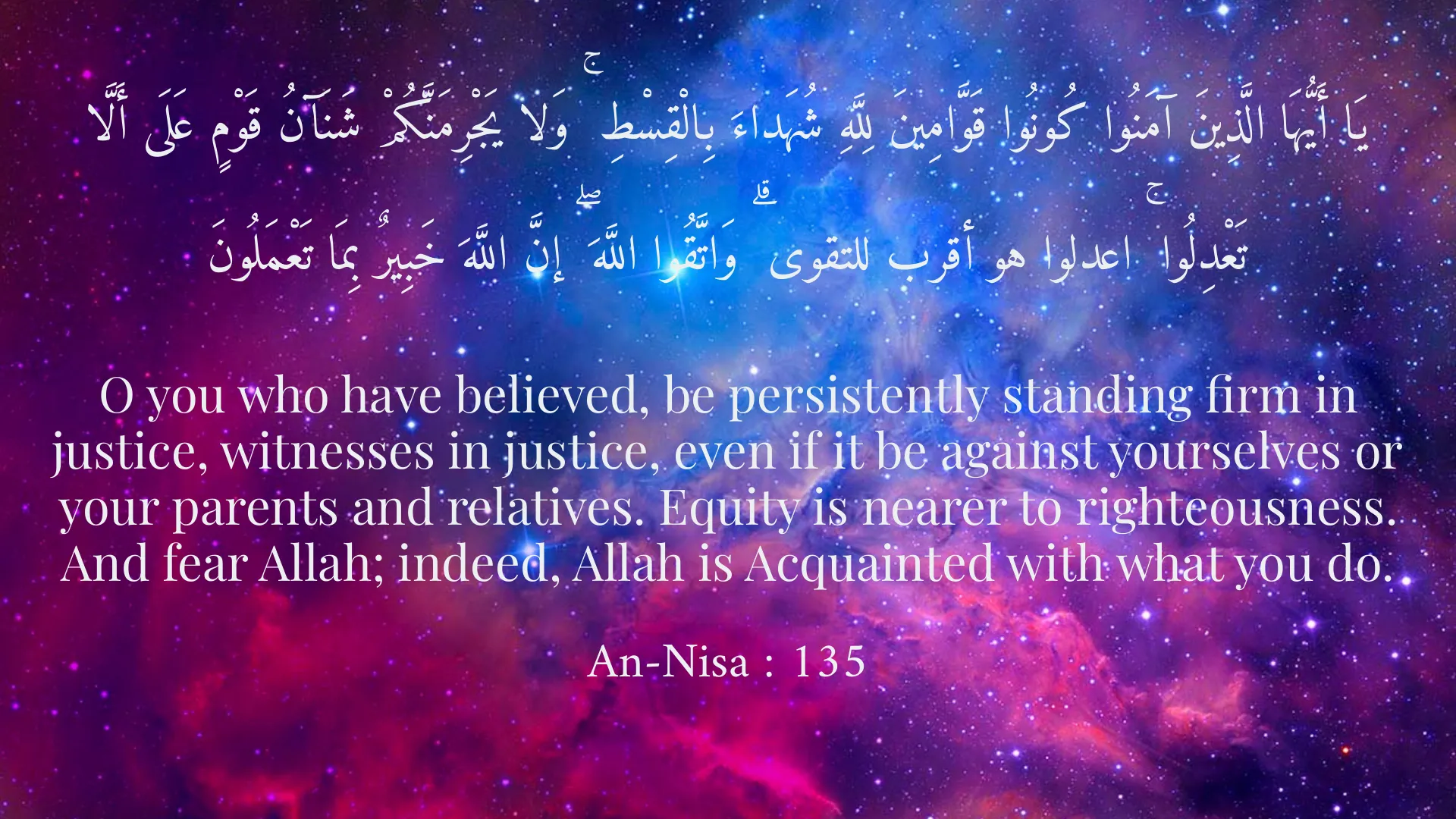
يَا أَيُّهَا الَّذِينَ آمَنُوا كُونُوا قَوَّامِينَ لِلَّهِ شُهَداءَ بِالْقِسْطِ ۚ وَلا يَجْرِمَنَّكُمْ شَنَآنُ قَوْمٍ عَلَى أَلَّا تَعْدِلُوا ۚ اعدلوا هو أقرب للتقوى ۗ وَاتَّقُوا اللَّهَ ۖ إنَّ اللَّهَ خَبِيرٌ بِمَا تَعْمَلُونَ
O you who have believed, be persistently standing firm in justice, witnesses in justice, even if it be against yourselves or your parents and relatives. Equity is nearer to righteousness. And fear Allah; indeed, Allah is Acquainted with what you do.
An-Nisa : 135
وَلْتَكُن مِّنكُمْ أُمَّةٌ يَدْعُونَ إِلَى الْخَيْرِ وَيَأْمُرُونَ بِالْمَعْرُوفِ وَيَنْهَوْنَ عَنِ الْمُنْكَرِ ۚ وَأُولَـئِكَ هُمُ الْمُفْلِحُونَ
And let there be [arising] from you a nation inviting to [all that is] good and enjoining what is right and forbidding what is wrong. And those will be the successful.
Al-Imran : 104
يَا أَيُّهَا الَّذِينَ آمَنُوا كُونُوا قَوَّامِينَ لِلَّهِ شُهَداءَ بِالْقِسْطِ ۚ وَلَا يَجْرِمَنَّكُمْ شَنَآنُ قَوْمٍ عَلَى أَلَّا تَعْدِلُوا ۚ اعدلوا هو أقرب للتقوى ۗ وَاتَّقُوا اللَّهَ ۖ إنَّ اللَّهَ خَبِيرٌ بِمَا تَعْمَلُونَ
O you who have believed, be persistently standing firm in justice, witnesses in justice, and do not let the hatred of a people prevent you from being just. Be just; it is nearer to righteousness. And fear Allah; indeed, Allah is Acquainted with what you do.
Al-Ma'idah : 8
Short Story
Once upon a time, a man named Ali lived in a village. He was always upset by the injustices that befell others. One day, he witnessed a weak person being harassed by an oppressor. Ali decided to stand up. He told the villagers, 'We must always stand against oppression and defend each other's rights.' His words inspired others to join him, and together they supported the oppressed individual. Thus, Ali and his friends managed to stop the injustice and establish fairness.