Quranic Answer
Spirituality in Islam is not confined to rituals and worship; rather, it is a comprehensive way of life that encompasses all dimensions of human existence. Bringing spirituality into daily life means finding God and His divine presence in every moment, every action, and every relationship. The Holy Quran, our unparalleled guide on this path, offers principles and methods for integrating spirituality into the fabric of ordinary life. This not only leads to inner peace and contentment but also enhances the quality of our interactions with others and with the world around us. The first step on this journey is awakening the heart and mind to the constant presence of God. This awakening forms the basis of all our spiritual actions and thoughts. One of the most central Quranic teachings for incorporating spirituality into daily life is the concept of 'Dhikr Kathir,' or abundant remembrance of God. In Surah Al-Ahzab, verse 41, it states: "O you who have believed, remember Allah with much remembrance." This remembrance is not limited to mere repetition of words; rather, it includes contemplating God's signs in the horizons and within ourselves, remembering His blessings, and being aware of His presence and oversight in every deed. An individual can remember God verbally or silently while performing daily tasks such as driving, cooking, working, or even walking. This continuous remembrance creates a spiritual shield that protects a person from heedlessness and worldly temptations, helping them not to forget their main purpose in life. Every time a person remembers they are in God's presence, they strive to perform at their best and avoid sin and error. Constant Dhikr brings tranquility to the heart and reduces the anxieties and worries arising from material life, as stated in Surah Ar-Ra'd, verse 28: "Unquestionably, by the remembrance of Allah hearts are assured." This tranquility is the foundation of a spiritual and fruitful life, allowing a person to face daily challenges and problems with a reliant and patient outlook. Prayer (Salat) is the pillar of faith and one of the most prominent manifestations of spirituality in daily life. Establishing prayer at prescribed times is not merely a religious obligation but a golden opportunity for spiritual rejuvenation and renewal. In Surah Al-Ankabut, verse 45, it is stated: "Recite, [O Muhammad], what has been revealed to you of the Book and establish prayer. Indeed, prayer prohibits immorality and wrongdoing, and the remembrance of Allah is greater." Prayer restrains a person from immorality and wrongdoing, and the remembrance of Allah within it is greater and more effective. The five daily prayers throughout the day and night divide our lives into spiritual segments, reminding us of our Creator. Each prayer is a brief pause amidst the hustle and bustle of life, allowing us to regain focus, purify our sins, and receive spiritual energy. This regular connection with God softens the heart, increases insight, and helps a person to adopt patience and serenity when facing difficulties. Prayer is an intimate conversation with God where a servant expresses their needs, gratitude, and repentance, thereby strengthening their bond with the Creator. Beyond its ritualistic aspects, prayer, as a continuous exercise in mindfulness and attentiveness, teaches a person how to live a more spiritual and conscious life throughout the day. The presence of heart in prayer can be extended to the presence of heart in all moments of life. Contemplation and reflection on God's signs in creation (Tafakkur fil-Afaq wal-Anfus) is another way to enhance spirituality. The Quran invites us to ponder the heavens, the earth, human creation, and other phenomena. In Surah Al-Imran, verse 191, it states: "Those who remember Allah while standing or sitting or [lying] on their sides and contemplate in the creation of the heavens and the earth, [saying], 'Our Lord, You did not create this in vain; exalted are You [above such a thing]; then protect us from the punishment of the Fire.'" This kind of contemplation changes a person's perspective on life, guiding them from a superficial view to the depths of reality. Seeing the beauty and order of the universe reminds us of the Creator's power, wisdom, and grandeur, and every part of nature can be a window to knowing God. This includes reflection on our own bodies, the cycle of life, and even the complexities of human relationships. This type of reflection awakens a sense of wonder and gratitude in a person, making every small phenomenon in daily life a sign of divine presence and generosity. When a person looks at the world with this perspective, no moment is meaningless, and every experience can be a source of spiritual growth. This insight helps a person to understand a deeper meaning when facing adversities and strengthens their faith. Good conduct and ethics are also fundamental components of practical spirituality in daily life. The Holy Quran strongly emphasizes 'Ihsan' (doing good to others) and 'Birr' (righteousness and piety). Every good deed a person does for family, neighbors, colleagues, or even strangers can be considered an act of worship and spiritual if done with a pure intention for God's pleasure. Helping the needy, visiting the sick, fulfilling trusts, honesty in speech and action, and respecting the rights of others are all manifestations of spirituality in social interactions. These actions not only improve society but also purify and refine the human heart. The Prophet Muhammad (peace be upon him) said: "The best of you is the best to his family, and I am the best to my family." This Hadith shows that the circle of spirituality extends even to family relationships. When a person treats those around them with love, respect, and forgiveness, they are indeed nurturing their spiritual essence. Every positive encounter, every kind word, and every charitable act performed with sincerity adds light to the human soul and brings one closer to God. Patience (Sabr) and gratitude (Shukr) are two important spiritual virtues that can be employed in every moment of daily life. The Quran repeatedly instructs believers to seek help through patience and prayer (Surah Al-Baqarah, verse 153). Life is full of challenges and hardships, and how we face them indicates the measure of our spirituality. Patience in the face of adversity does not merely mean passive endurance; rather, it is active resilience and reliance on God on the path of truth. Alongside patience, gratitude plays a central role. Gratitude for blessings, small and large, from health and security to the food we eat and the water we drink, leads to an increase in divine blessings. When a person develops a grateful outlook on life, they find points of hope and divine mercy even in the midst of difficulties. This positive and reliant perspective empowers a person to live with greater contentment and learn from every moment. Gratitude can be a daily practice; before sleeping, one can reflect on the blessings received throughout the day and be thankful. Ultimately, bringing spirituality into daily life means living with awareness and presence of heart. This awareness saves us from heedlessness and mere routine, and bestows divine meaning and value upon every action. Whether we are performing work duties, raising children, or resting and enjoying leisure, with the intention of drawing closer to God and remembering Him, we can transform these actions into opportunities for spiritual growth. True spirituality flows within the heart of life, not on its periphery. It is an ongoing journey where every step is an opportunity to draw closer to God and attain true peace and contentment. By consistently practicing remembrance, establishing prayer with presence of heart, contemplating creation, doing good to others, and cultivating patience and gratitude, we can transform our lives into a grand and continuous act of worship, experiencing the true joy of divine proximity at every moment. This comprehensive perspective transforms daily life from a series of repetitive tasks into a meaningful and purposeful path towards human perfection, bestowing a sense of purpose and tranquility upon a person in all circumstances.
Related Verses
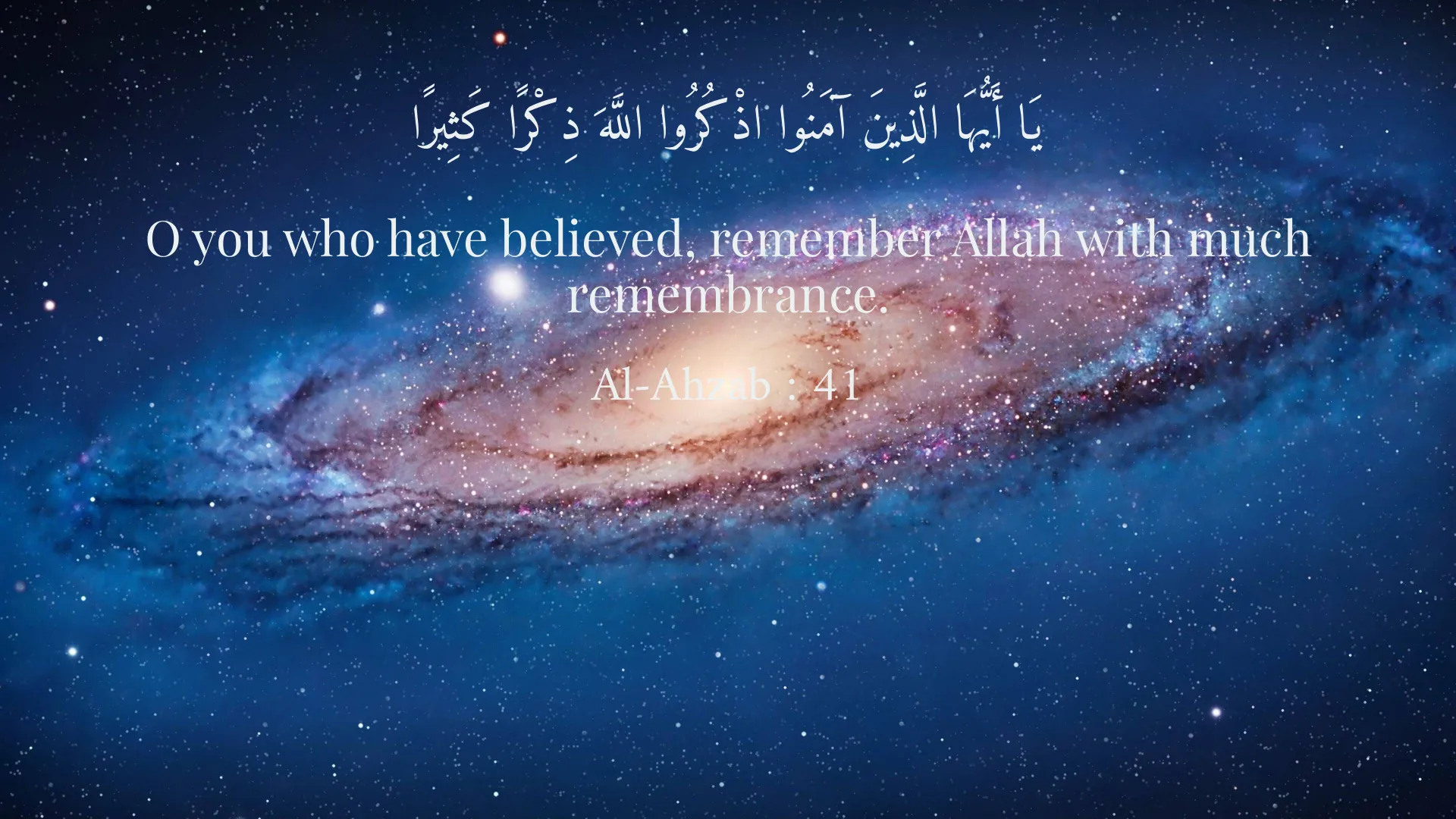
يَا أَيُّهَا الَّذِينَ آمَنُوا اذْكُرُوا اللَّهَ ذِكْرًا كَثِيرًا
O you who have believed, remember Allah with much remembrance.
Al-Ahzab : 41
اتْلُ مَا أُوحِيَ إِلَيْكَ مِنَ الْكِتَابِ وَأَقِمِ الصَّلَاةَ إِنَّ الصَّلَاةَ تَنْهَىٰ عَنِ الْفَحْشَاءِ وَالْمُنكَرِ وَلَذِكْرُ اللَّهِ أَكْبَرُ وَاللَّهُ يَعْلَمُ مَا تَصْنَعُونَ
Recite, [O Muhammad], what has been revealed to you of the Book and establish prayer. Indeed, prayer prohibits immorality and wrongdoing, and the remembrance of Allah is greater. And Allah knows that which you do.
Al-Ankabut : 45
الَّذِينَ يَذْكُرُونَ اللَّهَ قِيَامًا وَقُعُودًا وَعَلَىٰ جُنُوبِهِمْ وَيَتَفَكَّرُونَ فِي خَلْقِ السَّمَاوَاتِ وَالْأَرْضِ رَبَّنَا مَا خَلَقْتَ هَٰذَا بَاطِلًا سُبْحَانَكَ فَقِنَا عَذَابَ النَّارِ
Those who remember Allah while standing or sitting or [lying] on their sides and contemplate in the creation of the heavens and the earth, [saying], 'Our Lord, You did not create this in vain; exalted are You [above such a thing]; then protect us from the punishment of the Fire.'
Al-Imran : 191
Short Story
In Sa'di's Golestan, there is a tale of a dervish who, despite having renounced all his worldly possessions and appearing poor, possessed a generous heart and a soul brimming with tranquility. A wealthy but anxious king asked the dervish: "How is it that I, with all this wealth and power, have no moment of peace, while you, despite your poverty, are always joyful and at ease?" The dervish replied with a smile: "O King! I have gathered all my wealth within my heart, bound it to the remembrance of God and His contentment, and thus I have no fear of losing it. You keep your possessions outside yourself, and at every moment, you fear their loss. I find His presence in every breath and every movement, and this has made me free from every need. My life is not in gold and silver, but in His remembrance and contemplation. This is why my sleep is worship, and my wakefulness, a lesson for drawing closer to Him." The king took heed of the dervish's words and realized that true spirituality lies in a serene heart and constant remembrance of the Creator, not in accumulating worldly possessions. From then on, he tried not to forget God's remembrance even in his daily duties and administration of the kingdom, and through this, he tasted the sweet flavor of peace.