Quranic Answer
Adolescence is a transformative period, a time when young people embark on a quest to discover their place in the world and define their identity. This journey can be fraught with challenges and confusion, but the Holy Quran, as the divine word and a guiding light for life, offers unparalleled assistance to teenagers during this crucial phase. By presenting profound concepts and wise guidance, the Quran provides a solid foundation for building a healthy and stable identity. One of the most significant ways the Quran helps teenagers find their identity is by defining the purpose and meaning of life. In today's world, where teenagers are inundated with information and choices, understanding the ultimate purpose of creation can help them overcome confusion and find the correct direction for their lives. The Quran explicitly states that the primary purpose of human creation is to worship and know God. This purpose, transcending material and fleeting worldly matters, imbues life with depth and meaning, saving teenagers from wandering into futile and meaningless paths. When a teenager understands that their existence has a higher purpose, they no longer define themselves by superficial societal standards or the expectations of others; instead, they find their identity in connection with the Creator of the universe and their divine mission. Furthermore, the Quran places immense emphasis on human dignity and honor. In numerous verses, God designates humans as His vicegerents on Earth, affirming their nobility and intrinsic worth. In an era where teenagers might feel inadequate or less valuable due to social pressures, unfair comparisons, or unhealthy role models, these Quranic teachings remind them that every human being, regardless of appearance, race, wealth, or social status, possesses inherent dignity and invaluable worth. This understanding of self-worth, rooted in divine verses, helps teenagers build their identity based on true values, not on fleeting desires or external validation. This sense of dignity becomes a strong shield against temptations and negative pressures from their surroundings, granting them the confidence to choose the right path in life. The Quran also serves as a practical guide for teenagers in shaping their moral identity by providing clear ethical and behavioral standards. In a world where moral boundaries sometimes become blurred and values are subject to change, the Quran offers fixed and universal principles for truthfulness, justice, honesty, patience, kindness to parents, and respecting the rights of others. Adhering to these ethical principles helps a teenager develop a coherent and trustworthy character, building their identity on human virtues. This moral framework not only assists them in individual decision-making but also plays a central role in social relationships and fostering a sense of belonging to a larger community, the Islamic Ummah. The Quran strengthens a sense of responsibility in teenagers: responsibility towards themselves, their family, society, and even the environment. By introducing sublime role models, from divine prophets to righteous individuals and devout servants of God, the Quran offers practical and relatable examples for teenagers. These role models demonstrate how one can lead a purposeful, fruitful, and dignified life by adhering to Quranic principles. Quranic stories are replete with lessons and admonitions that help teenagers confront life's challenges, learn from mistakes, and progress on the path of growth and perfection. These stories are not only engaging for this age group but also convey deep wisdom and counsel in an appealing format. Ultimately, the Quran teaches teenagers that their true identity lies not in worldly appearances but in piety, knowledge, and connection with God. This profound understanding helps them see their identity beyond society's limited definitions and develop into independent, purposeful individuals with strong roots in divine faith. Consequently, the Quran is not merely a guide to finding identity but itself provides a comprehensive and complete identity to teenagers; an identity derived from servitude to God, human dignity, and divine ethics.
Related Verses
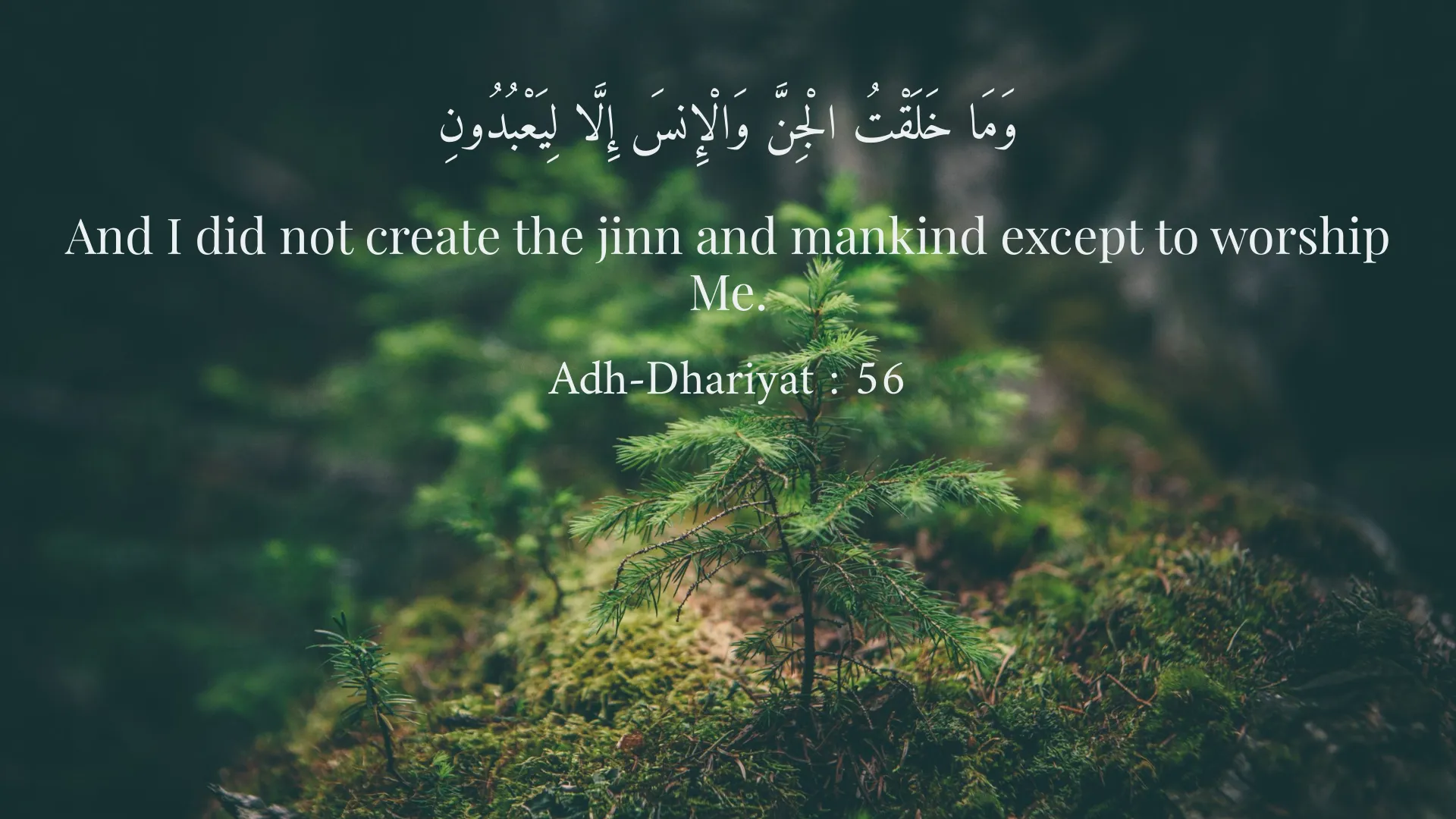
وَمَا خَلَقْتُ الْجِنَّ وَالْإِنسَ إِلَّا لِيَعْبُدُونِ
And I did not create the jinn and mankind except to worship Me.
Adh-Dhariyat : 56
وَلَقَدْ كَرَّمْنَا بَنِي آدَمَ وَحَمَلْنَاهُمْ فِي الْبَرِّ وَالْبَحْرِ وَرَزَقْنَاهُم مِّنَ الطَّيِّبَاتِ وَفَضَّلْنَاهُمْ عَلَىٰ كَثِيرٍ مِّمَّنْ خَلَقْنَا تَفْضِيلًا
And We have certainly honored the children of Adam and carried them on the land and sea and provided for them of the good things and preferred them over much of what We have created, with [definite] preference.
Al-Isra : 70
يَا أَيُّهَا النَّاسُ إِنَّا خَلَقْنَاكُم مِّن ذَكَرٍ وَأُنثَىٰ وَجَعَلْنَاكُمْ شُعُوبًا وَقَبَائِلَ لِتَعَارَفُوا ۚ إِنَّ أَكْرَمَكُمْ عِندَ اللَّهِ أَتْقَاكُمْ ۚ إِنَّ اللَّهَ عَلِيمٌ خَبِيرٌ
O mankind, indeed We have created you from male and female and made you peoples and tribes that you may know one another. Indeed, the most noble of you in the sight of Allah is the most righteous of you. Indeed, Allah is Knowing and Acquainted.
Al-Hujurat : 13
Short Story
Once upon a time, in a garden filled with young trees and tangled branches, a teenager named 'Hadi' felt utterly lost and confused. He didn't know which path was right or who he was meant to be. He approached a wise elder sitting in a corner of the garden and, with trepidation, asked, "O Sage, how can I find myself in this complex world?" The elder, with a kind smile, replied, "My son, your identity is like the roots of a tree; the deeper they go, the stronger the tree stands. The Quran is the fertile soil and water for these roots. In it, you will find the purpose of your creation, understand your inherent dignity, and learn that the highest value lies not in superficial branches, but in your inner essence: piety." Upon hearing these words, a ray of hope seemed to shine in Hadi's heart. He began to delve into the Quran and realized that what he was missing was precisely that connection with the Creator and adherence to His commands. Days passed, and with each verse he read, Hadi found his path more firmly and with greater confidence, much like a tree with strong roots that withstands any storm and bears fruit.