Quranic Answer
Humility is often regarded as a cornerstone of personal growth and moral integrity in various religious texts, and in the Holy Quran, it emerges as a distinctive trait of the believers. The practice of humility is not merely an outward demonstration of modesty; it is an intrinsic quality that reflects a deep understanding of one’s place in relation to the Creator and the creation. In Surah Al-Furqan, verse 63, Allah articulates the essence of humility in a profound statement, asserting, 'And the servants of the Most Merciful are those who walk upon the earth with humility, and when the ignorant address them [harshly], they [respond with] peace.' This poignant verse encapsulates a central theme of humility—responding to ignorance and rudeness with gentleness and peace, embodying the very essence of servitude to Allah. To embark on the path of humility, one must first grasp the enormity of Allah's power and majesty. Human existence, when viewed through the lens of the divine, reveals our limitations and ephemeral nature in stark contrast to God's eternal being. This realization is pivotal in fostering a humble spirit. As we traverse through life, it is essential to remember that in the grand scheme of creation, human beings are mere specks. However, this awareness should not lead to self-deprecation; rather, it is about recognizing our value in relation to God and others while acknowledging that we are all equal in our fundamental humanity. The Quran does not endorse a form of humility that leads to timidity or lack of self-respect. On the contrary, true humility involves accepting who we are in a manner that promotes the dignity of ourselves and others. This idea is further reinforced in Surah Al-Imran, verse 159, where Allah commands the Prophet Muhammad (PBUH) to be soft-hearted towards the people because of His mercy, and He emphasizes the importance of nurturing mutual respect within the community. The Prophet’s conduct serves as an exemplary model for believers, as he treated everyone—regardless of their social status or knowledge—with kindness and respect. Such behavior is foundational for establishing a harmonious society. Conversely, humility also necessitates a conscious effort to shun arrogance and pride. A true believer understands that all accomplishments and talents are gifts from Allah, and thus, should not be sources of conceit or haughtiness. Instead, these gifts are to be utilized in service of humanity and for the betterment of society. Humility manifests not just in how we perceive our worth, but how we engage with others. In our speech and actions, we are called to treat others with love, dignity, and respect, while consciously avoiding any forms of discrimination or superiority complexes. Moreover, fostering love and understanding towards others complements the trait of humility. The interconnectedness of humility and love creates an environment conducive to open dialogue, acceptance, and growth. When we approach others with a humble heart, we open ourselves to understand their perspectives, leading to enriched relationships and community bonds. This profound connection is essential in a world increasingly marked by division and conflict. In light of these reflections, one might ponder how to effectively cultivate humility within our lives. One of the most powerful tools at our disposal is prayer. The Quran emphasizes the significance of seeking assistance from Allah in all endeavors. In Surah Al-Mu’minun, verse 97, we are reminded to pray, 'And say, 'My Lord, cause me to enter a sound entrance and to exit a sound exit.' This prayer is a humble acknowledgment of our reliance on Allah for guidance and strength in all actions, including the pursuit of humility. By turning to Allah in sincere supplication, we reinforce our desire to embody the qualities that He values, enhancing our spiritual journey. Additionally, engaging in acts of service and charity can bolster one’s humility. Serving others, especially those in need, fosters an attitude of gratitude and compassion, reminding us of our own privileges and the blessings bestowed upon us by Allah. Such acts serve as a practical manifestation of humility, as they represent a selfless commitment to the welfare of others rather than a focus on self-centered pursuits. The more we give to others, the more we recognize the importance of collaboration over competition, fostering a society rooted in love and respect. In conclusion, humility is not a sign of weakness; it is indicative of strength, wisdom, and a deep connection with both Allah and humanity. By embracing this divine quality, as depicted in the Holy Quran, believers can rise above the challenges of arrogance and ignorance, promoting a culture of kindness and understanding. The reflections provided in Surah Al-Furqan and Surah Al-Imran guide us towards living a life imbued with humility. As we aspire to cultivate this virtue, prayers and acts of service become our companions on this noble path. Truly, humility allows us to honor our relationship with God and one another, crafting a legacy of love and peace that resonates throughout our communities.
Related Verses
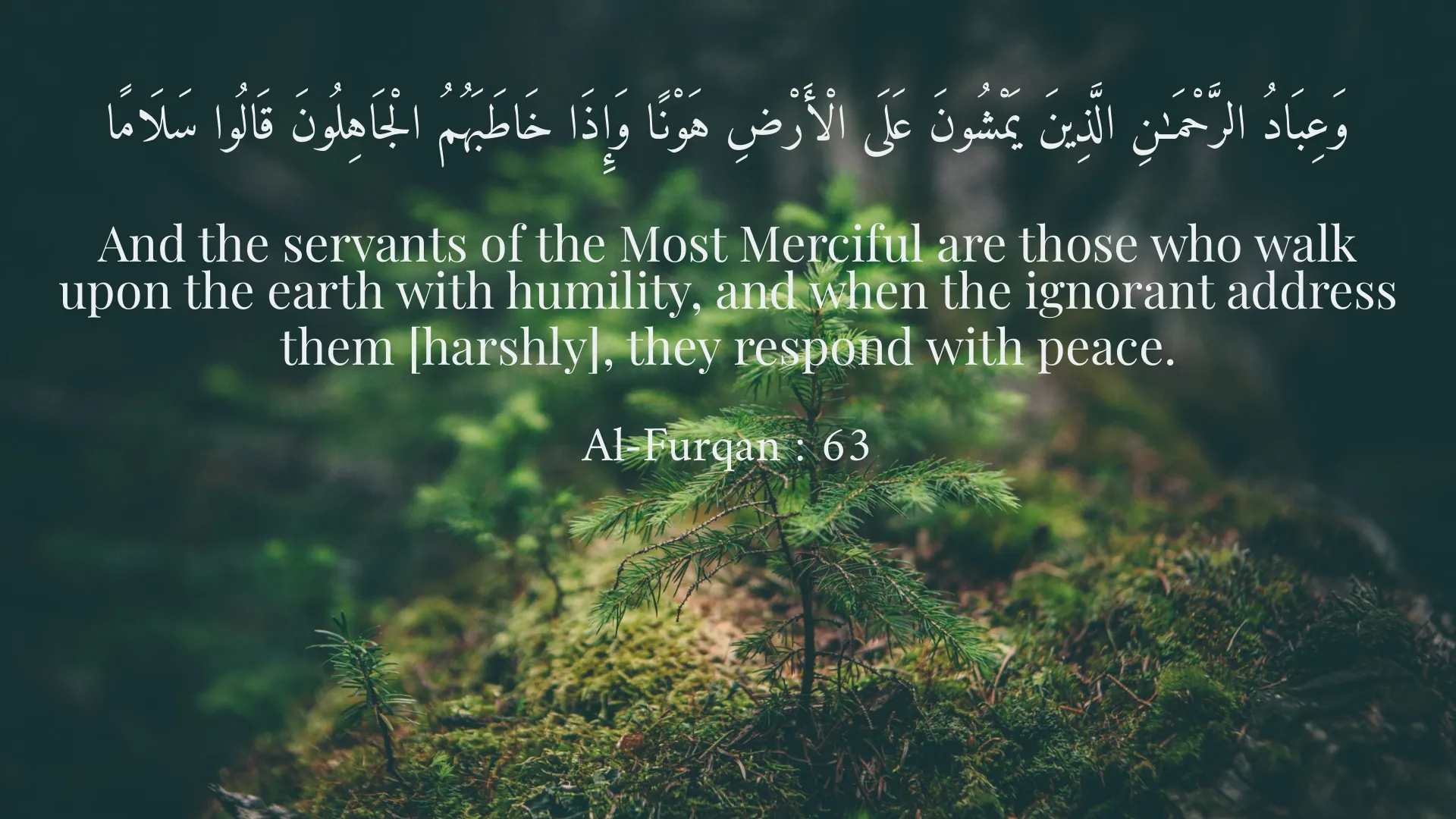
وَعِبَادُ الرَّحْمَـٰنِ الَّذِينَ يَمْشُونَ عَلَى الْأَرْضِ هَوْنًا وَإِذَا خَاطَبَهُمُ الْجَاهِلُونَ قَالُوا سَلَامًا
And the servants of the Most Merciful are those who walk upon the earth with humility, and when the ignorant address them [harshly], they respond with peace.
Al-Furqan : 63
فَبِمَا رَحْمَةٍ مِّنَ اللَّهِ لِنْتَ لَهُمْ ۖ وَ لَو كُنتَ فَظًّا غَلِيظَ الْقَلْبِ لَانْفَضُّوا مِن حَوْلِكَ ۖ فَاعْفُ عَنْهُمْ وَاسْتَغْفِرْ لَهُمْ وَ شَاوِرْهُمْ فِي الْأَمْرِ ۖ فَإِذَا عَزَمْتَ فَتَوَكَّلْ عَلَى اللَّهِ ۚ إِنَّ اللَّهَ يُحِبُّ الْمُتَوَكِّلِينَ
So by mercy from Allah, [O Muhammad], you were lenient with them. And if you had been rude in speech and harsh in heart, they would have disbanded from about you. So pardon them and ask forgiveness for them and consult them in the matter. And when you have decided, then rely upon Allah. Indeed, Allah loves those who rely [upon Him].
Al-Imran : 159
وَقُل رَّبِّ أَدْخِلْنِي مُدْخَلَ صِدْقٍ وَأَخْرِجْنِي مُخْرَجَ صِدْقٍ وَاجْعَل لِّي مِن لَّدُنكَ سُلْطَانًا نَّصِيرًا
And say, 'My Lord, cause me to enter a sound entrance and to exit a sound exit and grant me from Yourself a supporting authority.'
Al-Mu’minun : 97
Short Story
One day, Ali, a devout young man, encountered someone who spoke harshly to him. Instead of retorting, Ali remembered a Quranic verse and responded gently. This act made him ponder on how he could embody more humility in his life. A few days later, in another disagreement, his respectful behavior calmed the anger of others and brought peace to the group. These experiences reminded him that humility is not only a prized characteristic but also the key to friendship and love in society.