Quranic Answer
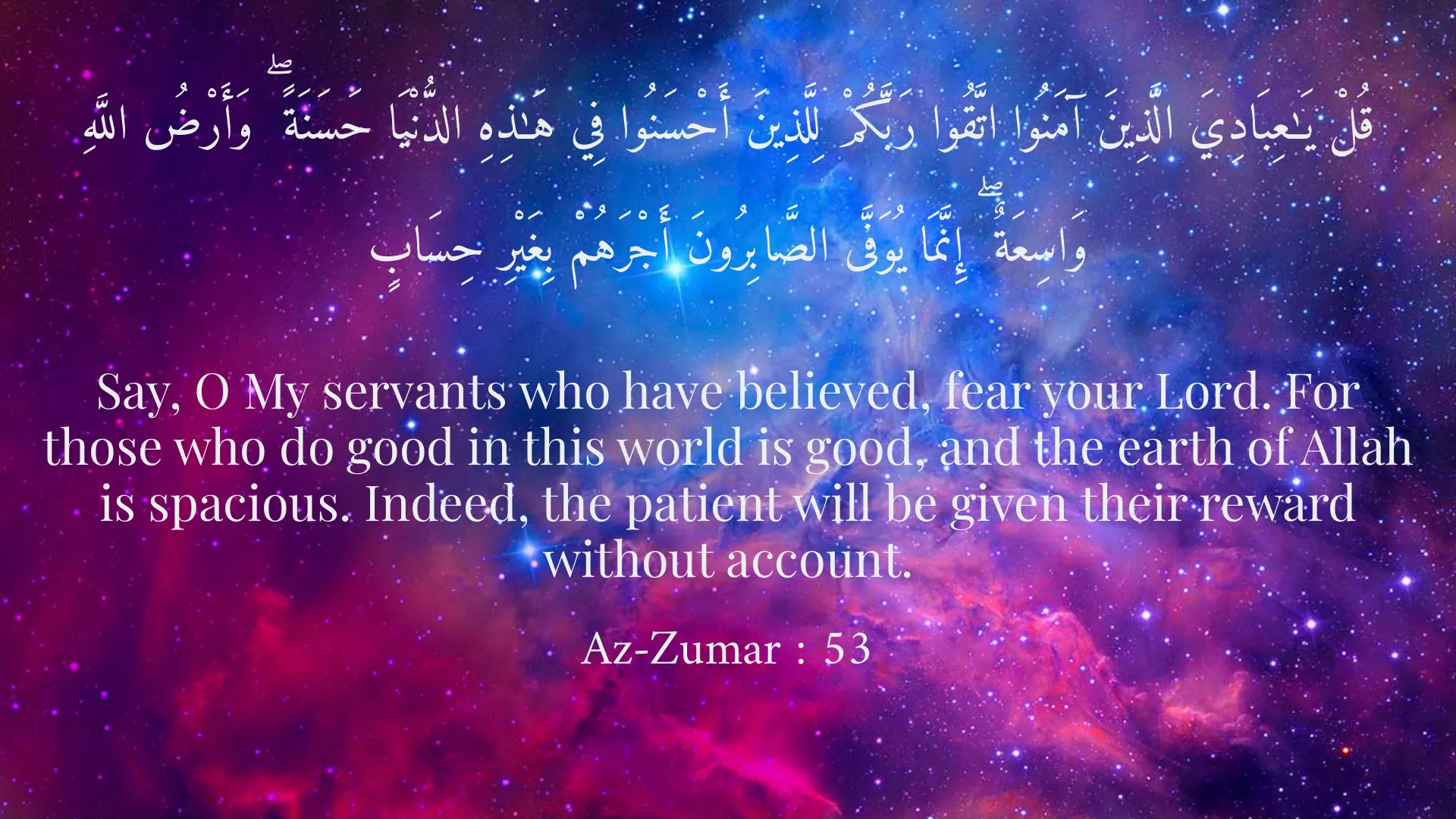
Freedom from past sins is a pivotal theme in Islam and is beautifully addressed in the Holy Quran, emphasizing God's mercy and forgiveness. The concept of sin and redemption does not solely belong to one religion but echoes throughout many spiritual beliefs. However, in Islam, the notion of sin is coupled with an overwhelming sense of hope that God's forgiveness is always within reach, a sentiment that is crucial for a believer seeking to reconcile their past with their present actions. The Quran speaks explicitly about the mercy of Allah, reinforcing the idea that no sin is so great that it cannot be forgiven. In this context, the act of turning towards Allah for forgiveness becomes a powerful responsibility that every Muslim carries. For instance, in verse 53 of Surah Az-Zumar, Allah proclaims, 'Say, O My servants who have believed, fear your Lord. For those who do good in this world is good, and the earth of Allah is spacious. Indeed, the patient will be given their reward without account.' This verse serves as a significant reminder for believers, encouraging them to strive towards righteousness while simultaneously being conscious of their past misdeeds. The phrase 'fear your Lord' emphasizes the importance of mindfulness in our actions. It is not merely about seeking forgiveness after committing sins, but also about nurturing a sense of responsibility towards our actions. The Quran acknowledges that although we all fall short and make mistakes, what truly matters is how we respond to our wrongdoings. This notion of accountability is intricately linked to the divine promise of mercy. Allah's declaration that the patient will have their reward without account suggests that perseverance in good deeds will lead to greater mercy and forgiveness in the afterlife. This assertion is particularly liberating for believers who may carry the weight of their past deviations. In a world that often glorifies instantaneous success and instant gratification, the act of patience is a significant antidote. It teaches individuals to navigate their personal spiritual journeys without succumbing to despair or hopelessness. The emphasis on patience in the face of challenges or enduring consequences of past sins fosters resilience and emotional strength in believers. It encourages a perspective that views life as a continuous journey of growth, where each step toward righteousness is met with vast potential for redemption. Furthermore, the Quran goes on to provide hope within the narrative of repentance. In verse 31 of Surah Al-Furqan, Allah states the comforting truth that if we repent and return to Him, He will forgive our sins. The beautiful words 'Indeed, those who have believed and done righteous deeds are the best of creatures' serve as an invitation to cultivate a life of virtue. This highlights the transformative journey of repentance; it is not merely an act of seeking forgiveness, but also an active engagement in doing good. Good deeds are not limited to acts of worship alone; they encompass all actions that contribute positively to ourselves and society. Whether through charity, kindness, or social justice, these actions play a role in the overall purification of the heart and soul, leading to a more fulfilling existence. The sweeping nature of Allah's mercy can also serve as encouragement for those who might feel caught in a cycle of sin. Acknowledging one's shortcomings is the first step towards transformation. The Quran compels individuals to reflect on their mistakes, which is an essential practice for cleansing the heart. This reflection can lead to sincere remorse, driving a believer to seek forgiveness with a longing heart. The act of making amends illuminates the significance of self-improvement, transforming one's life while simultaneously contributing to the betterment of the community. In verse 82 of Surah Al-An'am, it is mentioned, 'And those who do not exchange the covenant of Allah for a small price - for them is a great reward.' This verse serves as a reminder of the importance of adhering to one's convictions and the covenant made with Allah. It is easy to lose sight of spiritual goals amidst worldly temptations; however, this verse reminds believers that true fulfillment and freedom from past sins come from steadfastness and sincerity in faith. The 'great reward' signifies not merely the potential for forgiveness, but also the spiritual elevation and profound peace that follows a life committed to righteous actions and patience in the face of adversity. To sum it up, the pathway of freedom from past sins is illuminated through the principles of righteousness, patience, and the unwavering pursuit of Allah's forgiveness. As believers engage in good deeds while remaining patient, they align themselves closer to both spiritual and societal betterment. This journey not only cleanses their hearts but also has the capacity to transform communal relationships, instilling a culture of mercy and support. In conclusion, reflecting on past mistakes and making amends can indeed cleanse our hearts and transform our lives. The essence of Islam heavily revolves around the idea of continuous growth, repentance, and unwavering faith in Allah's mercy. Embracing this concept frees individuals from the shackles of guilt and empowers them to nurture their spiritual and ethical lives. In a world filled with challenges and temptations, the call for reflection, accountability, and the pursuit of goodness remains perennial, encouraging believers to foster hope and work towards their redemption in a profound, impactful manner.
Related Verses
قُلْ يَٰعِبَادِيَ الَّذِينَ آمَنُوا اتَّقُوا رَبَّكُمْ لِلَّذِينَ أَحْسَنُوا فِي هَـٰذِهِ الدُّنْيَا حَسَنَةً ۖ وَأَرْضُ اللَّهِ وَاسِعَةٌ ۖ إِنَّمَا يُوَفَّى الصَّابِرُونَ أَجْرَهُمْ بِغَيْرِ حِسَابٍ
Say, O My servants who have believed, fear your Lord. For those who do good in this world is good, and the earth of Allah is spacious. Indeed, the patient will be given their reward without account.
Az-Zumar : 53
إِنَّ الَّذِينَ آمَنُوا وَعَمِلُوا الصَّٰلِحَاتِ أُولَـٰئِكَ هُمْ خَيْرُ ٱلْبَرِيَّةِ
Indeed, those who have believed and done righteous deeds are the best of creatures.
Al-Furqan : 31
وَالَّذِينَ لَا يَشْتَرُونَ بِعَهْدِ اللَّهِ ثَمَنًا قَلِيلًا أُو۟لَـٰئِكَ لَهُمْ أَجْرٌ كَبِيرٌ
And those who do not exchange the covenant of Allah for a small price - for them is a great reward.
Al-An'am : 82
Short Story
One day, a man named Hasan reflected on his past sins. He felt unworthy of God's love. However, one day while reading the Quran, he stumbled upon a verse that prompted him to think deeply. He decided to repent and perform good deeds. Hasan didn’t get discouraged and pursued good every day. Over time, he felt a growing sense of peace in his heart and believed God had forgiven him.