Quranic Answer
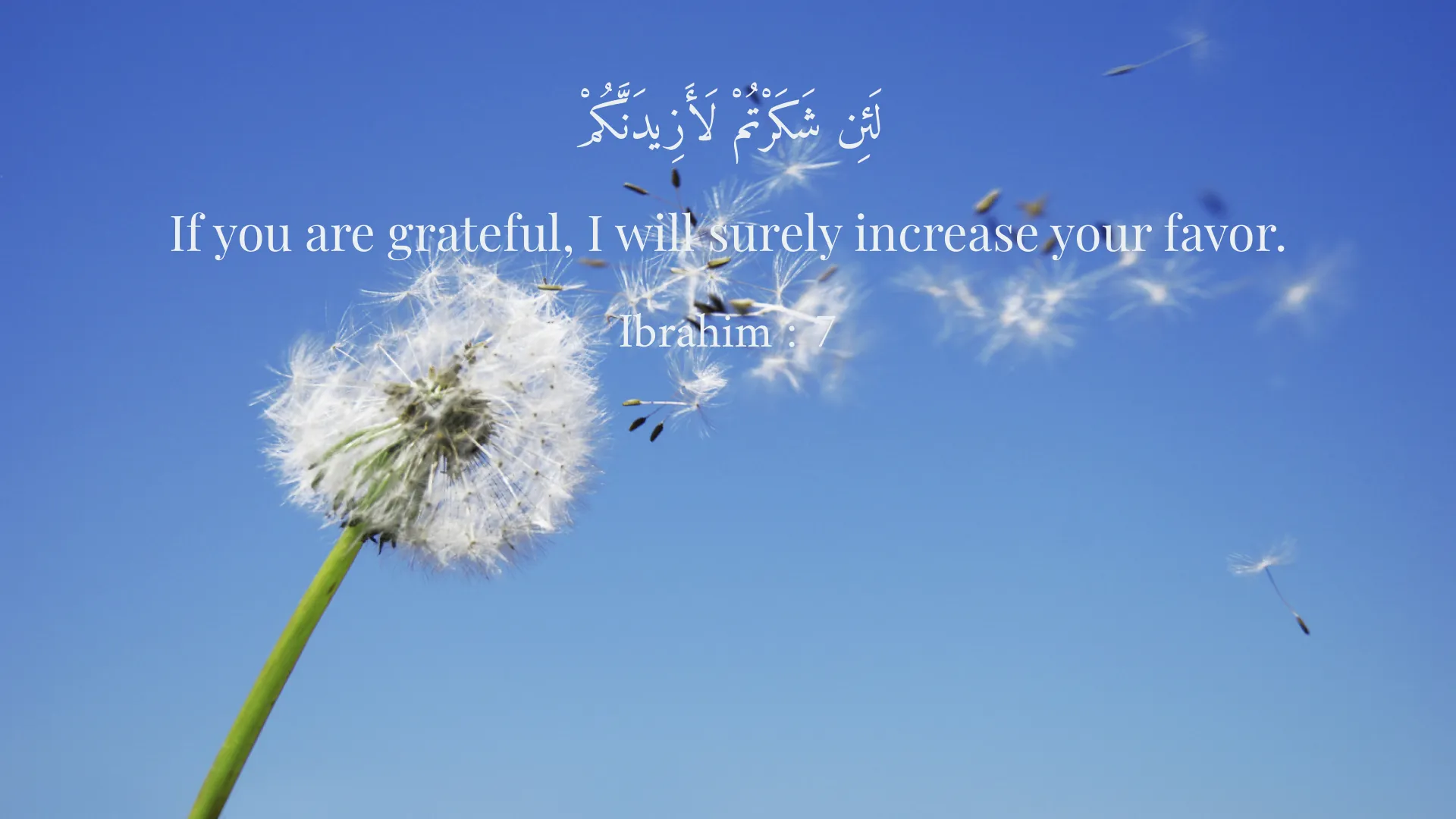
Gratitude is a profound and foundational principle that transcends the boundaries of culture and religion, yet it finds particularly significant expression within the lives of Muslims through their faith in Islam. At the core of this principle lies the notion of recognizing and appreciating the blessings bestowed upon us, a theme that resonates through the sacred teachings of the Holy Quran. One of the most compelling verses that highlights this importance is found in Surah Ibrahim, where Allah states, 'If you are grateful, I will surely increase your favor' (Surah Ibrahim, verse 7). This declaration serves as a reminder that gratitude is not merely a polite gesture; it is an essential element that can lead to the multiplication of blessings in one’s life. The act of being grateful for our blessings inherently encourages a mindset that actively seeks to acknowledge Allah’s gifts. A servant of Allah who embraces gratitude will cultivate a conscious awareness of the numerous gifts, both overt and subtle, that Allah has graced them with. This might include everything from the basic necessities of life, such as food and shelter, to more profound blessings, like family, health, and inner peace. By reminding themselves of these gifts—through reflection, prayer, and expressions of thanks—individuals not only honor Allah but also open their hearts to receive even more blessings. Moreover, developing gratitude can significantly enhance our ability to cope with the hardships and struggles that life inevitably presents. When we focus on our blessings, we foster a positive outlook that can serve as a buffer against despair and discontent. Studies in psychological research have demonstrated that individuals who practice gratitude tend to experience lower levels of stress and enhanced emotional well-being. In the context of Islamic teachings, this can be understood as a form of spiritual resilience. The Prophet Muhammad (peace be upon him) poignantly stated, 'Whoever does not forget the power of Allah will always be in need of His gifts.' This powerful reminder emphasizes the necessity of keeping our tongues and hearts engaged in the remembrance of Allah, continually offering our thanks regardless of our circumstances. Gratitude, as highlighted in Surah Al-Imran, acts as a conduit that draws us closer to Allah. When we express our thankfulness, we acknowledge His mercy and generosity in our lives. Surah Al-Imran states, 'And remember when your Lord proclaimed: "If you give thanks, I will surely increase your favor upon you; but if you deny, indeed, My punishment is severe"' (Surah Al-Imran, verse 7). This insistence on gratitude not only nurtures our connection with the Creator but also fortifies our ethical and moral grounding. By recognizing our blessings, we learn to appreciate the world around us and the collective humanity we share. However, it’s critical to understand that gratitude should not be confined to mere words; it must manifest in our actions. Expressing gratitude is not fully realized until it translates into deeds and conduct that reflect kindness and compassion towards others. Acts of charity, engaging in community service, or even showing kindness in our daily interactions can be seen as extensions of our gratitude towards Allah. When we help others, we are effectively sharing the bounty we have received, creating an environment where blessings can flow freely between Allah, ourselves, and those in need. In the practice of Islam, gratitude also serves as a reminder to cultivate humility. Recognizing that all that we possess—our wealth, health, relationships, and achievements—are gifts from Allah encourages us to approach life with a sense of responsibility and purpose. It fosters an attitude of service, propelling us to contribute positively to society. In this light, gratitude becomes a powerful motivator for change, both in our personal lives and within the community at large. In conclusion, gratitude is an indispensable part of a Muslim’s life, intricately woven into the fabric of daily existence through both spiritual and practical applications. The verses of the Quran reflect this nobility of practice, encouraging believers to not only acknowledge Allah’s blessings but also to reflect this recognition in their actions and interactions. As we express gratitude, we not only deepen our relationship with Allah but also inspire an environment of positivity and compassion around us. The act of giving thanks grows our hearts, enhances our lives, and ultimately connects us more profoundly with the essence of humanity. Therefore, let us take the time to appreciate and acknowledge the countless blessings in our lives, remembering that through gratitude, we can invite even more grace and favor into our journey.
Related Verses
لَئِن شَكَرْتُمْ لَأَزِيدَنَّكُمْ
If you are grateful, I will surely increase your favor.
Ibrahim : 7
وَاذْكُرُوا نِعْمَتَ اللَّـهِ عَلَيْكُمْ
And remember the favor of Allah upon you.
Al-Imran : 123
Short Story
Once upon a time, a young man named Sajjad remembered to express gratitude for his blessings. Every morning, he looked at the green trees and blue sky, thanking Allah for His love towards His creation. Sajjad decided to do one good deed each day, such as helping orphans or teaching children in a school. With this decision, he felt a strange calmness in his heart, and gradually, his life became brighter.