Quranic Answer
The Holy Quran, revered as the ultimate guide for Muslims, lays a profound emphasis on the virtues of patience and endurance when confronted with difficulties and injustices. These qualities form the bedrock of resilience and serve as essential elements in developing a strong spiritual character. The Quran encourages believers to find strength in their faith, often reminding them that Allah is a constant source of support in times of trial. One such reminder is found in Surah Al-Baqarah, verse 153, where Allah states, "O you who have believed, seek help through patience and prayer. Indeed, Allah is with the patient." This verse encapsulates the core message of how believers can navigate the choppy waters of adversity. Patience, in this context, is not just the ability to endure hardships passively; it is an active engagement in seeking help and guidance through prayer. The relationship between patience and prayer is profound, as prayer becomes a conduit through which faith can be strengthened and one’s resolve can be fortified. In times of injustice, when human efforts often seem futile, the reassurance that Allah is with the patient provides immense comfort and encourages believers to turn towards Him for solace. Moreover, in Surah Al-Imran, verse 200, the Quran further elucidates the importance of steadfastness, stating, "O you who have believed, be steadfast and endure and remain stationed and fear Allah, that you may be successful." Here, the call for endurance is not merely a passive waiting for problems to resolve themselves; rather, it emphasizes an active stance against the forces of injustice and oppression we may encounter throughout life. The exhortation to 'remain stationed' is a powerful reminder to stand firm in one's beliefs and values, even when external circumstances are challenging. At its core, the Quran presents patience as a pathway to success—not just in this life, but in the Hereafter as well. In Surah Al-Mu’minin, verse 111, Allah assures us that undoubtedly, the patient will be rewarded in both worlds. This promise underscores the notion that patience is not a sign of weakness; rather, it is a testament to one's faith and determination. It emphasizes that each act of endurance, however small, contributes to a greater purpose and that Allah values the struggles of those His way. Therefore, when faced with injustice, our initial response should be to cultivate our faith in Allah and to recognize the potential lessons and outcomes that come from our struggles. In many cases, the injustices we face serve as catalysts for our growth—both spiritually and personally. They compel us to reflect on what is truly important and to strengthen our character. For example, situations of injustice can ignite a desire for social change and justice not only for oneself but for others who might be suffering in silence. When we adopt a perspective of patience, we can transform our trials into opportunities for learning, growth, and service. In fact, many historical figures who have advocated for justice and equality were also individuals who endured personal hardships and injustices throughout their lives. Through patience, they became beacons of hope and change in society. It is crucial to recognize that patience is active—it requires effort, self-regulation, and practice. It is easy to become overwhelmed by a sense of powerlessness when faced with injustice; however, patience allows us to transform our feelings of despair into proactive measures. Whether through community organization, peaceful activism, or even simply providing support to those who have faced injustice, we can channel our feelings into meaningful action. Furthermore, the diversity in worship, as mentioned in the Quran, can be employed as a means of building patience. Engaging in various acts of worship strengthens our spiritual fabric and allows us to experience a closer connection to Allah. This includes performing daily prayers, engaging in supplications, and reciting the Quran—all of which act as tools to help balance our emotional and spiritual states during turbulent times. Additionally, our ability to face injustice with patience can serve as a model for others. When individuals witness our steadfastness and how we maintain our dignity while confronting unfairness, it can inspire them to act with the same sense of piety and strength. Our actions can create ripples of change, fostering a collective sense of resilience within our communities. This collective patience can ultimately lead to societal transformation, encouraging others to speak out against injustice. It is important to remember that the trials we face in life are not without purpose. Each challenge serves as a lesson, and patience is what allows us to navigate these lessons with grace and wisdom. In the words of the Quran, patience is not simply an act of waiting; it is a continuous process of internal growth and resilience. By maintaining our faith and relying on the support that Allah provides during these times, we allow ourselves not just to endure, but to emerge stronger and more capable than before. In conclusion, the Holy Quran’s emphasis on patience and endurance in the face of injustice provides invaluable guidance for believers. Each verse and teaching highlights that our responses to difficulties shape our character and our future. The essence of patience brings hope and strength, allowing us to cultivate a deeper connection to our faith. As we strive to embody the tenets of patience, we will not only find solace in our struggles but also become agents of change within our communities and beyond.
Related Verses
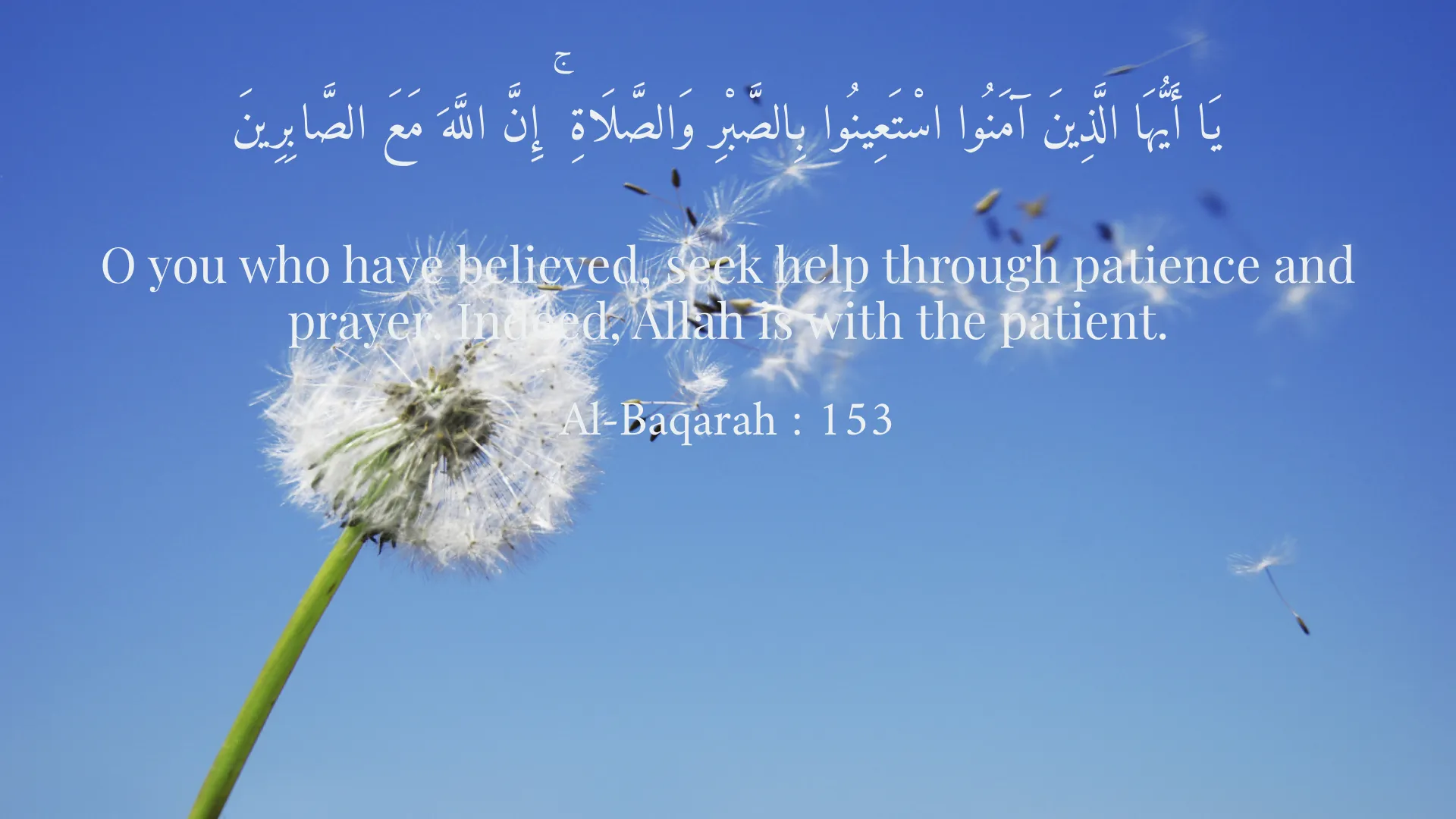
يَا أَيُّهَا الَّذِينَ آمَنُوا اسْتَعِينُوا بِالصَّبْرِ وَالصَّلَاةِ ۚ إِنَّ اللَّهَ مَعَ الصَّابِرِينَ
O you who have believed, seek help through patience and prayer. Indeed, Allah is with the patient.
Al-Baqarah : 153
يَا أَيُّهَا الَّذِينَ آمَنُوا اصْبِرُوا وَصَابِرُوا وَرَابِطُوا وَاتَّقُوا اللَّهَ لَعَلَّكُمْ تُفْلِحُونَ
O you who have believed, be steadfast and endure and remain stationed and fear Allah, that you may be successful.
Al-Imran : 200
إِنِّي جَزَيتُهُمُ الْيَوْمَ بِمَا صَبَرُوا أَنَّهُمْ هُمُ الْفَائِزُونَ
Indeed, I have rewarded them today for their patience; indeed, they are the attainers [of success].
Al-Mu'minun : 111
Short Story
Once upon a time, a man named Hamid sat beside a river, contemplating his life’s struggles. He was always troubled by the injustices he observed in society. Suddenly, an old man approached him and said, "Dear Hamid, I remember facing numerous injustices when I was young. But every time I prayed for patience, I felt a sense of lightness and peace. We must understand that patience in the face of troubles makes us stronger, and ultimately, Allah will vindicate all the oppressed." Upon hearing these words, Hamid felt a shift in his spirit and began to embrace patience and trust in God.