Quranic Answer
The Holy Quran, revered as the literal word of God by Muslims, offers profound insights into life, death, and what lies beyond. In its verses, death is often referenced as an unequivocal aspect of human existence, a transition that every individual will inevitably face. While there is no particular verse that explicitly explains how to be saved from sudden death, the Quran provides a framework that aids believers in comprehending death and preparing for it spiritually and morally. By understanding the Quranic perspectives on death, we can find guidance on how to approach this inevitable event with dignity and preparedness. One of the verses that encapsulates the essence of death in the Quran is found in Surah Al-Imran, verse 185: "Every soul will taste death, and you will surely be given your full compensation on the Day of Resurrection. So he who is drawn away from the Fire and admitted to Paradise has certainly attained success. And what is the worldly life except the enjoyment of delusion." This profound verse emphasizes that death is not just an end but also signifies the commencement of an afterlife filled with either reward or punishment based on one’s earthly actions. The phrase "every soul will taste death" serves as a reminder of the universality of mortality. Regardless of one’s social status, wealth, or achievements, death treats everyone equally. This principle is paramount for believers as it encourages humility and reflection throughout their lives. The reminder of our ultimate fate can instill a sense of urgency in us to live righteously and make the most of our time in this world, as life can end at any moment. Furthermore, the verse mentions the importance of the Day of Resurrection, a fundamental concept in Islamic belief, where individuals are held accountable for their deeds. The Quran underscores that the way we live our lives has eternal consequences. Therefore, the preparation for death transcends mere physical or existential considerations; it encompasses a spiritual journey towards self-improvement and accountability. By maintaining an awareness of death and the afterlife, individuals can cultivate a lifestyle centered on good deeds and enhance their connection to God. The teachings in Surah Al-Baqarah, verse 153 further bolster this notion: "O you who have believed, seek help through patience and prayer. Indeed, Allah is with the patient." This verse highlights the importance of patience and prayer, particularly in moments of despair or difficulty — universally applicable concepts that resonate with the inherent struggles of life. Striving to develop these qualities not only enriches one’s spiritual state but also provides solace and tranquility in facing the realities of life and death. When one recognizes that sudden death could occur at any moment, it becomes crucial to engage in self-reflection and a constant assessment of one’s life. Until our last breath, we should strive to draw closer to God and seek forgiveness for our shortcomings. Each act of kindness, compassion, and charity can be seen as steps towards ensuring a peaceful and honorable departure from this world. It is within these practices that believers find security and comfort regarding the inevitability of death. Understanding death as an integral part of existence, the Quran encourages believers to seek a life filled with purpose. It urges us to prioritize spiritual growth and embrace the tenets of our faith earnestly. The consequence of a righteous and meaningful life, as suggested by the Quran, is ultimately salvation and acceptance into Paradise, making every moment precious and worthy of pursuit. As Muslims, our faith teaches us that death is simply a transition, a passage into another realm that holds either unimaginable bliss or dire consequences. The Quran reassures us that those who lead righteous lives will experience the ultimate companionship with God in the afterlife. This belief fosters a sense of peace despite the fear associated with death, leading us to confront this reality with courage and conviction. In contemplating our mortality, it is essential to turn away from distractions and the illusions of worldly life. The transient nature of material possessions and the fleeting experiences of this world serves as a wake-up call for believers to invest in their spiritual well-being instead. Engaging in acts of worship, generosity, and kindness not only contributes to a virtuous life but also prepares the heart and soul for the end of this earthly journey. Moreover, the awareness of death and the afterlife should not lead to despair but should inspire us to appreciate our lives deeply. Each moment becomes an opportunity to connect with others, share kindness, and leave behind a legacy of love and compassion. The eventual aim of every believer should be to cultivate a heart filled with faith, so when the time comes, they can meet their end with grace and serenity. Ultimately, while the Quran may not provide a specific formula for escaping sudden death, it offers a comprehensive guide toward living a life that counts. By embracing its teachings and respecting the Divine commandments, we nurture our souls and cultivate a genuine fear of God that can transcend even the darkness of death. Therefore, salvation from sudden death or any death scenario lies in how we choose to live today. Our days are numbered, but if spent with purpose, service, prayer, and remembrance of the Almighty, we remain secure in our faith, knowing that every breath brings us closer to our Creator. Thus, with every act of goodness and every moment of reflection, we prepare not just for possible sudden death but for life beyond the mortal realm, embodying the very essence of what it means to be a faithful servant.
Related Verses
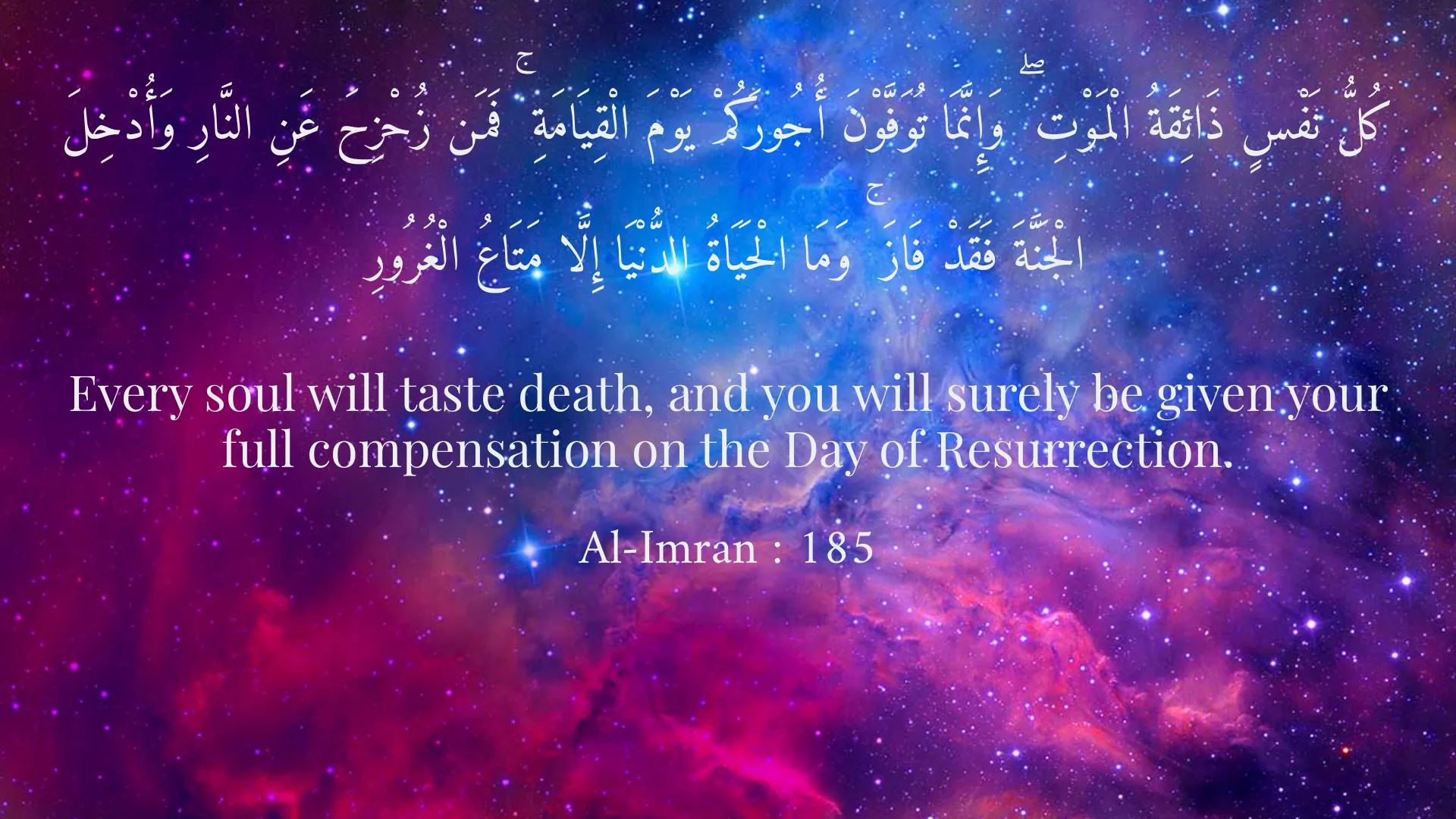
كُلُّ نَفْسٍ ذَائِقَةُ الْمَوْتِ ۖ وَإِنَّمَا تُوَفَّوْنَ أُجُورَكُمْ يَوْمَ الْقِيَامَةِ ۚ فَمَن زُحْزِحَ عَنِ النَّارِ وَأُدْخِلَ الْجَنَّةَ فَقَدْ فَازَ ۚ وَمَا الْحَيَاةُ الدُّنْيَا إِلَّا مَتَاعُ الْغُرُورِ
Every soul will taste death, and you will surely be given your full compensation on the Day of Resurrection.
Al-Imran : 185
يَاأَيُّهَا الَّذِينَ آمَنُوا اسْتَعِينُوا بِالصَّبْرِ وَالصَّلَاةِ ۚ إِنَّ اللَّهَ مَعَ الصَّابِرِينَ
O you who have believed, seek help through patience and prayer. Indeed, Allah is with the patient.
Al-Baqarah : 153
Short Story
Once there was a young man named Soroush who was always anxious about death. He had read Quranic verses multiple times and concluded that the best way to be freed from sudden death was to live a meaningful life and draw closer to God. He decided to remember God daily, doing good deeds not only for himself but also for others. Over time, this brought him profound peace, and Soroush realized that by living right, he could distance himself from unfortunate events.