Quranic Answer
The Holy Quran is a profound source of guidance that provides us with crucial teachings for personal growth and self-correction. One of the key themes in the Quran is the notion of transforming ourselves into better individuals, embodying virtues, and distancing ourselves from vices. The journey of self-improvement is not merely a personal endeavor but also a spiritual necessity, as it aligns with the teachings of Islam and the expectations set by Allah for every believer. In Surah Al-Ma'idah, verse 100, Allah states, 'Say, Are those who know equal to those who do not know?' This verse serves as a pivotal reminder that knowledge is a crucial precursor to personal growth. It emphasizes the importance of education, not just in terms of worldly knowledge but also in understanding one’s faith and ethical responsibilities. It invites us to reflect on our choices, urging us to pursue knowledge that leads to virtuous living. When we equip ourselves with knowledge, we are better positioned to choose righteousness over wrongdoings, bringing us closer to our ideal selves. Moreover, the verse calls into question the nature of wisdom: does mere knowledge equate to genuine understanding and moral behavior? The implication is clear: we are responsible for not just acquiring information but also for applying it in ways that elevate our character. Thus, this verse can inspire us to engage in lifelong learning and self-improvement, motivating us to strive for a deeper understanding of our faith and its implications on our actions. Believers who aspire to become better individuals are reminded of the fundamental importance of honesty in their words and actions. In Surah Al-Baqarah, verse 177, it states, 'Righteousness is not that you turn your faces toward the east or the west, but [true] righteousness is in one who believes in Allah, the Last Day, the Angels, the Book, and the Prophets and gives his wealth...' This verse is crucial as it redefines righteousness, distancing it from mere rituals or outward appearances. It underscores that true morality lies within one's faith and actions that stem from that belief. The essence of this verse challenges us to reflect on our intentions and the authenticity of our practices. It prompts us to evaluate our deeds beyond the superficialities of religious obligations; rather, it invites us to cultivate a deep and sincere relationship with God, grounded in belief and expressed through conduct that benefits not just ourselves, but also society at large. Such an understanding of righteousness urges us to express our beliefs tangibly, whether through acts of charity, kindness, or honesty, therefore contributing to the well-being of those around us. Furthermore, the Quran encourages us to maintain good conditions in our relationships with God and with others. This is emphasized through both direct commandments and examples drawn from prophetic narratives. To nurture our relationships, we must embody ethical qualities such as honesty, kindness, and love for others. As we cultivate these traits, we contribute to a positive social environment, one where compassion and empathy are at the forefront. In Surah An-Naml, verse 54, Allah warns about the people of Lot and the consequences of their disobedience. Their story serves as a powerful reminder of the potential consequences of straying from the path of righteousness. It illustrates that there are dire ramifications for ethical transgressions and disobedience to divine commandments. This, in turn, prompts us to awaken to the realities of sin and the importance of maintaining a moral compass. By reflecting on these historical narratives, we are reminded to purify our souls and seek forgiveness for our shortcomings, drawing upon the profound mercy and compassion of Allah. It is essential to internalize these teachings so that we can become individuals who strive for excellence in every aspect of our lives. The Quran sets the framework for our personal transformation, inviting us to look inward and engage in self-reflection. The process of becoming a new individual is not instantaneous; it requires continued effort, reflection, and commitment to change. Therefore, we must actively seek to conform our lifestyle with the divine guidance provided in the Quran, allowing it to direct our moral and ethical development. Additionally, personal growth is a continuous journey marked by struggles and victories. Each individual will face unique challenges on their path to self-improvement. The teachings of the Quran equip us with resilience and patience, urging us to keep striving despite our setbacks. By turning back to Allah and seeking His grace, we fortify our resolve to transcend our limitations and realize our true potential. In conclusion, the Holy Quran serves as a comprehensive guide for personal growth and self-correction. It emphasizes the importance of knowledge, righteousness, and ethical conduct in transforming ourselves into better beings. By adhering to its teachings and engaging in continuous self-reflection and reform, we can cultivate our character and nurture our relationships with God and fellow humans. Thus, to become a new individual, we must earnestly strive to embody the divine virtues espoused in the Quran and work diligently towards reforming our behavior and deepening our faith.
Related Verses
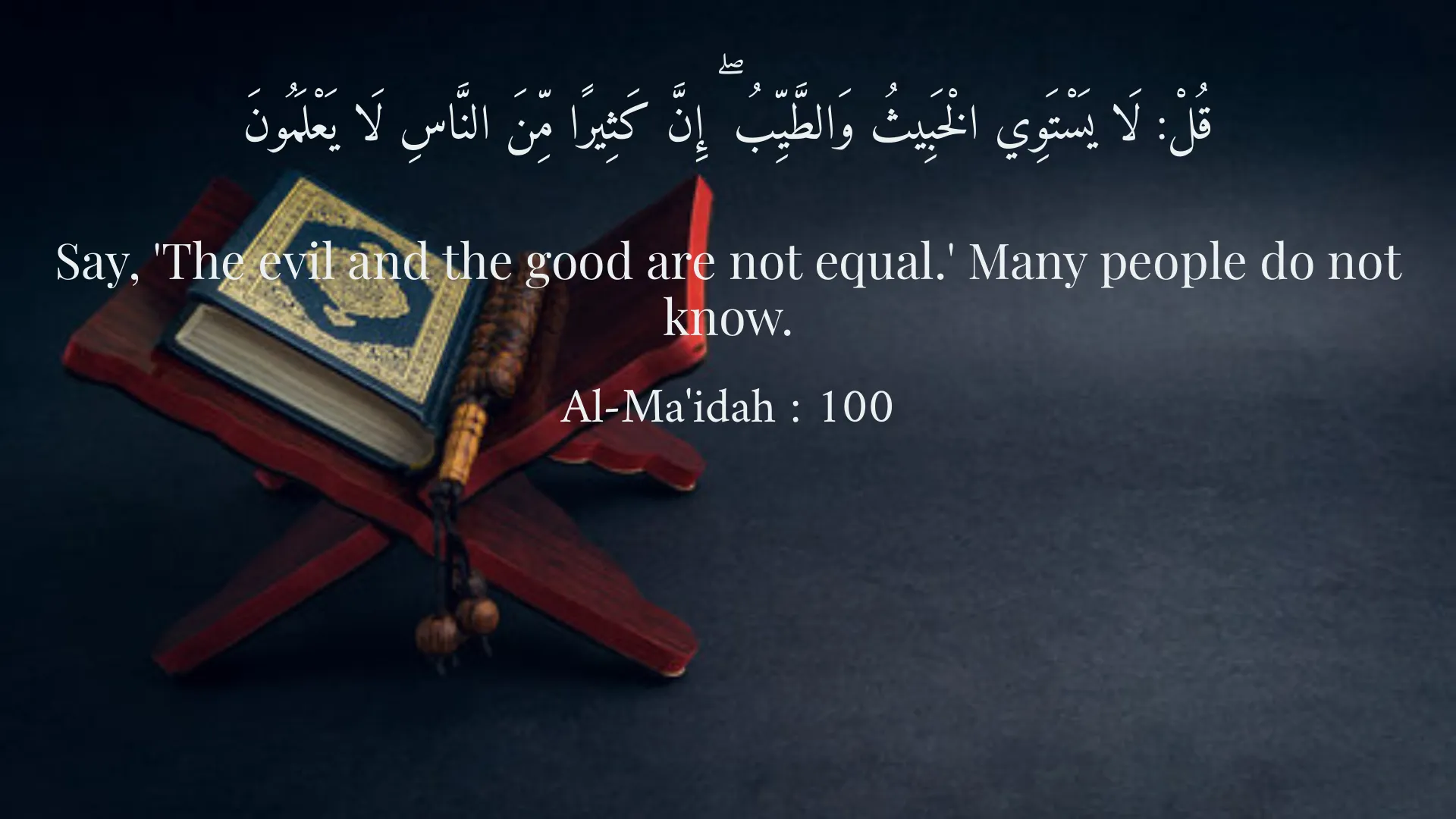
قُلْ: لَا يَسْتَوِي الْخَبِيثُ وَالطَّيِّبُ ۖ إِنَّ كَثِيرًا مِّنَ النَّاسِ لَا يَعْلَمُونَ
Say, 'The evil and the good are not equal.' Many people do not know.
Al-Ma'idah : 100
لَّيْسَ الْبِرَّ أَنْ تُوَلُّوا وُجُوهَكُمْ قِبَلَ الْمَشْرِقِ وَالْمَغْرِبِ ۖ وَلَكِنَّ الْبِرَّ مَنْ آمَنَ بِاللَّهِ وَالْيَوْمِ الْآخِرِ وَالْمَلَائِكَةِ وَالْكِتَابِ وَالْأَنْبِيَاءِ وَأَعْطَى مَالَهُ
Righteousness is not that you turn your faces toward the east or the west, but [true] righteousness is in one who believes in Allah, the Last Day, the Angels, the Book, and the Prophets and gives his wealth...
Al-Baqarah : 177
وَلُوطًا إِذْ قَالَ لِقَوْمِهِ أَتَأْتُونَ الْفَاحِشَةَ وَأَنتُمْ تُبْصِرُونَ
And [mention] Lot when he said to his people, 'Do you commit such immorality while you are seeing?'
An-Naml : 54
Short Story
One day, a young man named Amir decided to make changes in his life. He referred to the verses of the Quran and realized that the most important thing is faith in God. Every day when he went to pray, he asked God for help to become a better person. Then he started helping others and giving to charity. After a while, not only did he change himself, but those around him also responded to his goodness and made changes in themselves.