Quranic Answer
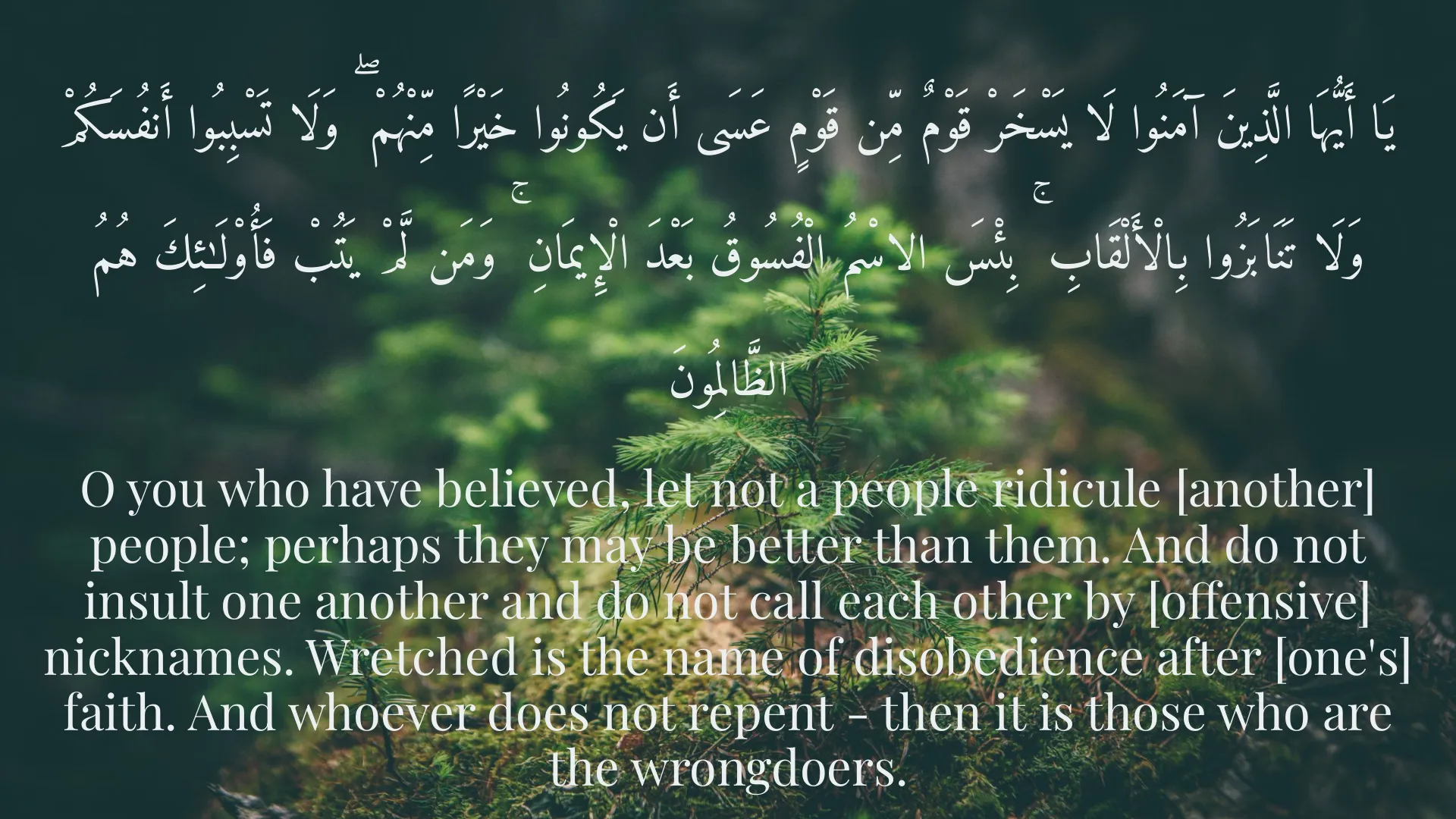
Behaving respectfully towards others is one of the fundamental principles of life as emphasized in numerous cultures and religions, particularly in Islam. The teachings of Islam provide profound guidance on interpersonal relations, encouraging individuals to foster a community that upholds respect, dignity, and empathy. The Holy Quran, in particular, offers many insights into the manner in which believers should interact with one another, with a special focus on the significance of respect and understanding. Two verses from Surah Al-Hujurat highlight these principles beautifully, underpinning the essential need for respect in our interactions. In Surah Al-Hujurat, verse 11, Allah explicitly instructs the believers: "O you who have believed, let not a people ridicule [another] people; perhaps they may be better than them. And do not insult one another and do not call each other by [offensive] nicknames. Wretched is the name by which one invokes [another] after his faith. And whoever does not repent - then it is those who are the wrongdoers." This verse serves as a powerful reminder of the importance of maintaining self-esteem and respecting others. The essence of this verse revolves around the idea that every individual, regardless of their background, deserves to be treated with dignity. By prohibiting ridicule and offensive labels, the Quran reinforces the necessity of mindfulness in our interactions, urging individuals to evaluate their words and actions carefully. Furthermore, the Quran continues in verse 13: "O mankind, indeed We have created you from male and female and made you peoples and tribes that you may know one another. Indeed, the most noble of you in the sight of Allah is the most righteous of you. Indeed, Allah is Knowing and Acquainted." This verse deepens the conversation about respect by introducing the notion of diversity and inclusion. The recognition that humanity comprises different tribes and peoples signifies that each person has a unique identity and story worth understanding. Instead of allowing differences to create divide, Allah's message encourages embracing these differences to foster a culture of knowledge, learning, and mutual respect. The concept of respect extends far beyond mere words; it is rooted in our behaviors and attitudes. Respectful behavior includes not only positive speech but also the avoidance of wrongful judgments and prejudice. We can exemplify respect by listening actively to others, valuing their opinions, and recognizing their feelings. This mindful approach to communication plays a pivotal role in nurturing a healthy and positive atmosphere, whether in workplaces, families, or communities. In the workplace, respect forms the bedrock of collaboration and productivity. An environment where individuals feel valued can lead to higher morale, increased motivation, and overall job satisfaction. Encouraging a culture of respect involves recognizing diverse ideas and contributions, as well as providing constructive feedback in a manner that uplifts rather than diminishes others. Additionally, fostering mutual respect among colleagues can lead to enhanced teamwork, creativity, and innovation as each individual feels empowered to share their skills and perspectives without fear of ridicule or dismissal. Similarly, within families, maintaining a respectful and nurturing environment allows for emotional growth and stability among family members. When parents model respectful behavior, children are more likely to internalize these lessons and carry them into their own relationships. Open communication, active listening, and validating emotions create a strong foundation for familial bonds. Moreover, practicing respect in family dynamics cultivates a safe space for expressing differences, discussing values, and navigating conflicts productively. Communities, too, benefit immensely from a climate of respect. As societies become increasingly diverse, understanding and celebrating cultural variations is essential to fostering harmony. Respectful neighborhood interactions pave the way for collaborative initiatives that address social issues and uplift communities as a whole. Events that celebrate cultural heritage, promote dialogue, and encourage connection among different groups can create a sense of belonging and unity, counteracting societal divisions that stem from misunderstanding and prejudice. Moreover, respect should encompass acts of kindness and compassion towards those outside of our immediate circles. Charity, volunteerism, and support for the less fortunate reflect a deeper understanding of our shared humanity. By engaging in service-oriented activities, we express respect for all individuals, acknowledging their inherent dignity and worth. This active engagement helps break down barriers and builds bridges of understanding, fostering a culture where empathy thrives. In conclusion, the principles of respect, as articulated in the Quran and embodied in the teachings of Islam, hold immense relevance in today’s world. With the emphasis on treating others with dignity and understanding, we can cultivate relationships that are based on mutual respect, empathy, and kindness. It is imperative that individuals actively practice these teachings in their daily lives—whether in professional settings, family interactions, or community engagement. By nurturing a culture of respect, we contribute to a healthier and more inclusive society where everyone can thrive, ultimately conveying the message that respect is not merely a virtue but a necessity for a harmonious existence.
Related Verses
يَا أَيُّهَا الَّذِينَ آمَنُوا لَا يَسْخَرْ قَوْمٌ مِّن قَوْمٍ عَسَى أَن يَكُونُوا خَيْرًا مِّنْهُمْ ۖ وَلَا تَسْبِبُوا أَنفُسَكُمْ وَلَا تَنَابَزُوا بِالْأَلْقَابِ ۚ بِئْسَ الاسْمُ الْفُسُوقُ بَعْدَ الْإِيمَانِ ۚ وَمَن لَّمْ يَتُبْ فَأُوْلَـٰئِكَ هُمُ الظَّالِمُونَ
O you who have believed, let not a people ridicule [another] people; perhaps they may be better than them. And do not insult one another and do not call each other by [offensive] nicknames. Wretched is the name of disobedience after [one's] faith. And whoever does not repent - then it is those who are the wrongdoers.
Al-Hujurat : 11
يَا أَيُّهَا النَّاسُ إِنَّا خَلَقْنَاكُم مِّن ذَكَرٍ وَأُنثَى وَجَعَلْنَاكم شُعُوبًا وَقَبَائِلَ لِتَعَارَفُوا ۚ إِنَّ أَكْرَمَكُمْ عِندَ اللَّهِ أَتْقَاكُمْ ۚ إِنَّ اللَّهَ عَلِيمٌ خَبِيرٌ
O mankind, indeed We have created you from male and female and made you peoples and tribes that you may know one another. Indeed, the most noble of you in the sight of Allah is the most righteous of you. Indeed, Allah is Knowing and Acquainted.
Al-Hujurat : 13
Short Story
One day, a young man named Amin was disrespectful to his friends at school. His teacher, noticing the situation, decided to refer him to the Holy Quran. He taught Amin how important it is to treat others with respect and used examples from Quranic verses like verse 11 of Surah Al-Hujurat to explain that even a simple mockery is not acceptable to Allah. Amin reflected on this and, after practicing respectful behavior, noticed that his friends also changed and strengthened their relationships.