Quranic Answer
The human experience is a complex interplay of emotions, thoughts, and actions. Among these emotions, anger stands out as a potent and often mismanaged force. In the context of Islamic teachings, particularly those found in the Holy Quran, anger is acknowledged as a natural human emotion. However, the vital emphasis lies not in the emotion itself but in how it is managed and expressed. This article delves into the Islamic perspective on anger management, drawing from the rich teachings of the Holy Quran and the sayings of the Prophet Muhammad (PBUH). Anger, by its very nature, is something that everyone experiences. It can stem from various sources, including frustration, injustice, or even disappointment. While it is important to recognize that feeling anger is normal, it is equally crucial to learn how to control it. The Quran provides guidance on this issue, as highlighted in Surah Al-Imran, verse 134. Here, Allah states, "And those who spend [in the cause of Allah] during ease and hardship and who restrain anger and who pardon the people - and Allah loves the doers of good." This verse illustrates several essential characteristics of a righteous individual, including the ability to restrain anger and practice forgiveness. The first lesson from this verse is the importance of restraining one's anger. In many situations, allowing anger to take control can lead to irreparable damage to relationships and one's well-being. When anger is unleashed, it can result in words and actions that one may later regret. Thus, the key takeaway is not solely to avoid anger but to find ways to manage it constructively. One effective method for controlling anger is to reflect on its consequences. Before reacting in anger, individuals should consider how their actions might affect their relationships with family, friends, colleagues, and their broader community. Taking a moment to evaluate the potential fallout can provide the clarity needed to respond calmly and thoughtfully. The Quran emphasizes the importance of patience in managing anger and other challenges in life. Surah Al-Baqarah, verse 153, states: "Seek help through patience and prayer." This verse encourages Muslims to turn to Allah in times of difficulty and to use patience and prayer as tools to navigate through challenges. Patience, in this context, becomes a profound form of self-control. Practicing patience allows a person to step back from an immediate situation, giving them the opportunity to assess their emotions rather than react impulsively. In the face of anger, prayer can serve as a powerful tool for self-calming. Engaging in prayer fosters a sense of connection with Allah, provides comfort, and instills a reminder of one's values and priorities. Moreover, the teachings of the Prophet Muhammad (PBUH) provide practical advice for managing anger. It is narrated that he said, "If any one of you gets angry and he is standing, then let him sit down, and if he is already sitting, then let him lie down." This advice carries significant weight as it suggests a physical response to manage emotional turmoil. When anger strikes, changing one's physical state can have a profound impact on their emotional state. By sitting or lying down, an individual creates an opportunity to calm their racing thoughts and feelings. This practical advice exemplifies how physical actions can influence emotional responses and ultimately guide one towards a more measured reaction. In addition to these methods, seeking counsel from experienced individuals can also serve as an effective strategy in dealing with anger. Engaging with trusted friends, family members, or mentors can provide new perspectives on the issues causing anger. A wise confidant can offer constructive feedback, alternative viewpoints, and emotional support, helping to diffuse the immediate anger and providing clarity on the underlying issues at play. Additionally, reflection on the triggers of anger is essential for long-term management. Understanding what specifically provokes intense emotions can empower individuals to anticipate and navigate those situations more effectively in the future. Forgiveness is a vital component of managing anger. The Quran emphasizes this virtue; by choosing to forgive those who have wronged us, we release ourselves from the burden of bitterness and resentment. Through forgiveness, individuals not only demonstrate moral strength but also improve their mental and emotional health. Holding onto anger can be detrimental, consuming one's energy and affecting overall well-being. Conversely, forgiveness fosters peace and facilitates healthier relationships. Ultimately, in the journey of managing anger, one must recognize that it is a continuous process. Mastery does not occur overnight but rather through consistent effort, reflection, and spiritual growth. The Quran serves as a timeless guide, encouraging believers to engage in practices that cultivate patience, self-control, and forgiveness. The path to mastering anger is inextricably linked to one's spiritual well-being. By incorporating prayer into daily life, remaining patient in adversity, and seeking guidance from knowledgeable individuals, Muslims can embrace a life that minimizes anger's grip and promotes harmonious relationships. In conclusion, anger is a natural emotion, but mismanagement can lead to significant personal and social repercussions. The teachings of the Holy Quran and the sayings of the Prophet Muhammad (PBUH) provide invaluable insights into managing this powerful emotion. By understanding the consequences of anger, practicing patience, utilizing prayer for emotional regulation, and embracing forgiveness, individuals can navigate the complexities of their emotions and build a more peaceful existence. The journey towards emotional mastery is ongoing, yet it holds the promise of cultivating a life filled with compassion, understanding, and positive relationships.
Related Verses
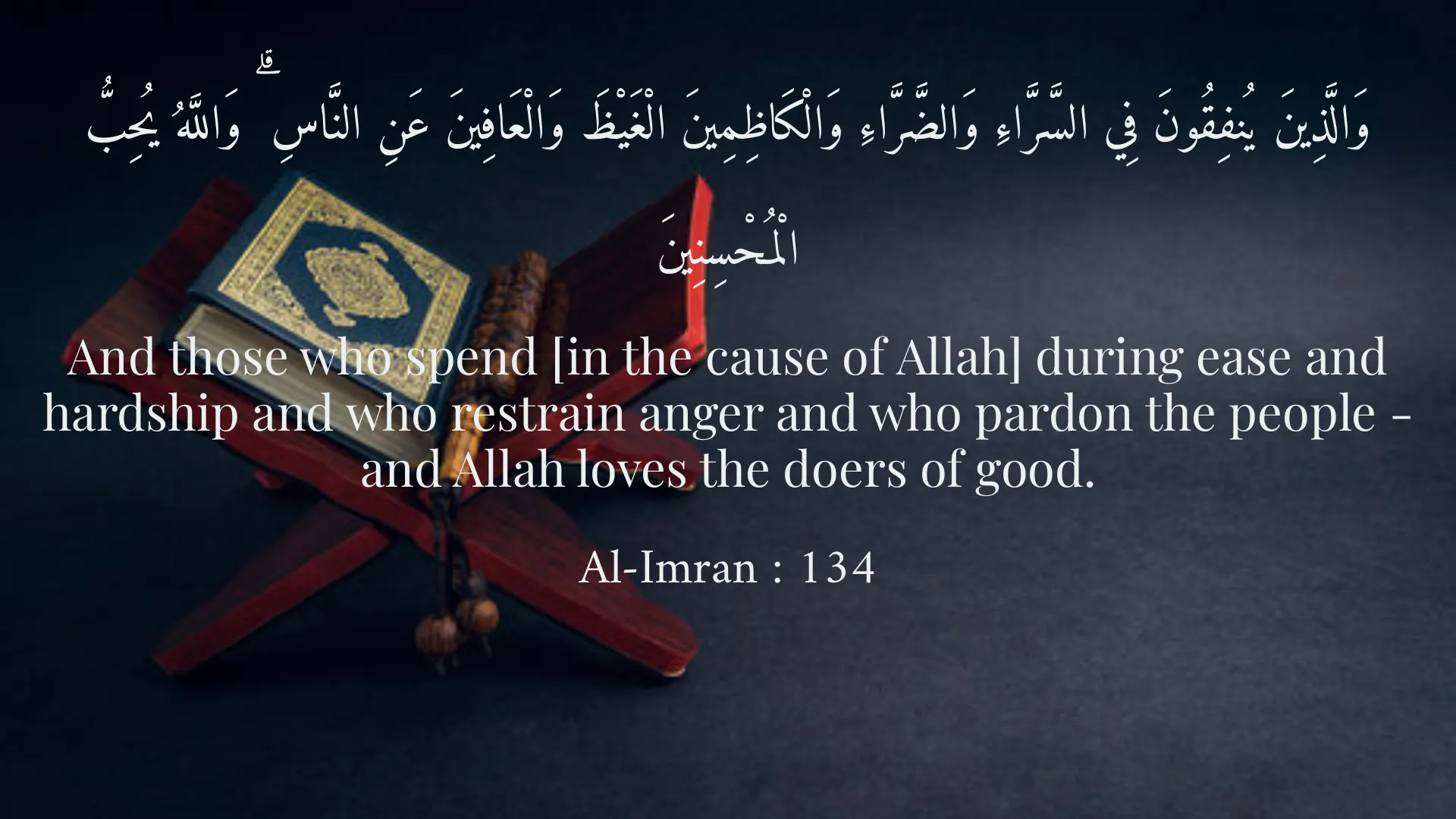
وَالَّذِينَ يُنفِقُونَ فِي السَّرَّاءِ وَالضَّرَّاءِ وَالْكَاظِمِينَ الْغَيْظَ وَالْعَافِينَ عَنِ النَّاسِ ۗ وَاللَّهُ يُحِبُّ الْمُحْسِنِينَ
And those who spend [in the cause of Allah] during ease and hardship and who restrain anger and who pardon the people - and Allah loves the doers of good.
Al-Imran : 134
استعينوا بالصبر و الصلاة إِنَّ اللَّهَ مَعَ الصَّابِرِينَ
Seek help through patience and prayer. Indeed, Allah is with the patient.
Al-Baqarah : 153
Short Story
Once upon a time, there was a man named Yusuf who often found himself in serious trouble due to his anger. One day, after a quarrel, he sat in a corner reflecting on a verse from the Quran. He decided to calm himself and, by remembering Allah, control his anger. From that day on, every time he felt angry, he recalled that verse and instead of fighting, he tried to act with kindness and calmness, and his life changed remarkably.