Quranic Answer
Coping with the grief of losing loved ones is one of life's greatest challenges that many individuals face. The experience of loss transcends cultural, religious, and social boundaries, affecting everyone at some point in their lives. Grief can often feel overwhelming, a heavy weight that makes it difficult to move forward. However, the teachings found in the Holy Quran provide guidance and comfort during these immensely painful times. The Quran, as a spiritual text, serves not only as a religious guide but also as a source of solace and strength for believers grappling with their sorrow. In Surah Al-Baqarah, verse 155, the Quran states: "And We will surely test you with something of fear and hunger and a loss of wealth and lives and fruits, but give good tidings to the patient." This verse acknowledges the reality of life's trials, emphasizing that loss is a part of the human experience. It highlights that grief is not merely an individual suffering but a trial ordained by God, suggesting that such hardships serve a greater purpose in shaping our character and faith. When faced with the loss of a loved one, patience becomes integral in navigating the tumultuous waters of grief. The Quran empowers believers by reminding them that patience is a form of spiritual strength. It encourages people to embrace their emotions while maintaining a spirit of endurance and resilience. To truly embody patience means to accept the divine decree and to trust in God’s wisdom, even when it is difficult to understand the reasoning behind personal tragedies. Moreover, another crucial verse in the Quran found in Surah Al-Imran, verse 139 states: "And do not weaken and do not grieve, and you will be superior if you are true believers." This powerful reminder serves as an encouragement to individuals not to surrender to sadness. The call to ‘not weaken’ is a plea to rise above despair and harness one’s faith as a source of empowerment. The phrase ‘if you are true believers’ emphasizes the necessity of maintaining faith in God’s plan, which can serve as a guiding light during the darkest moments of grief. Additionally, the Quran highlights the importance of remembrance of God in easing the heart’s turmoil. In Surah Ar-Ra'd, verse 28, it is stated: "Verily, in the remembrance of Allah do hearts find rest." This verse emphasizes that seeking solace through prayer and remembrance can significantly alleviate sorrow. The act of turning inward, contemplating the essence of God, and engaging in prayer fosters a sense of peace and connection to something greater than oneself. Moreover, prayer serves as an intimate channel for individuals to converse with Allah, express their feelings, and seek comfort. In Islam, the practice of remembering the deceased through prayers and recitations is also vital. By maintaining a connection with loved ones who have passed away, individuals can feel a sense of closeness and retain the memories that are dear to their hearts. Engaging in acts of charity or dedications of prayer for the departed can provide comfort, as it fosters a sense of purpose in dealing with grief, transforming mourning into a means of honoring their memory. The interrelationship between patience, remembrance, and supplication creates a robust framework for coping with the pain of loss. Through patience, one develops resilience, becoming better equipped to handle sorrow when it manifests. The act of remembrance permits individuals to honor their loved ones, maintaining their legacy while providing them with comfort in knowing they are not alone in their grief. Additionally, through supplication, individuals can seek divine assistance and comfort, further reinforcing their connection with God and enhancing their spiritual journey. Furthermore, understanding grief through an Islamic lens can promote communal bonds. Sharing experiences of loss with fellow believers can foster a sense of belonging and support. Engaging in community prayers, hosting memorials, or simply sharing stories about the deceased can help individuals feel less isolated in their grief. The collective acknowledgment of sorrow often creates an avenue for healing as community members uplift one another by sharing wisdom, experiences, and the light of faith. In moments of loss, it is essential to remember that grief is a natural and normal response. The journey through grief is often non-linear and varies for each person. Some may experience intense sorrow, while others may feel a quiet sadness lingering over time. The teachings of the Quran encourage individuals to be compassionate and patient with themselves as they navigate their emotions. Embracing grief as a part of the human experience allows individuals to honor their loved ones while acknowledging their own humanity. In conclusion, coping with the grief of losing loved ones remains one of the most profound challenges that humans encounter. The teachings of the Holy Quran provide a framework that encourages patience, remembrance, and supplication as we face this sorrow. The verses highlighted remind us that loss is a test of faith and resilience, providing a pathway to tranquility through the remembrance of God. In engaging with these teachings, individuals can find solace, support, and strength, guiding them through the journey of grief while fostering a connection with their loved ones in the hereafter. Ultimately, the Quran serves as a reminder that though loss is inevitable, the love and memories we carry will forever remain a part of us, guiding us towards healing and hope.
Related Verses
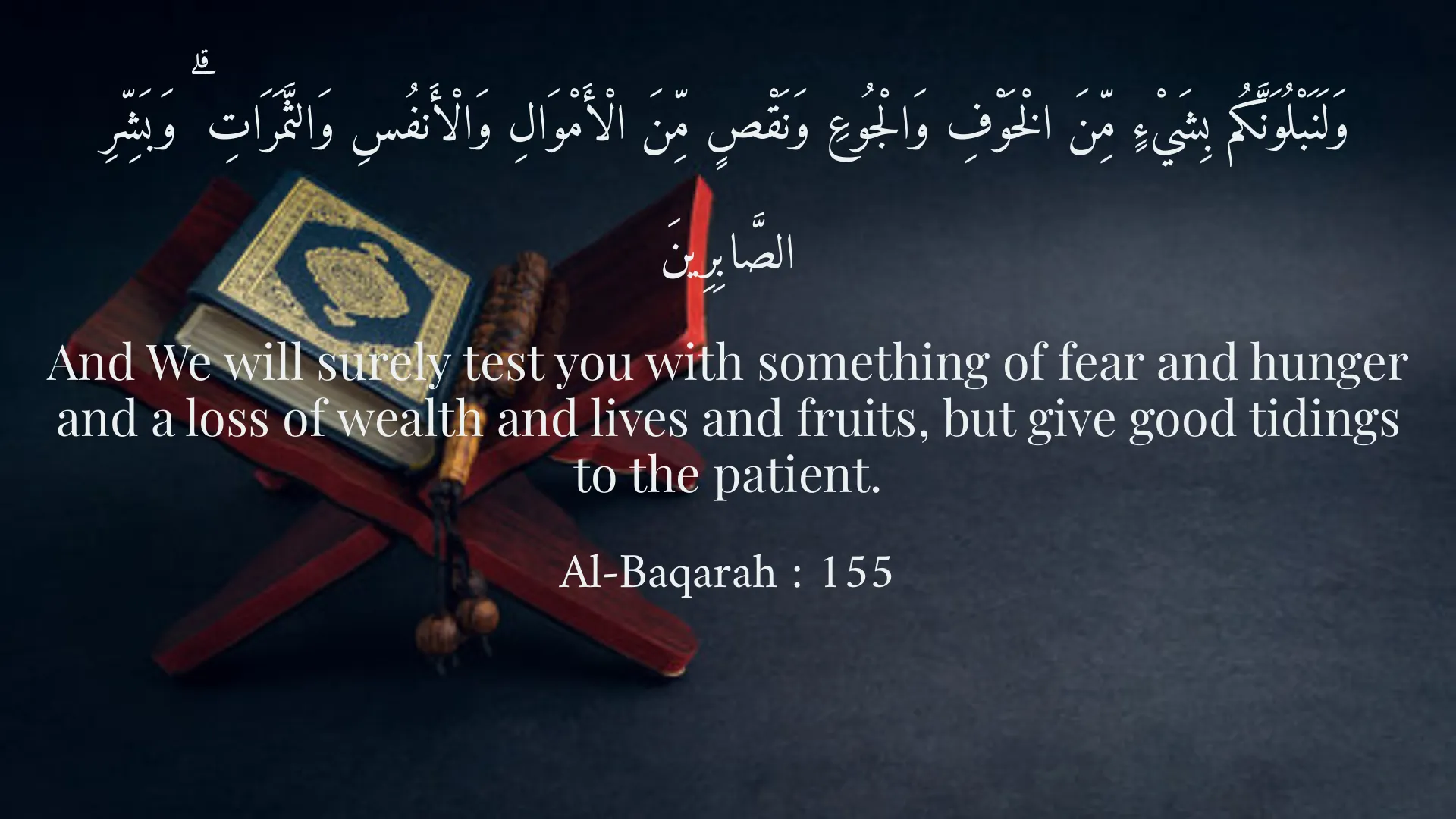
وَلَنَبْلُوَنَّكُم بِشَيْءٍ مِّنَ الْخَوْفِ وَالْجُوعِ وَنَقْصٍ مِّنَ الْأَمْوَالِ وَالْأَنفُسِ وَالثَّمَرَاتِ ۗ وَبَشِّرِ الصَّابِرِينَ
And We will surely test you with something of fear and hunger and a loss of wealth and lives and fruits, but give good tidings to the patient.
Al-Baqarah : 155
وَلا تَهِنُوا وَلا تَحْزَنُوا وَأَنتُمُ الْأَعْلَوْنَ إِن كُنتُمْ مُّؤْمِنِينَ
And do not weaken and do not grieve, and you will be superior if you are true believers.
Al-Imran : 139
أَلا بِذِكْرِ اللَّهِ تَطْمَئِنُّ الْقُلُوبُ
Verily, in the remembrance of Allah do hearts find rest.
Ar-Ra'd : 28
Short Story
Once, a man named Hossein lost his dearest friend. He was engulfed in deep sorrow, struggling to cope with the grief of separation. One day, while walking in a garden reminiscing about his friend, he noticed the leaves of the trees dancing in the wind, reminding him of the joy they had shared together. Hossein decided to plant a tree every day in his friend's memory, preserving their love and friendship. From that day on, every step he took honored that friendship, and those memories brought him solace.