Quranic Answer
Intentions are arguably one of the most crucial elements that dictate our actions and decisions. They serve as the driving force behind our lives, guiding us towards righteousness and bringing meaning to our endeavors. In various religious and philosophical teachings, the significance of intentions is emphasized, outlining how they can shape not only our individual characteristics but also our communities and societies at large. In the context of Islam, the concept of intentions holds a specially revered place, particularly as articulated in the Holy Quran. The Quran consistently underscores the importance of purifying and refining one's intentions. A foundational reference comes from Surah Al-Baqarah, verse 225, where Allah states, 'Allah is aware of what is in your intentions.' This verse crystallizes the understanding that our intentions are transparent to Allah, highlighting their privacy and sincerity. It serves as a reminder to Muslims that every action, no matter how small, is recognized and evaluated based on the purity of the intention behind it. But what does this mean for us in practical terms? The implication is profound. By enhancing our intentions and aligning them with a higher purpose, we elevate our everyday actions to acts of worship. For instance, let’s consider the act of charity—something that is encouraged in Islam and recognized as a means to purify wealth. If an individual’s sole goal is to help others by providing charity, that act can be noble in its own right. However, if this individual refines their intention and performs the charity for the sake of Allah, aiming to seek His pleasure, that same act transforms significantly. It not only becomes a means of social upliftment but also earns the individual spiritual rewards in the hereafter. This layer of intention injects a sense of greater purpose into their deeds, making each act of charity an opportunity to strengthen their relationship with Allah. Moreover, intentions play a crucial role in overcoming life's challenges. Surah At-Tawbah, verse 111, reiterates that Allah promises believers a significant reward for engaging in jihad—whether through their wealth or their lives. In saying, 'This promise is true,' it emphasizes that whatever effort is made for the sake of Allah carries great weight and meaning. This indicates that even if an action appears minor or insignificant, when performed with the right intention to strive for God’s sake, it transforms into something immensely valuable and rewarding. Here lies a fundamental feature of Islamic belief: it is not merely the action that holds merit, but the intention that fuels it. Furthermore, the concept of shared intentions is critical in strengthening societal bonds and fostering a culture of altruism. When individuals come together with a common intention to serve humanity—be it through charitable works, volunteer efforts, or supportive activities—they establish a stronger communal integrity. For example, a community that organizes a fundraising event with the intention of helping those affected by a natural disaster actively embodies collective goodwill. The unifying intention to aid others magnifies the effort, leading to a more profound impact. This shared endeavor reinforces the idea that collective intentions can bring about significant social improvements. As we ponder upon the ramifications of our intentions, it becomes clear that they are far from trivial. Each intention not only reflects our inner thoughts but also influences our actions and their outcomes. Whether it is in personal affairs, professional setups, or community initiatives, having a clear and noble intention acts as a guiding star, leading us toward honorable paths. When individuals set their intentions towards the greater good, they unleash possibilities for positive change—both within themselves and in the world around them. Moreover, in our modern world, where distractions abound and the focus on materialism can overshadow spiritual intents, it becomes imperative for individuals to routinely reflect and refine their intentions. Setting aside time for self-evaluation allows one to discern not only the motivations behind their actions but also to ensure alignment with personal and spiritual values. Daily practices such as gratitude, prayer, and contemplation can help recalibrate intentions, leading individuals back to a path filled with purpose and sincerity. As we navigate through challenges both individually and collectively, fostering a community built upon shared and righteous intentions is crucial. Such intentions can lead to initiatives aimed at social justice, environmental stewardship, and public health—all endeavors that hold significant merit and align with divine expectations as elucidated in the Quran. Every effort counts, and through collective resolve, people can engage in meaningful acts that resonate with their highest values and aspirations. To conclude, intentions are indeed the essence of meaningful action. They wield tremendous power over our lives, shaping our destinies, and carving our paths to righteousness. The Quran implores us to keep our intentions pure and driven by a desire to seek Allah's pleasure. By refining our intentions, establishing shared intentions within our communities, and aligning our actions with a higher purpose, we can strive for personal growth and contribute positively to society. Let this understanding guide us towards a life filled with purpose, fulfillment, and divine pleasure, making each deed an opportunity for spiritual elevation.
Related Verses
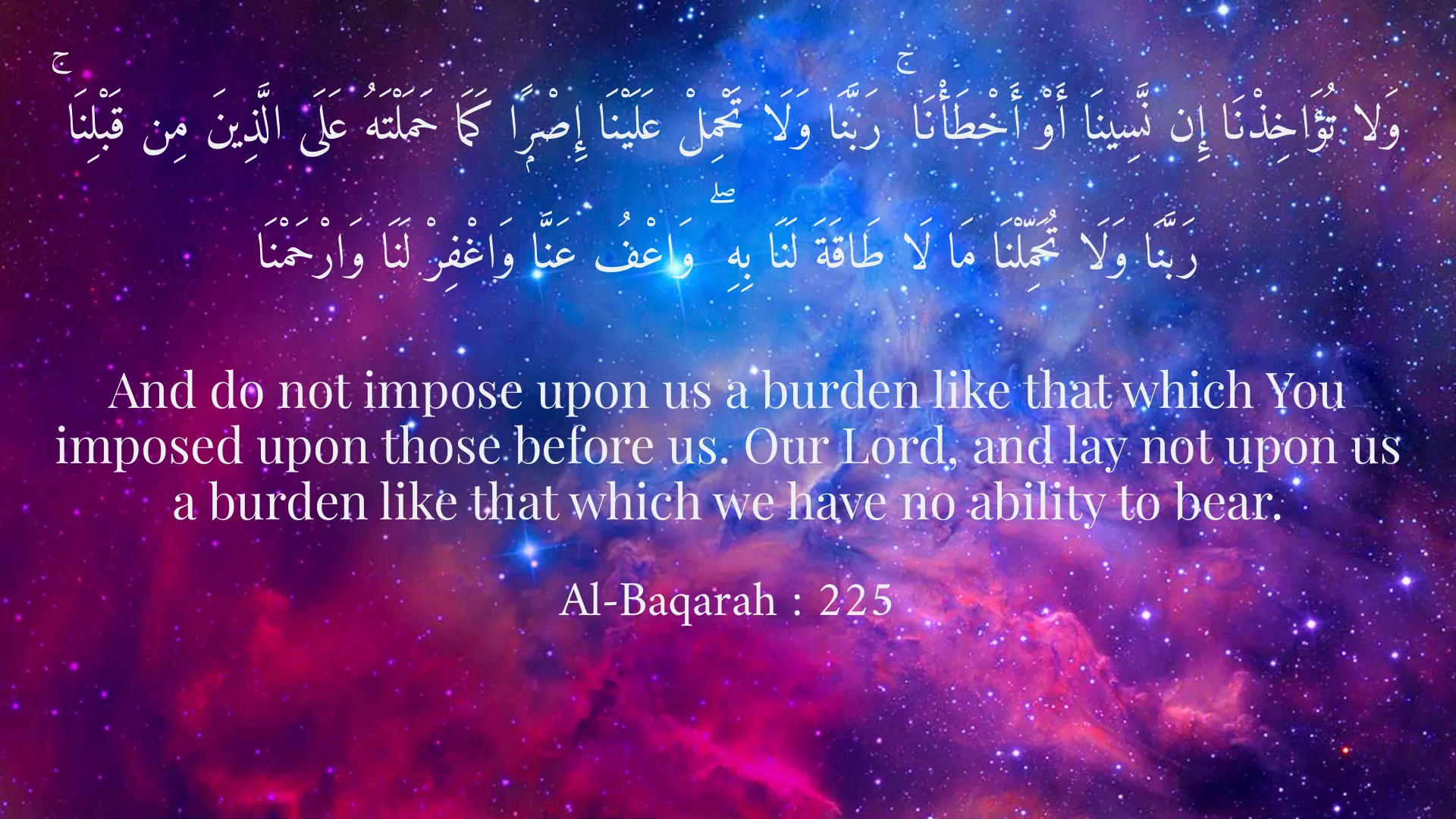
وَلا تُؤَاخِذْنَا إِن نَّسِينَا أَوْ أَخْطَأْنَا ۚ رَبَّنَا وَلَا تَحْمِلْ عَلَيْنَا إِصْرًۭا كَمَا حَمَلْتَهُ عَلَى الَّذِينَ مِن قَبْلِنَا ۚ رَبَّنَا وَلَا تُحَمِّلْنَا مَا لَا طَاقَةَ لَنَا بِهِ ۖ وَاعْفُ عَنَّا وَاغْفِرْ لَنَا وَارْحَمْنَا
And do not impose upon us a burden like that which You imposed upon those before us. Our Lord, and lay not upon us a burden like that which we have no ability to bear.
Al-Baqarah : 225
إن الله اشترى من المؤمنين أنفسهم وأموالهم بأن لهم الجنة
Indeed, Allah has purchased from the believers their lives and their properties; for that, they will have Paradise.
At-Tawbah : 111
Short Story
Once upon a time, there was a man named Ahmad who always intended small good deeds. However, he didn’t know how to enlarge these intentions. One day, during a visit to the mosque, he realized that his actions should be accompanied by a larger intention. He decided to perform all the good deeds he did with the intention of serving people and seeking Allah's pleasure. From that day forward, each time he helped someone, he felt more satisfied, and his life changed.