Quranic Answer
The Holy Quran, a significant religious text for Muslims around the world, provides profound insights into the concept of life and its fundamental purpose. As believers navigate the complexities of existence, many seek meaning and fulfillment, often wondering about the inherent aim of life. The Quran offers clarity on these questions, emphasizing that a deep connection with God is paramount in escaping feelings of emptiness and despair. By exploring various verses from the Quran, we can derive a comprehensive understanding of how faith, good deeds, and the pursuit of purpose lead to a fulfilling life. One of the fundamental verses that underscores the importance of this connection can be found in Surah Al-Baqarah, verse 21, where believers are instructed to seek assistance from Allah and to place their trust in Him. The message encapsulates the essence of faith: that by recognizing God as a central figure in one’s life, individuals can find strength, hope, and guidance amidst life’s challenges. This reliance on divine support fosters a sense of responsibility, heightening awareness of one's role in the world. It places emphasis on the fact that life is not merely a series of random events, but a purposeful journey toward fulfilling God’s commands and positively impacting creation. Moreover, in Surah Al-Mu’minun, verse 115, a poignant question arises: "Did you think that We created you aimlessly and that you would not be returned to Us?" This verse serves as a powerful reminder that humans are not mere accidents of nature, but rather, they are gifted with purpose and intentionality. This inquiry invites believers to reflect on their actions and their responsibilities, urging them to live mindfully and with intention. Every individual is encouraged to consider how they contribute to the broader tapestry of life, and to recognize the significance of their existence. Living with purpose entails a conscious effort to engage with the world thoughtfully, making decisions that align with one’s values and beliefs. It involves taking a proactive stance in both personal and communal realms, facilitating not only personal growth but also the development of a responsible society. The Quran accentuates this aspect by highlighting that God has endowed each individual with unique abilities and potentials, which they are expected to utilize in the service of others and in pursuit of righteousness. Another critical theme in the Quran related to escaping emptiness is the emphasis on good deeds and selflessness. In Surah Al-Imran, verse 92, believers are reminded that their acts of kindness and charity are never wasted. The verse states, "You will never attain righteousness until you spend in the way of Allah from that which you love." This indication underlines the transformative power of altruism and generosity—acting for the benefit of others cultivates a connection not just with God's creations, but also enhances one’s inner satisfaction and happiness. Engaging in acts of kindness, volunteering, and helping those in need create a ripple effect of positivity that extends beyond the immediate act itself. The fulfillment derived from assisting others can foster deep emotional satisfaction and contribute to a sense of belonging within the community. As one serves their fellow beings, they tap into a profound reservoir of joy that combats feelings of loneliness and existential emptiness. The holistic balance between one's relationship with the Divine and one's responsibilities towards humanity establishes a symbiotic relationship that significantly enriches personal existence. The Quran portrays these elements as interconnected pathways leading toward a salad of life, filled with meaning and purpose. The goal is to create a life infused with spirituality, awareness, and compassion, propelling individuals toward their highest potential while simultaneously addressing the needs of the broader community. To further illustrate, consider the significance of prayer, community participation, and reflective worship mentioned within the Quranic texts. Engaging in regular prayers not only solidifies a person’s relationship with Allah but also provides a pause for introspection. During this time, individuals can assess their intentions, aspirations, and actions, allowing for spiritual growth and development. Coupled with acts of service, such spiritual practices cultivate an environment where one can thrive, thus steering them away from feelings of emptiness and despair. In a world characterized by rapid changes and countless distractions, the teachings of the Quran can serve as a guiding light. When individuals prioritize their relationship with God, their perspectives on life begin to shift. They begin to see challenges as opportunities for growth, and they recognize their inherent worth as meaningful participants in God's creation. This profound realization becomes the bedrock upon which they can build a purposeful life, filled with aspiration and a drive to contribute positively. In conclusion, the Quran’s elucidation of life’s purpose reveals a rich tapestry of interconnected themes, with a focus on faith, good deeds, and the importance of nurturing a relationship with God as the cornerstones of a fulfilling existence. Embracing these principles offers a roadmap towards transcending feelings of emptiness, enabling individuals to lead lives filled with meaning and significance. As one cultivates this relationship through prayer and reflection, and as one extends kindness and support to others, they embody the essence of the teachings of the Quran—transforming their existence into a journey marked by purpose, happiness, and a deep connection to the divine and humanity alike.
Related Verses
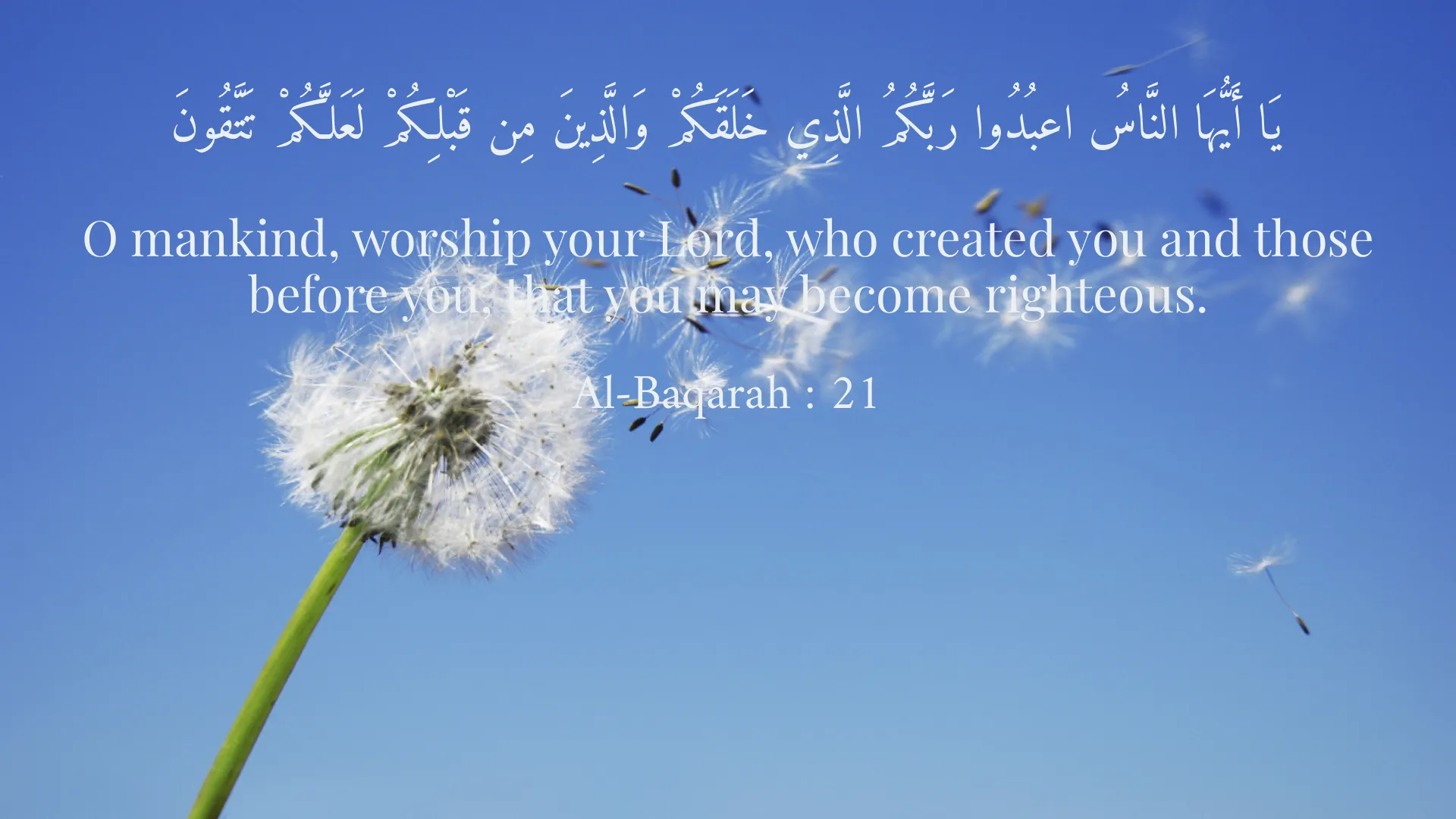
يَا أَيُّهَا النَّاسُ اعبُدُوا رَبَّكُمُ الَّذِي خَلَقَكُمْ وَالَّذِينَ مِن قَبْلِكُمْ لَعَلَّكُمْ تَتَّقُونَ
O mankind, worship your Lord, who created you and those before you, that you may become righteous.
Al-Baqarah : 21
أَمْ حَسِبْتُمْ أَنَّا خَلَقْنَاكُمْ عَبَثًا وَأَنَّكُمْ إِلَيْنَا لَا تُرْجَعُونَ
Did you think that We created you aimlessly and that you would not be returned to Us?
Al-Mu'minun : 115
لَن تَنَالُوا الْبِرَّ حَتَّى تُنفِقُوا مِمَّا تُحِبُّونَ ۖ وَمَا تُنفِقُوا مِن شَيْءٍ فَإِنَّ اللَّهَ بِهِ عَلِيمٌ
Never will you attain the good reward until you spend [in the way of Allah] from that which you love. And whatever you spend – indeed, Allah is Knowing of it.
Al-Imran : 92
Short Story
One day, a man named Ali was contemplating the emptiness of his life. He felt that every day passed without a purpose. While browsing through religious books, he came across verses of the Quran. These verses led him to reflect on his motivations and goals. He decided that in addition to connecting with God, he should also pay attention to the needs of others. His belief was that doing good for others could save him from this feeling of emptiness. From that day forward, his life transformed.