Quranic Answer
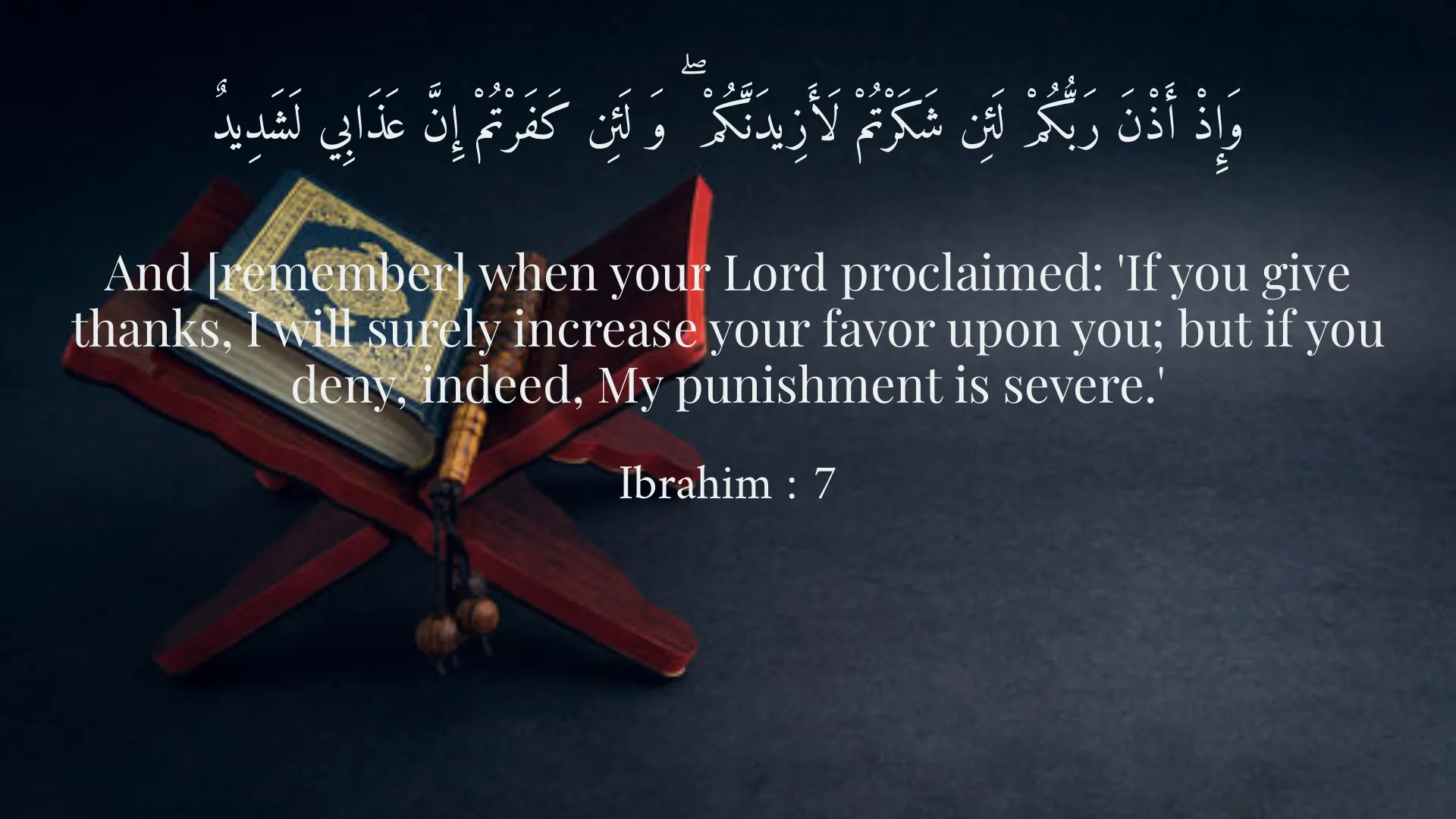
Gratitude is one of the most profound principles emphasized in the Quran, a revered text that serves as a guide for over a billion Muslims worldwide. Among its many teachings, gratitude occupies a central position, reflecting both a spiritual and a practical approach to life. The concept of gratitude is comprehensively addressed in various verses, with one of the most noteworthy passages found in Surah Ibrahim, 14:7, where Allah states: 'And [remember] when your Lord proclaimed: 'If you give thanks, I will surely increase your favor upon you; but if you deny, indeed, My punishment is severe.' This verse encapsulates the essence of gratitude—it is not merely a matter of uttering words of thanks but requires genuine recognition and appreciation of the blessings bestowed upon us by Allah. The Quran teaches that gratitude manifests itself in actions. This means that acknowledging the abundance of blessings—be it health, wealth, knowledge, or any other favor—should incite us to utilize these gifts responsibly and in a manner that benefits not only ourselves but also those around us. This perspective aligns with the Islamic principle of community service and social responsibility, reinforcing the idea that our well-being is intertwined with that of others. When Allah blesses us with health, for example, it is our duty to take care of our physical well-being, allowing us to engage actively in community and not merely exist passively. This could involve participating in charitable endeavors, volunteering time and resources to support those in need, or simply extending acts of kindness to individuals within our communities. Through these actions, we show that we are grateful for Allah's blessings and are willing to use them for good. Furthermore, in Surah Al-Baqarah, 2:152, it is stated: 'So remember Me; I will remember you.' This verse emphasizes the cyclical nature of gratitude: by recalling and recognizing the blessings of Allah, we put ourselves in a position to receive even more blessings. It follows that genuine remembrance of Allah should not be a sporadic affair but should permeate our daily lives. Each moment holds an opportunity to express gratitude, whether it is through prayers, reflections, or simply a mindset of appreciation. Practical gratitude extends beyond personal wellbeing—it encourages us to actively engage in good deeds. Engaging in charitable acts is a recognized way to express our thankfulness. Whether through monetary contributions, acts of service, or advocacy for important social issues, these actions translate our gratitude into tangible benefits for society. By doing so, we not only honor the blessings we have received but also foster an environment of reciprocity and kindness which aligns with Islamic values. Moreover, gratitude is not limited to the obvious blessings; it extends to challenges and difficulties we face in life. One of the remarkable aspects of gratitude as highlighted in the Quran is its relation to patience and resilience. The ability to express gratitude in times of hardship reflects a profound trust in Allah’s wisdom. Recognizing that trials and tribulations are part and parcel of life allows us to appreciate the good moments even more. This is beautifully captured in Surah Al-Baqarah, 2:286, where Allah assures us that He does not burden a soul beyond that it can bear. Recognizing that challenges serve a purpose and can lead to personal growth cultivates a mindset of gratitude even in adversity. To fully embrace the lessons of gratitude as laid out in the Quran, developing a daily practice of thankfulness can be incredibly beneficial. This can take numerous forms: maintaining a gratitude journal where one documents things they are thankful for regularly, verbalizing gratitude during prayers, or simply making a conscious effort to find the silver lining in every situation. Such practices encourage a more generous and positive outlook on life, reinforcing the grateful mindset. Additionally, gratitude has profound implications for emotional and mental health. Numerous psychological studies have highlighted the positive impacts of gratitude on individuals' overall well-being—including increased happiness, reduced stress, and improved relationships. The practice of gratitude shifts our perspective; it steers us away from focusing on what is lacking in our lives to appreciating what we have. This shift can be transformative, not only enhancing personal joy but also promoting stronger connections with others in our society. In conclusion, gratitude stands as a cornerstone teaching in the Quran that resonates deeply within both individual and communal realms. It is an act that transcends mere words and emerges in the fabric of our actions—nurturing our relationships with one another and with Allah. By recognizing our blessings and utilizing them wisely, we not only fulfill a spiritual obligation but also contribute positively to our societies. The essence of gratitude is an ongoing journey; it involves perseverance in celebration of blessings as well as courage in facing life’s challenges. Ultimately, embracing gratitude as a fundamental element of our daily conduct cultivates a more compassionate, enriched, and fulfilling life—one that aligns with the noble teachings of the Quran.
Related Verses
وَإِذْ أَذْنَ رَبُّكُمْ لَئِن شَكَرْتُمْ لَأَزِيدَنَّكُمْ ۖ وَ لَئِن كَفَرْتُمْ إِنَّ عَذَابِي لَشَدِيدٌ
And [remember] when your Lord proclaimed: 'If you give thanks, I will surely increase your favor upon you; but if you deny, indeed, My punishment is severe.'
Ibrahim : 7
فَذُكُرُوني أَذْكُرْكُمْ
So remember Me; I will remember you.
Al-Baqarah : 152
Short Story
One day, a man named Ali reviewed his life and concluded that he should be grateful for his blessings. He decided to think of three things God had given him every night before sleep and express gratitude for them. Days passed, and Ali found himself feeling more content and happier each day. He even started helping others and seeking ways to do good deeds. This practical gratitude not only brought a fresh color to his life but also influenced those around him.