Quranic Answer
The Holy Quran, revered as the divine word of God by Muslims around the world, serves as a guiding light in times of hardship and distress. Its teachings emphasize the importance of maintaining a strong connection with God, particularly during difficult moments, and underscore the significance of fulfilling our religious obligations. The verses of the Quran provide insights on how we can cultivate inner peace, navigate through life's tribulations, and find strength in our faith. One of the poignant reminders found in the Quran is in Surah Al-Baqarah, verse 153, where Allah instructs the believers: 'O you who have believed, seek help through patience and prayer. Indeed, Allah is with the patient.' This powerful verse delineates two key strategies for overcoming adversities: patience and prayer. The notion of patience, or Sabr in Arabic, is a pivotal concept in Islam. It is not merely the act of enduring hardship but involves a profound level of perseverance and resilience. Patience encourages believers to maintain their faith in the face of challenges, reminding them that trials are a part of life and can serve as a means of spiritual growth. In conjunction with patience, prayer, or Salah, is presented as a fundamental practice that elevates our spiritual connection with God. Through prayer, believers express their vulnerability, seek solace, and present their challenges to the Almighty. It serves as a direct line of communication between the worshiper and God, fostering a relationship built on trust and reliance. The verse assures us that Allah is with those who are patient, thus providing encouragement to press on in our struggles. Continuing on the theme of hope and resilience, Surah Al-Imran, verse 139 states: 'And do not weaken and do not grieve, for you will be superior if you are [true] believers.' This verse emphasizes the importance of maintaining one's faith and optimism. In times of difficulty, it is easy to succumb to feelings of despair and hopelessness. However, this verse serves as a reminder that true believers must not falter; they are called to trust in God’s plan and maintain their belief in eventual triumph. The assurance found in this verse empowers individuals to rise above their difficulties and remain steadfast in their faith. The concept of remembrance of God is further elaborated in Surah Ar-Ra'd, verse 28: 'Unquestionably, by the remembrance of Allah hearts are assured.' This verse beautifully encapsulates the idea that engaging in the remembrance (Dhikr) of Allah leads to tranquility and peace of heart. In our fast-paced world, where distractions are prevalent, taking moments to remember God through recitation, reflection, and gratitude can ground us and provide solace amid chaos. The practice of Dhikr nurtures a sense of closeness to God, which is vital in achieving a sense of inner calm. Furthermore, establishing a closer relationship with God is essential for finding peace. This relationship is not one-sided; it requires effort and sincerity from the believer. Engaging in acts of worship, fulfilling religious obligations, and embodying Islamic principles in daily life fosters a bond that allows for open communication with God. Expressing gratitude, whether through daily prayers or special occasions, amplifies the sense of connection and assurance. Gratefulness helps redirect the focus from problems to blessings, nurturing a positive outlook despite challenges. The process of prayer and invocations, in addition to drawing us closer to God, creates a serene environment within our hearts. When facing life’s challenges, prayer acts as an anchor, providing stability and security. It is the emotional outlet that helps alleviate stress, reminds us of God’s mercy, and reinforces our trust in His wisdom. Through prayers, individuals can verbalize their fears and anxieties, seek divine assistance, and, in turn, invite a sense of calmness into their lives. Having identified patience, prayer, and remembrance of God as essential elements for overcoming difficulties, it is vital to recognize the interconnectedness of these spiritual practices. They work in tandem, enhancing each other and contributing to the broader framework of support embedded within Islamic teachings. Patience allows individuals to withstand trials, prayer facilitates communication with God, and remembrance fosters an awareness of God’s presence and assistance. In conclusion, the teachings of the Holy Quran furnish believers with a profound set of tools to navigate through life’s adversities with grace and tranquility. The guidance provided in the verses of Al-Baqarah, Al-Imran, and Ar-Ra'd serves as a reminder that in times of stress and challenges, one can find peace and assurance through a steadfast relationship with God. By practicing patience, engaging in prayer, and regularly remembering God, individuals can create a stable foundation that enables them to flourish even in the face of adversity. As we journey through life, let us embrace these teachings and cultivate an unshakeable faith that lights our path, inspires our souls, and leads us to everlasting tranquility.
Related Verses
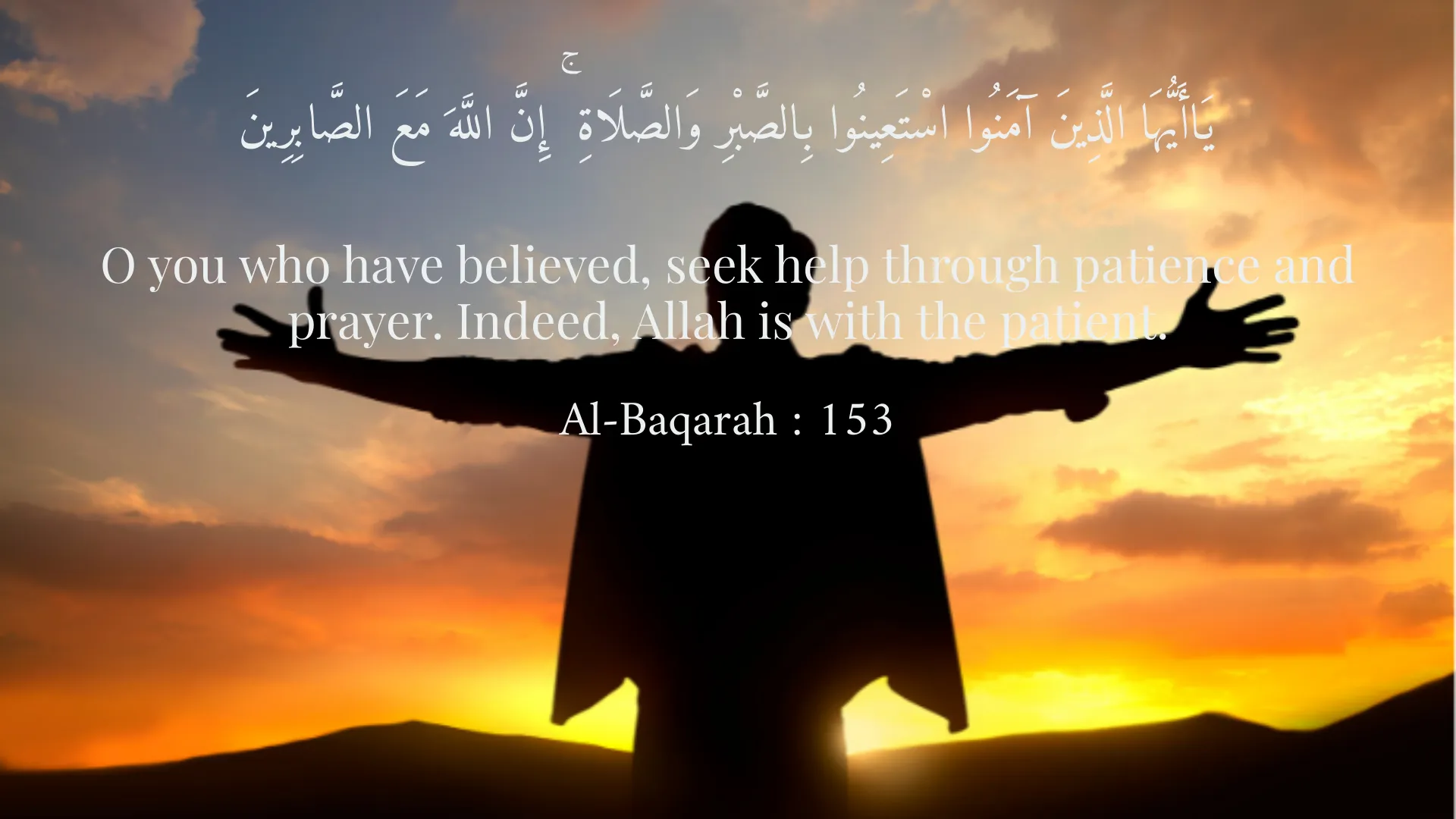
يَاأَيُّهَا الَّذِينَ آمَنُوا اسْتَعِينُوا بِالصَّبْرِ وَالصَّلَاةِ ۚ إِنَّ اللَّهَ مَعَ الصَّابِرِينَ
O you who have believed, seek help through patience and prayer. Indeed, Allah is with the patient.
Al-Baqarah : 153
وَلا تَهِنُوا وَلا تَحْزَنُوا وَأَنتُمُ الأَعْلَوْنَ إِن كُنتُم مُّؤمنينَ
And do not weaken and do not grieve, for you will be superior if you are [true] believers.
Al-Imran : 139
أَلَا بِذِكْرِ اللَّهِ تَطْمَئِنُّ الْقُلُوبُ
Unquestionably, by the remembrance of Allah hearts are assured.
Ar-Ra'd : 28
Short Story
Once upon a time, a man named Ahmad was troubled by his problems and wondered, 'How can I find peace?' One day, he remembered a verse from the Quran that said, 'The remembrance of God brings peace to hearts.' He decided to focus more on prayer and supplication, and with the remembrance of God, he felt a greater sense of tranquility. Henceforth, despite his problems, he always felt a calmness in his heart.