Quranic Answer
Comparing ourselves with others is a common challenge that can lead to feelings of inadequacy and despair. It is a phenomenon that transcends culture, geography, and time, impacting individuals across the globe. With the advent of social media, the tendency to compare ourselves with others has only grown more pronounced. We are constantly bombarded with curated images and stories that present an idealized version of life. This barrage often leaves us feeling as though we fall short in various aspects—be it career, appearance, or relationships. However, the Holy Quran provides profound insights that can help us navigate these pressures, emphasizing self-awareness and understanding our inherent worth. Self-Reflection Over Comparison The journey of self-awareness is crucial for emotional and spiritual well-being. In Surah Al-Hujurat, verse 13, Allah states: 'O mankind, indeed We have created you from male and female and made you peoples and tribes that you may know one another. Indeed, the most noble of you in the sight of Allah is the most righteous of you.' This verse serves as a reminder that our worth is not determined by superficial measures such as wealth, beauty, or social status. Instead, it teaches us that righteousness and moral integrity hold paramount importance in the eyes of Allah. The call to know one another is not merely for social interaction but serves as a vehicle for self-discovery and self-acceptance. Rather than measuring our success against others, we should focus on understanding and embracing who we are as individuals. The Dangers of Comparisons When we engage in comparisons, we often find ourselves trapped in a cycle of negativity. This habit can lead to a distorted self-image, fostering feelings of inadequacy and self-doubt. We may overlook our own strengths and talents while fixating on the perceived successes of others. Such comparisons can become toxic, leading to anxiety and even depression. It is essential to recognize that each person's journey is unique, shaped by distinct circumstances, choices, and challenges. The Holy Quran’s emphasis on individual worth urges us to celebrate our uniqueness rather than diminish it by how we measure against others. Focusing on Personal Growth To break free from the cycle of comparison, it is essential to focus on personal growth and achieving one’s own goals. This involves setting personal benchmarks rather than using others as a yardstick. Personal growth can take many forms. It could be the pursuit of knowledge, honing a skill, spiritual development, or fostering healthy relationships. By concentrating on our strengths and capabilities, we create a more positive and empowering self-image. Engaging in continuous learning—whether through formal education, personal reading, or life experiences—helps us carve our path to self-improvement. Embracing Your Spiritual Journey Prayer and seeking guidance from Allah play a vital role in finding peace and contentment in our lives. It is through prayer that we can express our struggles with comparison and ask for divine assistance in fostering self-acceptance. Surrendering our worries to Allah can be soothing and liberating, allowing us to develop gratitude for our unique experiences instead of lamenting our perceived shortcomings. By turning to God for guidance, we cultivate a sense of trust in His plan for our lives, recognizing that everyone is on their unique path and that divine wisdom governs each journey. Building a Supportive Community Another crucial element in overcoming harmful comparisons is building a supportive community. Surrounding ourselves with positive, encouraging individuals who uplift us and celebrate our accomplishments fosters a sense of belonging. Engaging with such a community can help mitigate the feelings of inadequacy that arise from comparisons. Friends and family who inspire growth and provide constructive feedback create an environment where we can thrive and refine our paths without judgement. Their support can serve as a counterbalance to the negativity often tied to comparison. Assessing Personal Standards and Goals As we strive to navigate the turbulent waters of societal expectations and comparisons, it is important to assess ourselves against our own goals and standards. What do we genuinely desire in our personal and professional lives? How can we establish meaningful objectives that resonate with our values? Building a framework based on our aspirations allows for a clearer path forward, equipping us with a focused vision that diminishes the impact of external comparisons. As we pursue our defined goals, we begin to cultivate a deeper sense of fulfillment, paving the way toward self-acceptance and contentment. Cultivating Inner Peace Through the process of self-reflection, personal growth, community support, and spiritual connection, we can cultivate a sense of inner peace. This newfound calm enables us to look at others with kindness rather than envy, recognizing their successes as part of their journey without diminishing our own. Realizing that everyone battles their challenges can foster empathy and understanding, transforming comparisons into opportunities for learning and growth. We can cheer for each other’s successes without feeling threatened, for we understand that our paths are uniquely our own. Conclusion In conclusion, the challenge of comparing ourselves with others is one that requires deliberate awareness and effort to overcome. The Holy Quran offers us wisdom that encourages self-acceptance and understanding our individual worth. By turning our focus inward, prioritizing personal growth, engaging with supportive communities, and seeking guidance through prayer, we can free ourselves from the chains of comparison. Finally, we must remember that Allah has created each individual with their strengths and weaknesses, and learning to assess ourselves based on our own goals equips us with the resilience and confidence to navigate our own journeys. This transformative approach not only leads to individual fulfillment but also fosters a culture of empathy and support within our communities.
Related Verses
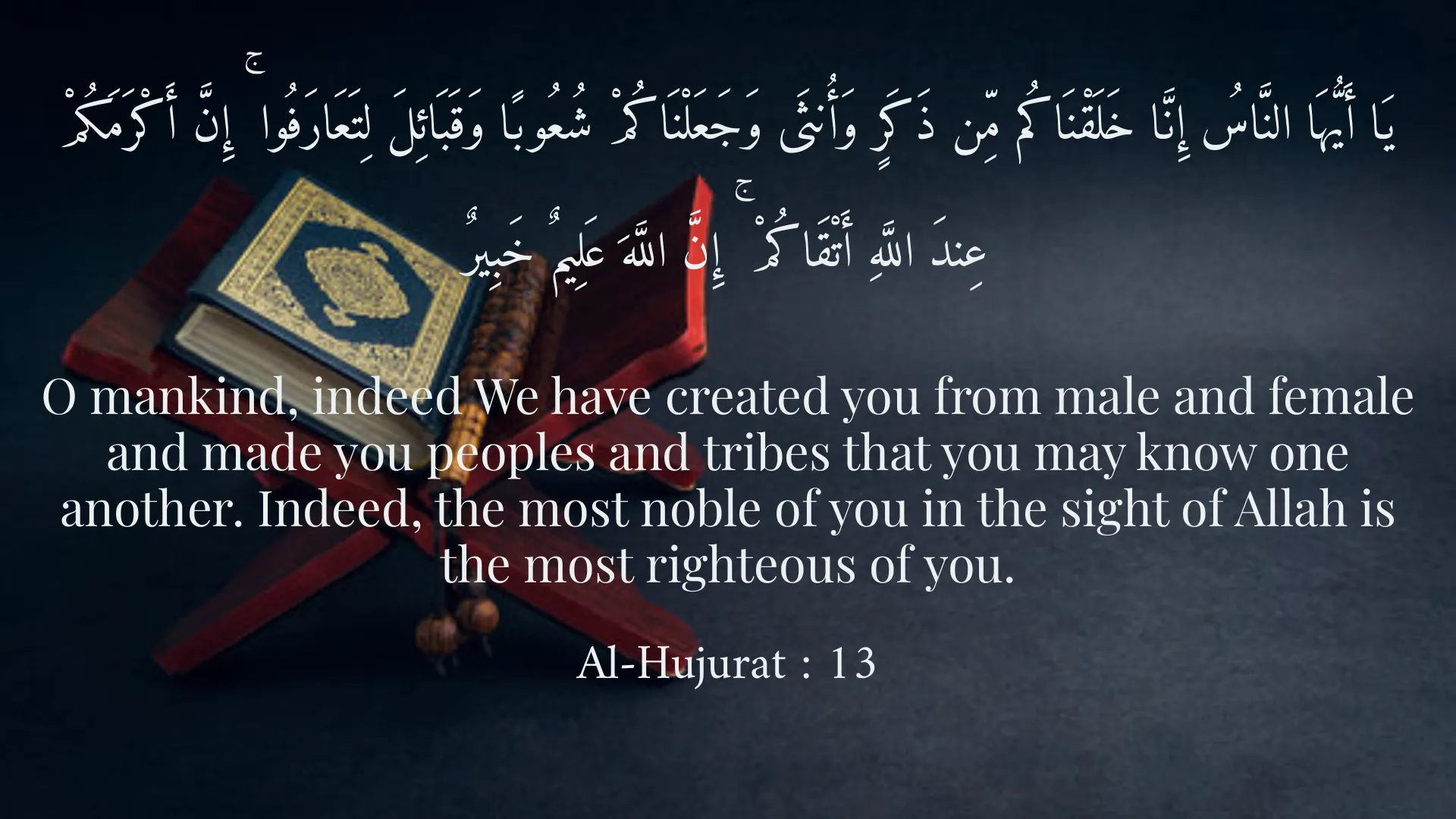
يَا أَيُّهَا النَّاسُ إِنَّا خَلَقْنَاكُم مِّن ذَكَرٍ وَأُنثَى وَجَعَلْنَاكُمْ شُعُوبًا وَقَبَائِلَ لِتَعَارَفُوا ۚ إِنَّ أَكْرَمَكُمْ عِندَ اللَّهِ أَتْقَاكُمْ ۚ إِنَّ اللَّهَ عَلِيمٌ خَبِيرٌ
O mankind, indeed We have created you from male and female and made you peoples and tribes that you may know one another. Indeed, the most noble of you in the sight of Allah is the most righteous of you.
Al-Hujurat : 13
Short Story
In a small village, there was a young man named Ali who constantly compared himself with his friends and was unhappy with his life. One day, he decided to go to the mosque, and while praying, a verse from the Quran came to his mind that said whoever walks in the way of Allah, He guides him. This statement made Ali focus on his life and find more satisfaction and peace.