Quranic Answer
Freeing oneself from worldly attachments is a profound concept deeply embedded in the teachings of the Holy Quran. This theme resonates throughout various verses, urging believers to detach themselves from the fleeting nature of this world and to orient their lives towards spiritual fulfillment. The Quran serves as a guide, illuminating the path toward recognizing the transient nature of worldly possessions and the importance of seeking lasting value in our spiritual commitments. This article will explore the Quranic perspective on worldly attachments, offering insights into how one can cultivate a deeper connection with Allah and adhere to the timeless values that can lead to true fulfillment. The Quran eloquently illustrates humanity's innate love for worldly possessions in Surah Al-Imran, verse 14. Allah states: 'Beautified for people is the love of that which they desire - of women and sons, heaped-up sums of gold and silver, fine branded horses, and cattle and tilled land.' This excerpt resonates profoundly with the human experience. The natural inclination towards material desires is a facet of human nature; however, the verse goes on to affirm that 'this is but the enjoyment of worldly life, and Allah has the best return.' The disparity between temporary worldly gratification and the eternal rewards of the Hereafter serves as a crucial reminder of our priorities in life. Understanding that this world is merely a temporary abode can help one prioritize the afterlife over transient pleasures. Engaging in the remembrance of Allah and reflecting on the impermanence of worldly attachments can provide the necessary perspective needed to transcend these desires. By consistently reminding ourselves of the reality, we can align our actions with our spiritual goals, thus freeing ourselves from the clutches of superficiality. One practical way to strengthen our connection with Allah is to engage in daily prayers, supplications, and acts of worship that draw us closer to Him. This spiritual commitment helps illuminate the path toward detaching from worldly desires and reinforces the idea that true fulfillment lies within our faith. In Surah Al-Fajr, verses 27-30, Allah emphasizes the significance of faith and acts of righteousness, which are the only means to achieve true salvation. The verses convey the message that material accumulation cannot substitute for a life led with purpose and spiritual integrity. Faith acts as a compass that guides our actions and intentions, directing us towards benevolence, kindness, and compassion. Engaging in positive behaviors and acts of kindness not only uplifts others but also reinforces our own spiritual growth, ultimately reducing our attachment to worldly matters. By nurturing love for others and practicing empathy, we create a foundation that supports our efforts in freeing ourselves from materialistic pursuits. Moreover, the Quran advises believers to remain steadfast amidst the trials and tribulations of life. In Surah An-Nisa, verse 77, Allah reminds us that the true believers are those who remain resolute against worldly challenges and remain focused on their spiritual aspirations. Trials often come disguised as distractions that can easily lead one astray from the core of their faith. However, staying grounded in spiritual practices and continuously seeking Allah's guidance can fortify an individual's resolve against such distractions. Navigating away from worldly dependencies necessitates persistent effort and intention. It is essential to actively engage in remembrance of Allah through meditation, reflection, and acknowledgment of His blessings. This constant engagement fosters gratitude and shifts our focus from what we lack to what Allah has graciously bestowed upon us. Practicing thankfulness nurtures a deeper bond with Allah, allowing us to recognize His omnipresence in our lives and steering us away from ingratitude, which often leads to a yearning for more possessions. In addition to individual efforts, one can benefit from being part of a community that shares similar values and aspirations. Surrounding oneself with a supportive group that prioritizes spirituality can significantly strengthen one’s faith and resolve to detach from worldly aspirations. Collective acts of worship, community service, and gatherings focused on spiritual discussions can enhance one’s understanding and commitment to pursuing higher values. These connections serve as reminders of our shared mission and encourage personal growth toward detaching from material desires. Furthermore, understanding the concept of moderation can play a crucial role in relaxing our attachments to worldly considerations. Islam teaches the importance of balance in life. While it is permissible to indulge in the pleasures of this world, moderation ensures that one’s relationship with material possessions does not cross the line into obsession. This moderation cultivates a sense of contentment and allows individuals to appreciate what they have without incessantly seeking what they do not. In conclusion, the Quran presents a clear message about the importance of freeing oneself from worldly attachments. The transient nature of this world serves as a reminder that genuine happiness and fulfillment are not found in material possessions but in our relationship with Allah and our commitment to righteousness. By strengthening our faith, engaging in continuous remembrance of Allah, and nurturing acts of kindness and community, we can navigate through life with a clear focus on the values that truly matter. The ultimate goal is to elevate our spiritual practices so that, even amidst worldly distractions, we remain steadfast in our journey toward enlightenment and fulfillment, trusting that Allah's guidance will lead us to the best return of all.
Related Verses
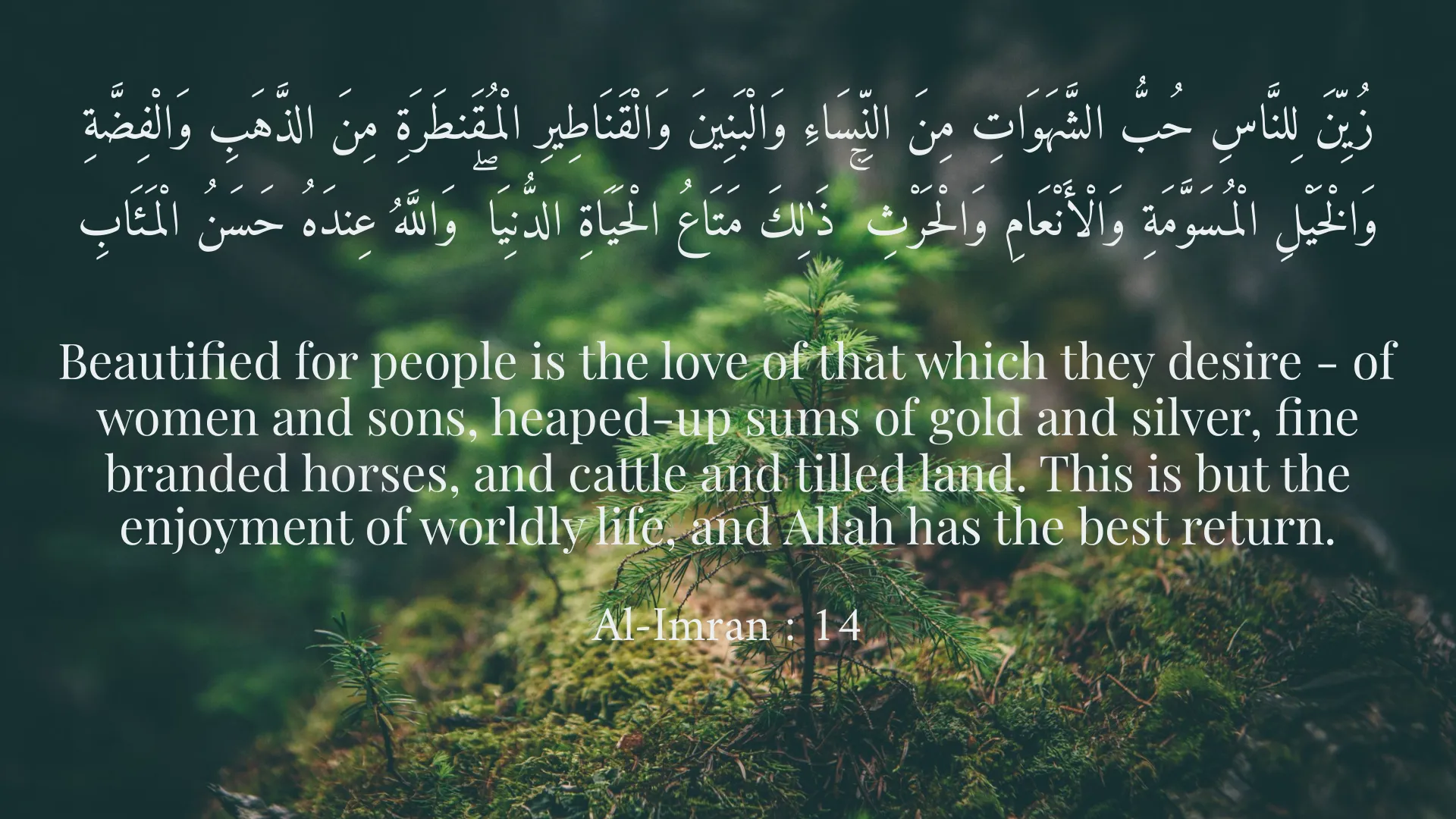
زُيِّنَ لِلنَّاسِ حُبُّ الشَّهَوَاتِ مِنَ النِّسَاءِ وَالْبَنِينَ وَالْقَنَاطِيرِ الْمُقَنطَرَةِ مِنَ الذَّهَبِ وَالْفِضَّةِ وَالْخَيْلِ الْمُسَوَّمَةِ وَالْأَنْعَامِ وَالْحَرْثِ ۚ ذَٰلِكَ مَتَاعُ الْحَيَاةِ الدُّنِيَا ۖ وَاللَّهُ عِندَهُ حَسَنُ الْمَئَابِ
Beautified for people is the love of that which they desire - of women and sons, heaped-up sums of gold and silver, fine branded horses, and cattle and tilled land. This is but the enjoyment of worldly life, and Allah has the best return.
Al-Imran : 14
يَا أَيَّتُهَا النَّفْسُ الْمُطْمَئِنَّةُ، ارْجِعِي إِلَى رَبِّكِ رَاضِيَةً مَّرْضِيَّةً، فَادْخُلِي فِي عِبَادِي، وَادْخُلِي جَنَّتِي
O tranquil soul, return to your Lord, well-pleased and pleasing. And enter among My servants and enter My Paradise.
Al-Fajr : 27
أَلَمْ تَرَ إِلَى الَّذِينَ قِيلَ لَهُمْ كُفُّوا أَيْدِيَكُمْ وَأَقِيمُوا الصَّلَاةَ وَآتُوا الزَّكَاةَ ۚ فَلَمَّا كَتَبَ عَلَيْهِمُ الْقِتَالُ إِذَا فَرِيقٌ مِّنْهُمْ يَخْشَى النَّاسَ كَخَشْيَةِ اللَّهِ أَوْ أَشَدَّ خَشْيَةً ۚ وَقَالُوا رَبَّنَا لِمَ كَتَبْتَ عَلَيْنَا الْقِتَالَ ۖ لَوْلَا أَخَّرْتَنَا إِلَى أَجَلٍ قَرِيبٍ ۚ قُلْ مَتَاعُ الدُّنْيَا قَلِيلٌ ۖ وَالْآخِرَةُ خَيْرٌ لِّمَنِ اتَّقَى ۖ وَلَا تُظْلَمُونَ فَتيلاً
Have you not considered those to whom it was said, 'Hold back your hands and establish prayer and give zakah'? But when the ordinance of battle was decreed upon them, a faction of them feared the people as they should have feared Allah or with greater fear. And they said, 'Our Lord, why have You decreed upon us combat? If only You could delay us for a short time.' Say, 'The enjoyment of this world is brief, and the Hereafter is better for he who fears Allah. And injustice will not be done to them even as much as an atom's weight.'
An-Nisa : 77
Short Story
A story narrated by Saadi tells of a young man who was heavily attached to his worldly life. One day, he encounters an old man in the market who advises him that the world is fleeting and he should focus on spiritual values. The young man listens to the elder's words and decides to engage in worship and service to others. Over time, he feels that his life has changed and experiences a greater sense of tranquility.