Quranic Answer
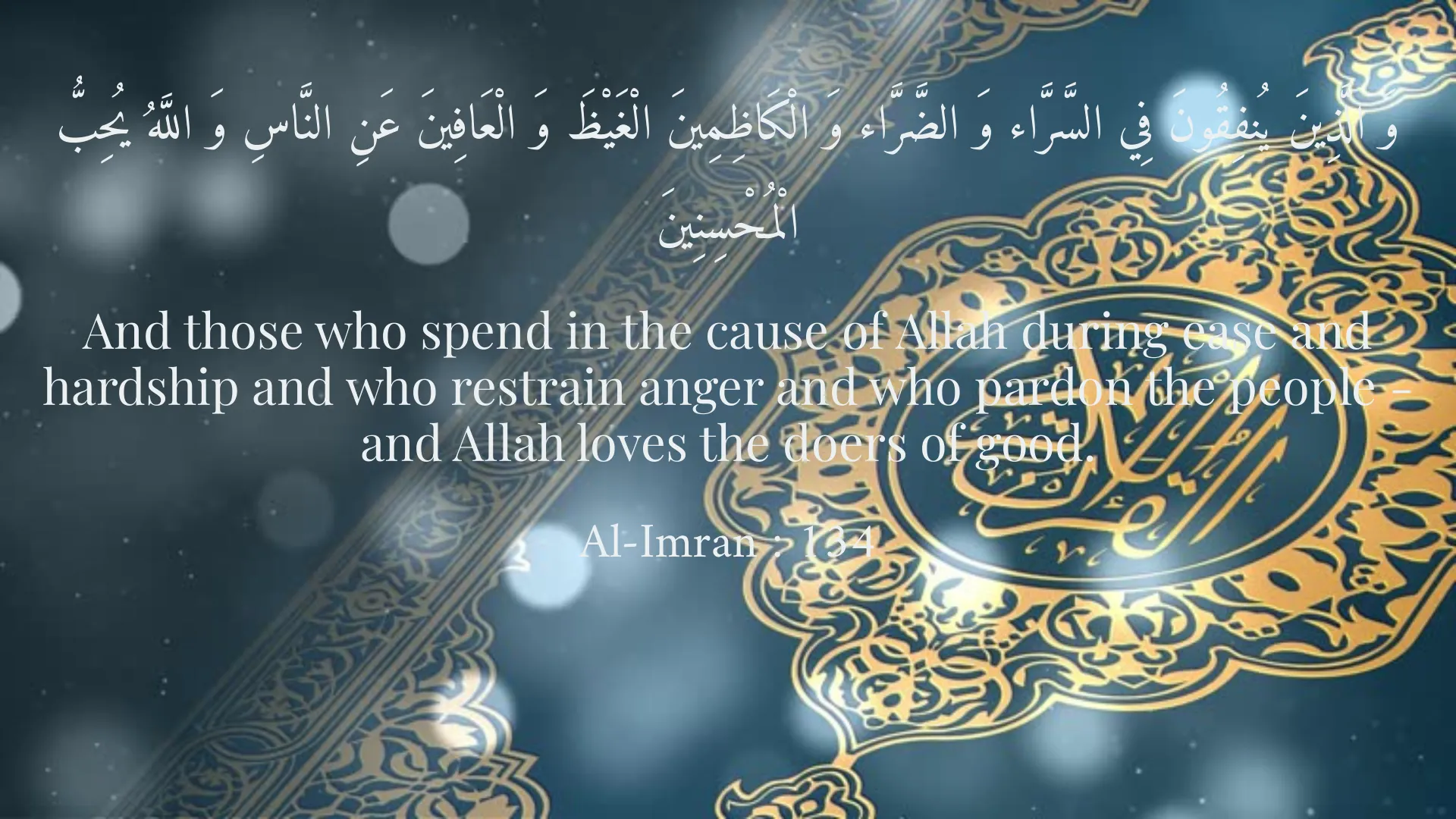
Forgiveness is a profound and transformative process that enables individuals to move beyond their pain and resentment. In the moral fabric of society, it stands as a pillar of personal healing and spiritual growth. The notion of forgiving others is a moral virtue that is profoundly emphasized in the Holy Quran. The central theme of forgiveness resonates throughout this sacred text, underscoring the importance of mercy, compassion, and understanding in human relationships. In our daily lives, we continuously encounter a wide array of individuals and behaviors. Some people may harm us or treat us unjustly, often leaving scars that can take time to heal. In such circumstances, amid the chaos of emotions, it becomes crucial to learn the art of forgiveness. One of the most significant verses that encapsulates the essence of forgiveness can be found in Surah Al-Imran, verse 134: "And those who spend in the cause of Allah during ease and hardship and who restrain anger and who pardon the people - and Allah loves the doers of good." This verse highlights the value placed on self-control and generosity of spirit, showing that Allah cherishes those who can manage their emotions and extend forgiveness to others. It speaks to the heart of humanity, reflecting the necessity of these traits in our journey as individuals striving for a wholesome and virtuous life. To practice forgiveness, we can begin by recalling not just this verse but many other verses of the Quran that discuss themes of pardon and mercy. It is essential to understand that these values are characteristics of great individuals whom Allah loves. As believers, it is imperative to embed these teachings into our daily life practices. By reflecting on the Quran, we are reminded that no one is infallible. Each of us makes mistakes, and we must recognize that humans are inherently flawed. This realization can lead to a more compassionate perspective regarding the transgressions of others. When faced with hurtful actions or words, it is vital to seek ways to forgive rather than seeking revenge or harboring a grudge. The first step in this process often involves calm communication. Open and honest dialogue allows for the expression of feelings without the heat of anger clouding judgment. When we articulate our feelings, we not only pave the way for healing but also enhance our relationships with others who may have wronged us. This step is often crucial, as confronting issues directly, yet kindly, can unearth deeper understandings and even lead to reconciliations that were previously thought impossible. Moreover, forgiveness is not an act that negates one’s pain or dismisses injustice. It is instead a conscious choice to reclaim one’s peace. It is about letting go of the burdens of resentment and negativity that weigh down our spirits. As we embrace forgiveness, we cultivate our own mental health and spiritual wellness. The process may require time and patience, but the rewards are manifold: improved emotional health, reduced stress, and greater happiness and fulfillment in day-to-day living. To further facilitate forgiveness, it is beneficial to remember Allah’s mercy. Reflection on the countless blessings in our lives can serve as a reminder that we, too, are recipients of forgiveness. Understanding that Allah’s mercy is infinite can inspire us to cultivate a similar approach toward others. In moments of anger or pain, it can be helpful to engage in self-reflection or prayer, seeking guidance from Allah to open our hearts to forgiveness. This spiritual dialogue can provide reinforcement in our attempts to forgive, emphasizing the depth of compassion required in our interactions with others. Additionally, forgiveness necessitates empathy. It requires us to view our grievances from the perspective of the one who hurt us. This does not excuse their behavior; instead, it allows us to see their humanity. It could be that the other person acted out of their own pain, misunderstandings, or struggles. Understanding this can help soften our perception and willingness to let go. It is crucial to underscore that forgiveness does not imply condoning or accepting wrongdoing. Instead, it is a personal choice to liberate ourselves from the continuous cycle of pain and anger. Just as Allah extends mercy to His creations, we too must endeavor to reflect this quality in our lives. By embodying this characteristic, we allow for the nurturing of goodness, kindness, and love within our communities. In conclusion, embracing forgiveness is an integral part of our human experience and a vital aspect of our spiritual journey. The Holy Quran calls upon us to cultivate this moral virtue, reminding us of Allah’s love for those who forgive. The act of forgiving others is not merely for the benefit of those who have transgressed against us, but it is primarily an act of self-care that can renew our spirits and clear our paths towards peace and contentment. By embracing forgiveness, we move towards becoming better individuals, drawing closer to the compassion exemplified by Allah. As we navigate through life, filled with its trials and tribulations, let us remember that the road to forgiveness is also the road to inner serenity and a more profound connection with the divine.
Related Verses
وَ الَّذِينَ يُنفِقُونَ فِي السَّرَّاء وَ الضَّرَّاء وَ الْكَاظِمِينَ الْغَيْظَ وَ الْعَافِينَ عَنِ النَّاسِ وَ اللَّهُ يُحِبُّ الْمُحْسِنِينَ
And those who spend in the cause of Allah during ease and hardship and who restrain anger and who pardon the people - and Allah loves the doers of good.
Al-Imran : 134
Short Story
There is a story from Saadi about a man who returned home and saw his neighbor teaching his children. This reminded him of his own childhood. He decided to put aside his negative feelings towards the neighbor and talk to him. Ultimately, this conversation and kindness led to reconciliation between them, and both were happy with their new friendship.