Quranic Answer
True repentance is a significant concept in the Quran that refers to returning to God and seeking His forgiveness. It serves as a vital aspect of the Islamic faith, embodying the relationship between the believer and their Creator. In this article, we will explore the profound implications of sincere repentance, its requirements, and its transformative power on an individual’s life. Emphasized in various verses of the Quran, true repentance is not merely an act of seeking forgiveness but a comprehensive journey towards self-improvement and spiritual awakening. In Surah At-Tahreem, verse 8, Allah states, 'O you who have believed, repent to Allah with sincere repentance. Perhaps your Lord will remove from you your misdeeds and make for you gardens beneath which rivers flow.' This verse serves as a clarion call for believers to turn back to Allah genuinely and humbly. It signifies that repentance must be made with a sincere heart and correct intention. The concept of sincere repentance in Islam underscores the importance of being genuine in one's approach towards seeking forgiveness. To achieve genuine repentance, an individual must first recognize their wrongdoing and feel a deep sense of remorse about it. This process of acknowledgment is essential, as it reflects the individual's understanding of their actions and how those actions deviate from the path of righteousness prescribed by Allah. Recognizing one's mistakes enables the believer to confront their faults and fosters a sense of accountability, which is the cornerstone of sincere repentance. Next comes the critical step of making a firm decision not to revert to sin. This commitment involves a strong resolve to change one’s behavior and avoid situations that may lead back to the same transgressions. It represents a shift in mindset, one that prioritizes spiritual growth and moral integrity over yielding to temptations. Such a decision often requires not just intention but action; it might include the establishment of new habits, surrounding oneself with righteousness, and actively seeking knowledge of Islam to fortify one's faith. Moreover, requesting forgiveness from Allah is a fundamental aspect of the repentance process. It is an expression of humility and submission to the Almighty, acknowledging His greatness and mercy. The act of supplication is an important practice in Islam, as it is through supplication that believers seek refuge in Allah's mercy and forgiveness. Islam teaches that even the most egregious of sins can be forgiven if the sinner approaches God sincerely and earnestly. This aspect is powerfully illustrated in Surah Az-Zumar, verse 53, where Allah guides His servants: 'O My servants who have believed, do not despair of the mercy of Allah. Indeed, Allah forgives all sins.' This verse encapsulates the essence of hope and compassion inherent in the Islamic faith. For many believers, the journey of repentance goes beyond just seeking forgiveness; it includes making amends for past mistakes. Compensating for past sins can aid in sincere repentance, often referred to as 'tawbah.' This might involve performing good deeds, charitable acts, and helping others. Islam places a strong emphasis on acts of kindness and generosity, which not only serve to compensate for past misdeeds but also uplift the soul and purify the heart. Engaging in positive actions can help in alleviating the burden of guilt and remorse, fostering a sense of inner peace and fulfillment. The ongoing nature of repentance is another critical element believed to enrich the believer's life. True repentance is not just a one-time event; it is an ongoing process that requires persistence and effort. This continuous striving for self-improvement allows individuals to remain conscious of their actions and the impact they have on their spiritual condition. The practice of daily self-reflection encourages believers to assess their behaviors, intentions, and relationship with Allah, allowing for a deeper connection with the Divine. Furthermore, it is vital to understand that true repentance not only mends the relationship between an individual and Allah but also has positive repercussions on one’s relationships with others. When a person sincerely repents and seeks forgiveness, it creates a ripple effect, encouraging more compassion, understanding, and forgiveness in their interactions with others. By embodying the principles of humility and accountability, individuals can foster healthier relationships, both socially and spiritually. In conclusion, true repentance is a multifaceted concept in the Quran that reflects the believer's journey towards self-awareness, accountability, and spiritual growth. It requires sincere acknowledgment of one’s errors, a steadfast commitment to change, and active engagement in good deeds. The Quran reminds us that Allah's mercy is vast and encompassing, offering hope even in the darkest of times. Ultimately, the practice of true repentance is not only an essential act of worship but also a transformative experience, enriching our lives and bringing us closer to peace and tranquility. It serves as a reminder that we are all fallible beings in need of divine forgiveness and guidance, and the path of repentance invites us to embark on a journey of betterment and faith.
Related Verses
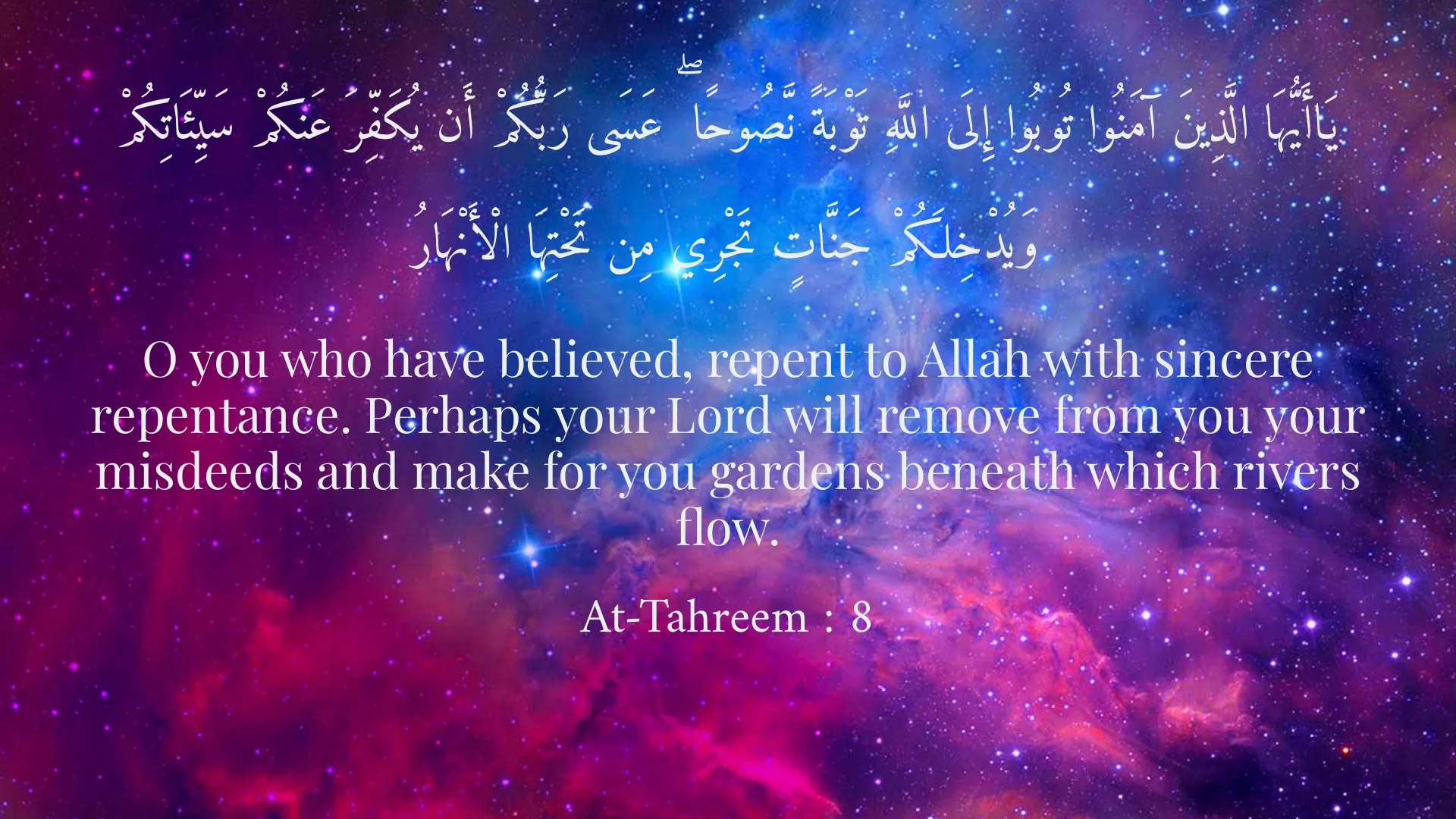
يَاأَيُّهَا الَّذِينَ آمَنُوا تُوبُوا إِلَى اللَّهِ تَوْبَةً نَّصُوحًا ۖ عَسَى رَبُّكُمْ أَن يُكَفِّرَ عَنكُمْ سَيِّئَاتِكُمْ وَيُدْخِلَكُمْ جَنَّاتٍ تَجْرِي مِن تَحْتِهَا الْأَنْهَارُ
O you who have believed, repent to Allah with sincere repentance. Perhaps your Lord will remove from you your misdeeds and make for you gardens beneath which rivers flow.
At-Tahreem : 8
قُلْ يَا عِبَادِي الَّذِينَ آمَنُوا اتَّقُوا رَبَّكُمْ لِلَّذِينَ أَحْسَنُوا فِي هَذِهِ الدُّنْيَا حَسَنَةٌ وَأَرْضُ اللَّهِ وَاسِعَةٌ إِنَّمَا يُوَفَّى الصَّابِرُونَ أَجْرَهُمْ بِغَيْرِ حِسَابٍ
Say, 'O My servants who have believed, do not despair of the mercy of Allah. Indeed, Allah forgives all sins.'
Az-Zumar : 53
Short Story
Once upon a time, there was a man named Omar who contemplated his life full of errors and sins. He decided to repent and turn back to God. One rainy night, he stood by a tree and asked Allah for forgiveness. After requesting forgiveness with a sincere intention, he felt a profound sense of lightness and peace in his heart. He decided to help others and dedicated his life to serving others from that day onward. The people of the town knew him as someone always striving for good and helping others.