Quranic Answer
Control over the self is one of the most significant issues highlighted in the Quran and Islamic teachings. The notion of self-control is not merely a practical guideline for Muslims, but rather a spiritual commandment deeply embedded in the foundation of Islamic belief and practice. It is through self-control that individuals can navigate the complexities of life, maintaining their faith and ethical standards amidst various trials and temptations. In Surah Ash-Shu'ara, verse 87, Allah warns humanity to ensure they control their selves and not fall into heedlessness. This verse encapsulates a broader theme prevalent in Islamic doctrine: the need for vigilance and self-awareness. The struggle against one’s own desires and whims is often referred to in Arabic as 'nafs,' which represents the self, ego, or inner self. The Quran emphasizes that understanding and managing the 'nafs' is crucial for spiritual development and overall well-being. The first step to mastering oneself is recognizing and acknowledging personal strengths and weaknesses. This awareness is paramount as it serves as the foundation on which self-improvement can be built. One must engage in honest self-reflection to identify areas that require attention, whether they relate to one’s conduct, ambitions, or habits. By understanding themselves better, individuals can craft strategies to resist temptations and impulses. For instance, if someone recognizes that they have a tendency toward anger, they can be more mindful during stressful situations and take proactive steps to foster a calm demeanor. Furthermore, regularly engaging in the remembrance of Allah can provide tranquility and strengthen one's resolve against the impulses of the self. As highlighted in Surah Ar-Ra'd, verse 28, "Verily, in the remembrance of Allah do hearts find rest." This verse underscores the importance of spiritual connection in achieving inner peace. The act of dhikr, or remembrance of Allah, serves multiple purposes; it draws the believer closer to their Creator and acts as a powerful tool for self-regulation. The tranquility that comes from regularly remembering Allah helps to stabilize emotions, allowing one to approach life’s challenges with a sense of composure and clarity. This connection with the divine enables individuals to tap into a source of strength that goes beyond their limitations. Moreover, the performance of good deeds, such as charity, helping others, and engaging in beneficial activities, facilitates self-improvement and leads to a stronger constitution against negative impulses. Acts of kindness and generosity not only uplift those in need but also cultivate a sense of purpose and fulfillment within the doer. The Prophet Muhammad (peace be upon him) emphasized the impact of charity on personal and communal well-being. By contributing positively to society, individuals strengthen their character and, simultaneously, foster self-discipline. The notion that giving to others directly influences personal growth aligns with the practice of suppressing selfish desires, leading to greater self-control. The social fabric of Islam encourages individuals to surround themselves with like-minded people who inspire and motivate one another toward good. Seeking advice from knowledgeable individuals can be exceptionally beneficial on this journey. Engaging with mentors or participating in community discussions allows for the exchange of experiences and wisdom. This support system serves as a reminder that the quest for self-mastery is neither solitary nor easy; it is a shared endeavor that flourishes in collaboration and mutual encouragement. Establishing these connections can help individuals keep their goals in perspective and provide accountability as they strive to improve themselves. It’s paramount to remember that controlling the self is a gradual process requiring patience and continued effort. Each step taken towards self-regulation, no matter how small, is a victory in itself. In the fast-paced world we live in, immediate gratification is often a temptation that overshadows the value of delayed rewards. However, the teachings of Islam remind us that perseverance and dedication to self-control lead to greater spiritual and personal fulfillment. Learning to appreciate the journey ascends individuals beyond their immediate desires, fostering a robust character aligned with divine principles. In conclusion, self-control is more than a mere guideline for behavior; it is a fundamental aspect of spiritual growth within Islam. Through self-awareness, remembrance of Allah, acts of charity, and building supportive relationships, individuals can enhance their ability to master themselves. The Quran and teachings of the Prophet offer timeless wisdom that guides believers on this essential quest. By internalizing these lessons, one can foster a tranquil spirit, enhance moral fortitude, and navigate life’s challenges with faith and integrity. Ultimately, the path to self-control is a lifelong journey, demanding commitment, reflection, and the constant striving for excellence in all aspects of life. In the grand tapestry of Islamic teachings, mastery over oneself is not simply a recommendation but a divine imperative that paves the way to true success in this life and the hereafter.
Related Verses
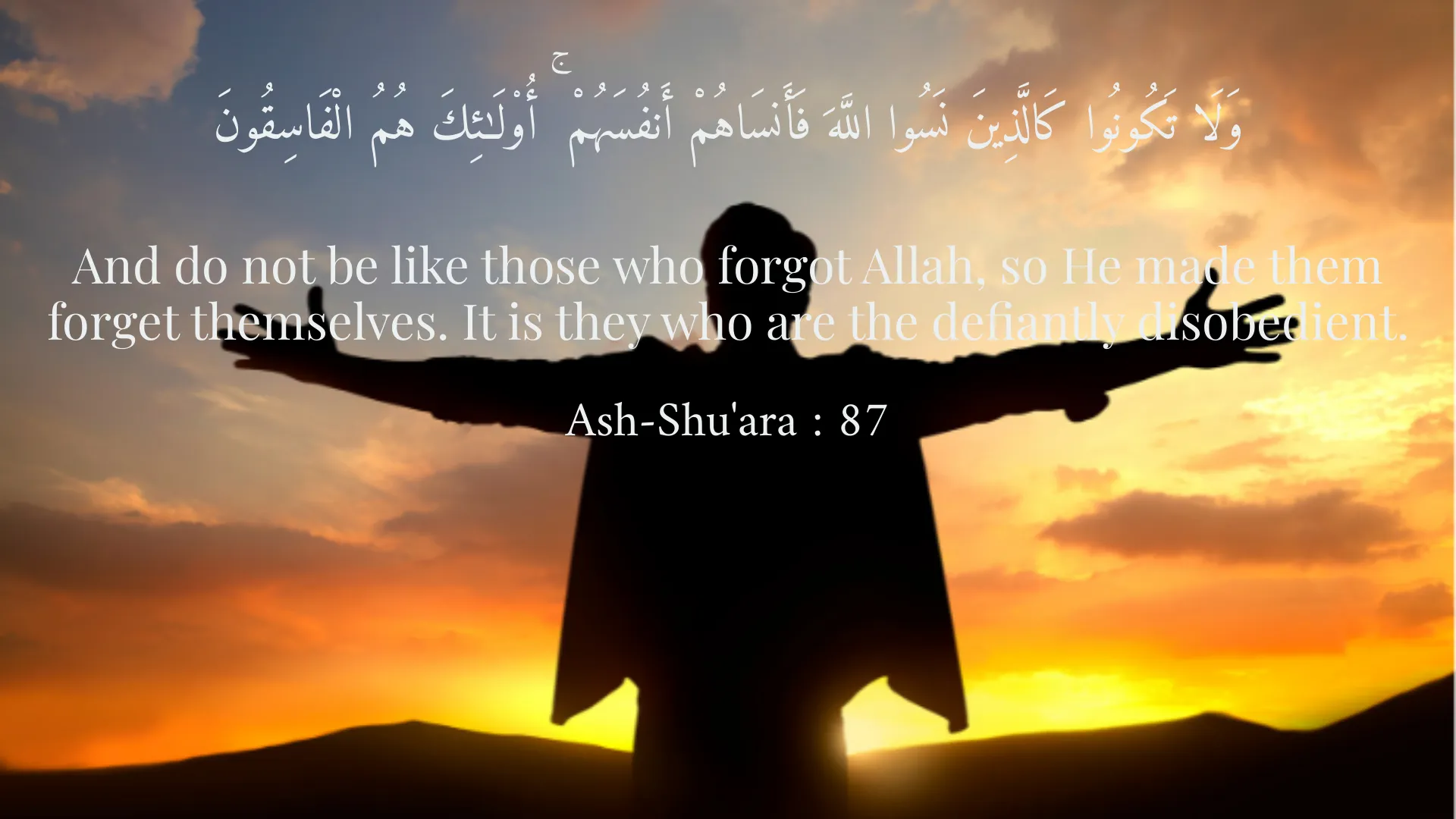
وَلَا تَكُونُوا كَالَّذِينَ نَسُوا اللَّهَ فَأَنسَاهُمْ أَنفُسَهُمْ ۚ أُو۟لَـٰئِكَ هُمُ الْفَاسِقُونَ
And do not be like those who forgot Allah, so He made them forget themselves. It is they who are the defiantly disobedient.
Ash-Shu'ara : 87
أَلَا بِذِكْرِ اللَّهِ تَطْمَئِنُّ الْقُلُوبُ
Verily, in the remembrance of Allah do hearts find rest.
Ar-Ra'd : 28
Short Story
One day, Yunus was sitting in his garden and reflecting on his life. He pondered why he sometimes struggled to control his anger and tensions. Suddenly, he recalled a verse from the Quran which said, 'Verily, in the remembrance of Allah do hearts find rest.' Yunus decided to become more mindful of God and resist temptations. From that day on, he made it a habit to remember God every morning and by engaging in good deeds, he found himself interacting positively with others and experiencing greater peace.