Quranic Answer
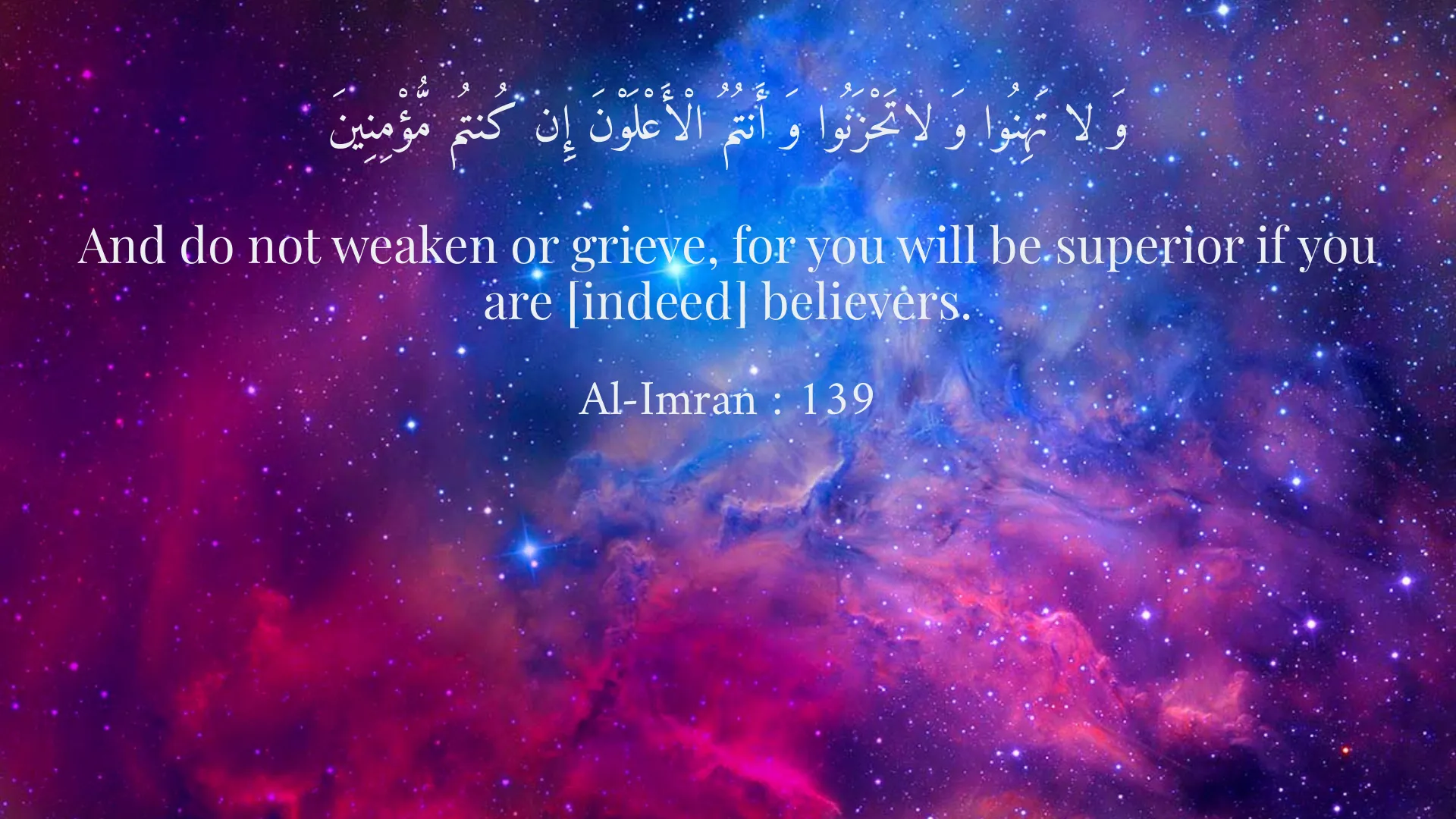
Faith-based self-esteem is a profound concept deeply rooted in Islamic teachings that encourages individuals to transcend beyond mere material dependencies and human imperfections. It is an understanding that our true worth is not dictated by external factors but is bestowed upon us by our Creator, Allah. As highlighted in the Holy Quran, humans hold a unique dignity and value due to their bond and belief in Allah. This article aims to explore the significance of faith in building self-esteem from an Islamic perspective, emphasizing personal growth, ethical behavior, and the need to prioritize spiritual over worldly matters. The foundation of faith-based self-esteem is illuminated by the Quranic verses that encourage believers to seek their worth from Allah. One notable verse is found in Surah Al-Imran, verse 139, where Allah instructs, "And do not weaken or grieve, for you will be superior if you are [indeed] believers." This encapsulates the essence of self-esteem as interconnected with our faith. Here, Allah assures believers that their self-worth is contingent upon their belief and reliance on Him. The message is clear: in times of struggle, rather than succumbing to despair, one must lean on faith, reinforcing the idea that self-esteem stems from an unwavering connection to Allah. Furthermore, this self-esteem is further enhanced through the cultivation of good character and engagement in righteous actions. Islam encourages its followers to embody virtues such as honesty, kindness, and integrity, which are crucial in fostering a positive self-image. The Quran states in Surah Al-Fil, verse 2, "Did you not see how your Lord dealt with the companions of the elephant?" This reflection serves as a reminder of Allah’s omnipotence and protective nature. It illustrates that Allah's support permeates every aspect of human life and reassures believers of His ultimate authority and care. Recognizing that we are under the divine protection of Allah offers a strong foundation upon which self-esteem can grow. To develop a sturdy self-esteem that withstands the pressures of modern life, it is essential to incorporate faith into all dimensions of living. This means dedicating oneself to the pursuit of knowledge, self-improvement, and ethical conduct. When Muslims strive for goodness and uphold Islamic values in their daily actions, they reinforce their self-worth and contribute positively to society. For example, engaging in community service, maintaining family ties, and promoting justice are all actions that enhance one's self-esteem while fulfilling religious obligations. Additionally, faith can act as a buffer against challenges that may damage self-esteem. In an ever-changing world, difficulties such as personal failures, societal pressures, and emotional turmoil can challenge an individual’s self-perception. Integrating faith principles equips believers with resilience, enabling them to view setbacks as opportunities for growth rather than signs of inadequacy. Rather than allowing these trials to diminish their self-worth, Muslims are taught to seek comfort in their faith and to understand that they are shaped by their experiences, not defined by them. Through patience (sabr) and gratitude (shukr), individuals can cultivate a more profound sense of appreciation for themselves and their journeys. Moreover, the emphasis on community support within Islam plays a pivotal role in enhancing self-esteem. The ummah, or community, serves as a source of strength and encouragement. Knowing that they are part of a greater collective provides individuals with a sense of belonging and purpose, which is crucial for nurturing self-esteem. Engaging with others in religious activities, participating in group prayers, and offering mutual support fosters an environment where individuals can thrive while standing firm in their faith. Islam also presents a unique perspective on the relationship between self-esteem and humility. While confidence derived from faith is vital, it is equally essential to maintain an attitude of humility and a recognition of one's limitations. This balance is beautifully articulated in Islamic teachings, reminding believers that they are servants of Allah and that true self-worth is achieved not through arrogance but through submission and acknowledgment of divine mercy. By surrendering oneself to Allah and seeking His guidance, Muslims can navigate life with a sense of peace that cultivates genuine self-esteem. Furthermore, it is important to address the misconceptions surrounding self-esteem in contemporary society. Often, self-worth is measured through material success, physical appearance, or social status—none of which are congruent with Islamic values. This misalignment can frequently lead to feelings of inferiority and a negative self-image. Instead, faith-based self-esteem advocates a perspective rooted in spirituality, where believers find solace in the knowledge that their worth is intrinsic and ordained by Allah. Thus, the focus shifts from external validation to a deeper understanding of one’s identity, which transcends superficial measures of esteem. In conclusion, faith-based self-esteem is a transformative concept that encourages Muslims to derive their self-worth from their relationship with Allah rather than from worldly markers of success. By internalizing the teachings of the Quran and embodying Islamic values, individuals can develop a resilient sense of self that withstands the fluctuations of life. The Quran guides believers to see themselves through the lens of faith, thus elevating their perception of self and reinforcing the notion that their worth is anchored in their belief and actions. The dynamic interplay between faith, good character, and community engagement reinforces a robust self-esteem that not only enriches individual lives but also contributes positively to the broader society. Therefore, it is imperative for Muslims to incorporate these Islamic principles into their lives, paving the way for personal growth, emotional stability, and a profound understanding of their inherent worth.
Related Verses
وَ لا تَهِنُوا وَ لاتَحْزَنُوا وَ أَنتُمُ الْأَعْلَوْنَ إِن كُنتُم مُّؤْمِنِينَ
And do not weaken or grieve, for you will be superior if you are [indeed] believers.
Al-Imran : 139
أَلَمْ تَرَ كَيْفَ فَعَلَ رَبُّكَ بِأَصْحَابِ الْفِيلِ
Did you not see how your Lord dealt with the companions of the elephant?
Al-Fil : 2
Short Story
One day, Massoud, a young faithful thinker, was in search of ways to strengthen his self-esteem. He had heard that God declares in the Quran: 'The believers are superior.' So, he decided to devote himself to worship and kindness towards his family every day. After a while, he felt more at peace and was more confident than ever as he walked down the path of life.