Quranic Answer
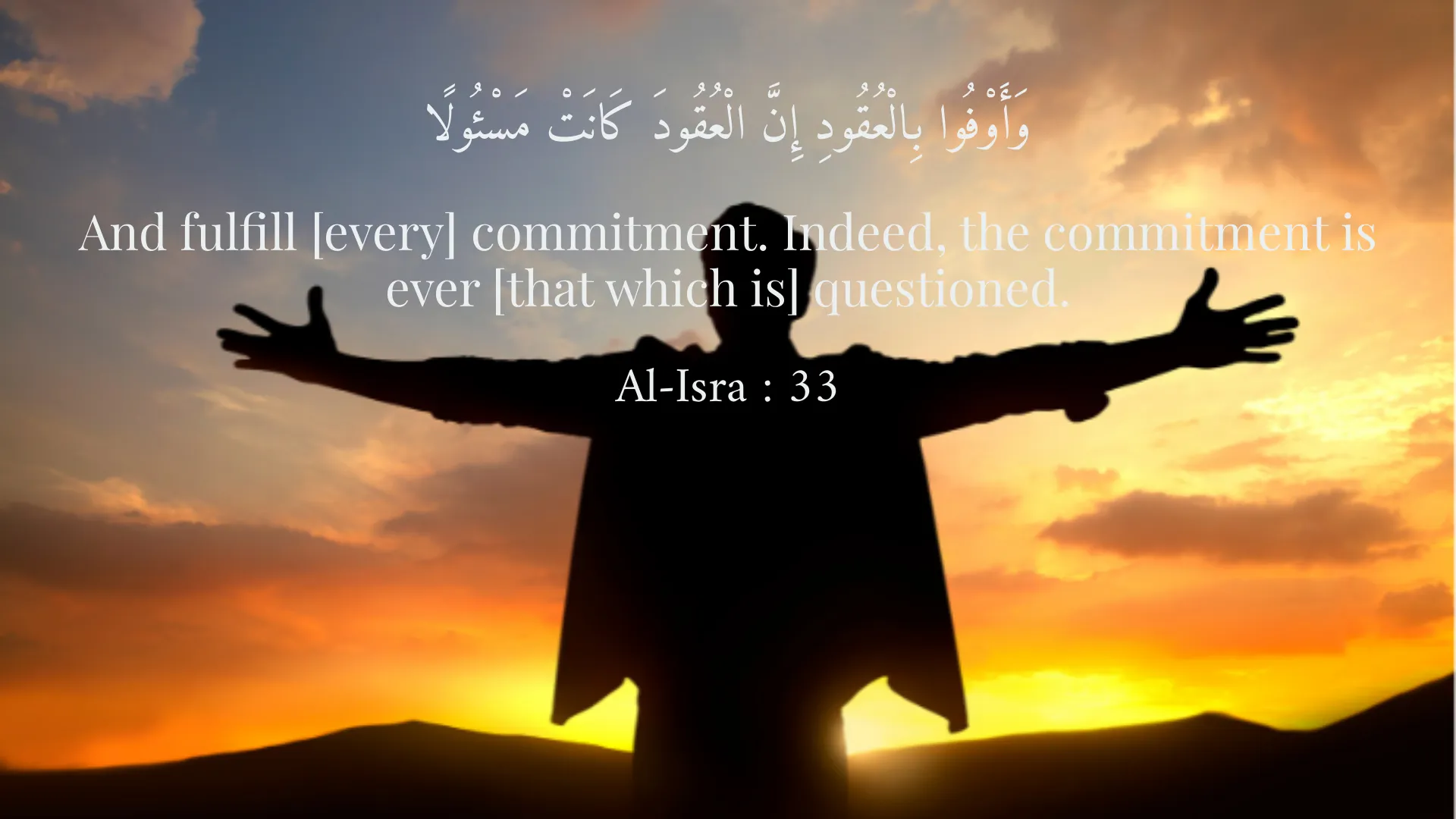
Honoring promises and commitments is a tremendously important ethical value in Islam, which is frequently referenced in the Quran. This fundamental aspect of morality serves as a foundation for interpersonal relationships and social cohesion among individuals. The essence of fulfilling one's promises can be distilled into a broader principle: the profound connection between honor, trust, and faith. For Muslims, adhering to the commitments made with others goes beyond mere social obligation; it reflects deep-rooted spiritual beliefs and values. The significance of keeping promises is emphasized in several verses of the Quran, showcasing the commitment that God expects from believers. For instance, in verse 33 of Surah Al-Isra, it is clearly articulated: 'And fulfill [every] commitment. Indeed, the commitment is ever [that which is] questioned.' This particular verse underlines the weight of accountability associated with the promises we make. It serves as a reminder that each promise involves an ethical obligation, one that is recognized not only by society but also by God Himself. This theme of accountability continues in Surah Al-Muddathir, verse 38, which states, 'Every soul, for what it has earned, will be retained.' In this context, it becomes evident that the consequences of failing to honor commitments are far-reaching. Each individual's actions, including the fulfillment or neglect of their promises, will be scrutinized on the Day of Judgment. This notion of future accountability instills a sense of responsibility in believers, encouraging them to adhere to their commitments diligently. Moreover, the repercussions of not fulfilling one’s promises extend beyond the spiritual implications and can lead to tangible social ramifications as well. When commitments are disregarded, trust diminishes – not just between individuals but within communities. Trust serves as the bedrock of society, and breaking promises can lead to a ripple effect of suspicion and discord among people. Conversely, honoring commitments strengthens relationships and nurtures a sense of belonging and stability. In Surah Al-Baqarah, verse 177, the Quran expands the definition of righteousness by stating, 'Righteousness is not that you turn your faces toward the east or the west, but [true] righteousness is in one who believes in Allah, the Last Day, the Angels, the Book, and the Prophets and gives his wealth, in spite of love for it, to relatives, orphans, the needy, the traveler, those who ask, and for freeing slaves; and [who] establishes prayer and gives zakah; [those who fulfill their promise when they promise].' This profound assertion illustrates that true righteousness is comprehensive and encompasses various actions, including the fulfillment of promises. Honoring commitments is presented as a marker of genuine faith and sincerity. Thus, one could argue that fulfilling promises is not merely a good moral practice; it is indicative of one's faith and devotion to God. The interconnectedness of ethical behavior and spiritual belief within the Islamic framework offers a unique perspective on the importance of keeping one’s word. Promises that are made in good faith should be viewed as sacred, and the act of breaking them is tantamount to breaching the ethical contract that one has with oneself and with God. Furthermore, the cultural implications of honoring promises can be seen in the way Muslims view trustworthiness as a character trait of a true believer. The Prophet Muhammad (peace be upon him) is often cited as the paragon of integrity and trust, demonstrating through his life the importance of honesty and reliability. His reputation as 'Al-Amin' or 'the Trustworthy' exemplifies the high regard for fulfilling promises within the Islamic tradition. This ideal not only applies to promises made to people but also extends to responsibilities and commitments one has undertaken towards society. In contemporary society, where distractions and complex relationships abound, the challenge of keeping promises is ever-present. However, the ethical call to honor commitments remains relevant and urgent. Young Muslims, in particular, are encouraged to embrace this tenet of their faith as it will serve them well as they navigate the complexities of modern life. Engaging in open conversations, being reliable in friendships, and maintaining commitments in professional relationships can lead to a more harmonious existence rooted in trust and respect. Consequently, honoring one’s promises is not merely an isolated act of good behavior; it is a reflection of a person’s character and their faith in the eyes of God. Every promise kept is an affirmation of integrity, a testament to one’s commitment to righteousness, and a sign of true belief in Allah. Therefore, it rests upon every believer not just to speak words of commitment but to embody them through action. In conclusion, the ethical dimension of honoring promises in Islam cannot be overstated. The Quran serves as a constant reminder of the importance of keeping one's word, emphasizing that such fulfillment is integral to both personal faith and community wellbeing. The teachings of Islam illustrate that the act of fulfilling one’s commitments extends beyond social contracts; it is intertwined with the fabric of one’s spiritual existence. Ultimately, this profound emphasis on promises reminds us that our words hold weight and our actions define the essence of our faith.
Related Verses
وَأَوْفُوا بِالْعُقُودِ إِنَّ الْعُقُودَ كَانَتْ مَسْئُولًا
And fulfill [every] commitment. Indeed, the commitment is ever [that which is] questioned.
Al-Isra : 33
كُلُّ نَفْسٍ بِمَا كَسَبَتْ رَهِينَةٌ
Every soul, for what it has earned, will be retained.
Al-Muddathir : 38
لَيسَ الْبِرَّ أَن تَولُّوا وَجُوهَكُمْ قِبَلَ الْمَشْرِقِ وَالْمَغْرِبِ وَلَكِنَّ الْبِرَّ مَنْ آمَنَ بِاللَّهِ وَالْيَوْمِ الْآخِرِ وَالْمَلَائِكَةِ وَالْكِتَابِ وَالنَّبِيِّينَ وَأَعْطَى الْمَالَ عَلَى حُبِّهِ ذَوِي الْقُرْبَى وَالْيَتَامَى وَالْمَسَاكِينَ وَابْنَ السَّبِيلِ وَالسَّائِلِينَ وَفِي الْرِّقَابِ وَأَقَامَ الصَّلَاةَ وَآتَى الزَّكَوٰةَ وَالْمُوْفُونَ بِعَهْدِهِمْ إِذَا عَاهَدُوا
Righteousness is not that you turn your faces toward the east or the west, but [true] righteousness is in one who believes in Allah, the Last Day, the Angels, the Book, and the Prophets and gives his wealth, in spite of love for it, to relatives, orphans, the needy, the traveler, those who ask, and for freeing slaves; and [who fulfills the promise when they promise].
Al-Baqarah : 177
Short Story
One day, a person named Sajjad decided to be faithful to his promises and commitments. At the beginning of a new month, he set a goal to fulfill all the promises he had made to others. This not only turned him into a trustworthy person but also gave him a deep sense of satisfaction. Sajjad realized that honoring commitments positively impacted his life and also pleased God.